
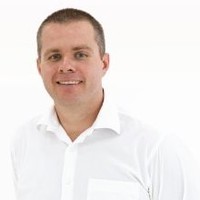
AeroLeads people directory · profile
Nathan Taylor Email & Phone Number
Head of Technology
at
Optus Sport
1 work email found
@optus.com.au
5 phones found area 140 and 917
LinkedIn matched
✓ Verified Jul 2026
4 data sources
Profile completeness 100%
Current company
Role
Head of Technology
Location
Greater Sydney Area, Australia
Company size
Who is Nathan Taylor? Overview
A concise factual answer block for searchers comparing this professional profile.
Quick answer
Nathan Taylor is listed as Head of Technology at Optus Sport, a with 97 employees, based in Greater Sydney Area, Australia. AeroLeads shows a work email signal at optus.com.au, phone signal with area code 140, 917, and a matched LinkedIn profile for Nathan Taylor.
Nathan Taylor previously worked as Director Technology, Media at Optus and VP of Technology, SVOD at Amc Networks. Nathan Taylor holds Bachelor’S Degree, Computer Engineering from University Of Wollongong.
Company email context
Email format at Optus Sport
This section adds company-level context without repeating Nathan Taylor's masked contact details.
{first}.{last}@optus.com.au
86% confidence
AeroLeads found 1 current-domain work email signal for Nathan Taylor. Compare company email patterns before reaching out.
Profile bio
About Nathan Taylor
I am a Product Development leader with a passion for TV, Sports and Technology. For the past 10 years I have been trying to crack how to deliver the best possible TV Experience to customers over the Internet. Things have come a long way in this space but the future is HUGE!!. My super power is that I can make the complex simple and use this to align an organisation around the target. I understand the entire stack of technologies. You will find my fingerprints all over the projects that I have lead. I have managed teams of 60+ software engineers using a variety of Agile Methodologies (SCRUM/Kanban) and Continuous Integration. I have a knack for building simple elegant customer experiences because I think customer first. I understand that content is king, but I specialise in putting the content in the biggest possible spotlight that technology can create.My career has been 50/50 between start-ups and large companies. I understand how to execute efficiently in start-up environments, but have superior communication and people skills that help me navigate the bureaucracy of a large corporate environment and garner support from the key stakeholders.Specialties: OTT, Video, Leadership, Making the Complex Simple, Problem Solving, Technical Leadership, Product Management, Product Development, Software Development, Solution Architecture, Strategic Thinking, Contract Negotiation, Customer Experience, P+L Management, Contract Negotiation, Agile Methodologies (Scrum/Kanban), Continuous Integration, System Integration, Content Delivery Networks, Distributed Team ManagementYou can contact me on:email: nathanedwardtaylor@hotmail.comPhone: +971554144168
Listed skills include Simplifying The Complex, Ott, Critical Thinking, Leadership, and 46 others.
Current workplace
Nathan Taylor's current company
Company context helps verify the profile and gives searchers a useful next step.
11 roles
Nathan Taylor work experience
A career timeline built from the work history available for this profile.

Director Technology, Media
Current
Apr 2017 - Present

Vp Of Technology, Svod
Nov 2015 - Apr 2017

Head Of Technology
Intigral is a Digital Media Start-Up based in Dubai. It was founded in 2009 and its remit is to develop a series of compelling content services that can be used as a point of differentiation by Telco's.I am responsible for all Software Development and Technical Operations at INTIGRAL. In this role I manage a technology budget of $10M+. I have a team of 60+ people which includes UI/UX Designers, Project Managers, Solution Architects/ System Integrators, Developers and Technical Operations staff.My main achievement has been the creation of a Pay-TV Platform solution that we have combined with our other core capabilities. This has allowed us to offer a turn-key Pay-Tv solution to Telco's and FTA broadcasters to help them generate new revenue streams. We investigated a number of potential partners in this space but all solutions were either too expensive or did not provide a customer experience that we were happy with. My team has constructed a Pay-Tv Platform using best of breed SAAS Platforms and integrated this with our own customer experience (UI/UX). My team also develop and operate the exclusive way to watch Saudi Premier league online (www.dawriplus.com)
Nov 2013 - Nov 2015

Gm Software Solution - Media
In this role I managed a team of 40 people. They were a mix of Software Developers (Java, IOS, Android, Web), System Integrator's, Solution Architects and UI/UX Designers.I was responsible for a technology budget of $15M+. My team developed a number of products including: A re-usable SAAS Multi-tenanted Pay-TV Video Platform (built around the Ooyala Platform) A Netflix like SVOD Service for FOXTEL called Presto (www.presto.com.au) A Sports website and Live Streaming App for AFL (www.afl.com.au) A Sports website and Live Streaming App for NRL (www.nrl.com.au)
Sep 2012 - Oct 2013
Chief Architect - Media Strategy
During the T-Box development we chose to re-use our existing backend platforms to accelerate the time to market and to defer backend development investment until our strategy was validated. Within 12 months of the T-Box launching many of these platforms traffic had increased by 100 -> 1000x and had far exceeded their original engineering assumptions. It was becoming extremely expensive to horizontally scale many of these platforms.During this period I moved into a Strategy role across the entire Media Engineering Department and began working on a replacement strategy for these platforms. We looked at single vendor Solutions from Ericsson and Cisco but we believed that the economics of these platforms ultimately wouldn't work as they required each customer to operate and manage their own instance of the video platform.As a result we looked at SAAS OTT Players in the market and narrowed our search down to thePlatform and Ooyala. I lead the technical assessments, which lead to the Series E $35M investment that Telstra made in Ooyala.
Jul 2011 - Aug 2012
Chief Architect T-Box
When I joined Telstra in early 2009 their media department had a large number of content services available to their customers (e.g. Movies, Music, 7 Free Online TV Channels and Free Online TV Portal). These services were getting very little usage as they were only available to users via their PC. To help drive usage of these properties Telstra decided to create their own STB called the T-Box (https://www.telstra.com.au/entertainment/tbox). It was a Hybrid PVR device that allowed the customer to have an enriched FTA TV experience and also complement it with other content (e.g. PPV Movies, OTT Live TV Channels). I was the Chief Architect on this product and had a team of 8 Solution Architects/System Integrator's. We developed the product in less than 12 months.In the next 12 months we also added a Pay-Tv Service called "FOXTEL on T-Box" to the platform. This service was 30 of the best FOXTEL channels delivered to the end customer over their broadband using OTT Adaptive streaming. This FOXTEL package was aimed at the "Pay-Lite" ($15->$35 ARPU) segment of the market. This strategy has been hugely successful. There are now over 800k T-Box devices in market.
Mar 2009 - Jun 2011

Director Of Product Development
By November 2006 we were selling a lot of lab evaluation units to Telco's but very few deployments had significant scale. For our business to succeed we needed to sell a lot more units to fewer customers as the current way we were getting revenue wasn't scalable.One of the main reasons that the services weren't getting beyond the lab was that the price that the Telcos had to charge the end customer was normally around $1/minute. This was far beyond what customers were willing to pay except for a small number of niche services (e.g. gambling, adult services).We believed that we could reduce the price per customer of our system by a factor of 10 by building a custom DSP board (more DSP's, latest DSP technology was 3x more powerful than our current board) and by migrating our technology onto a much larger chassis (21 slots instead of 4). We believed that this strategy would amplify our patented transcoding technological advantage and would remove a lot of the fixed costs that the Telco had by reducing the number of chassis they needed (e.g. cost of unique ISUP SS7 Code cost/chassis).We also believed at the time that for a window of time delivering video to a customer via circuit switched was a superior customer experience compared to IP delivery for mobile services due to: Coverage and bandwidth issues with 3G IP connectivity, but we knew that this wasn't a sustainable advantage as Telco's were aggressively rolling out network infrastructure to fix this. We thought a more sustainable factor was that it was much easier for a customer to dial a phone number to access video content rather than try to find it via the phones browser (clearly we didn't bank on the I-Phone!).During this period I lead a team of 30 engineers that developed the much higher capacity Media Gateway and I also spent a significant amount of time in building a team in Delhi, India and migrating the development and maintenance of legacy product to our team there.
Nov 2006 - Feb 2009
Software Development Manager
It was difficult to find the right skills to build a Telco Media Gateway platform in Sydney, so In January 2004 I moved to San Francisco and worked with our VP Engineering to establish an engineering office in the Bay Area.During this time we developed a Media Gateway which was used by Telco's for two different commercial applications. The first application was video calling. In this scenario that Media Gateway sat between the Telco's mobile network, and their Fixed ISP network and allowed customers to make video phone calls between devices on these two incompatible networks.The second commercial application was a TV streaming service. In this scenario the device sat between the Telco's Mobile network and their data centre. This allowed IP based version of Mobile TV to be sent over 3G to end customers using the circuit switched data path. This was the only technical option in these early days of 3G Mobile deployments as IP network connectivity over 3G had extremely low bandwidth and coverage.We recruited a team of 20 engineers to build the new platform. I became the team manager of 6 software engineers that were responsible for building the signalling component of the platform. All of this software was written in C++.In addition to this we also were responsible for managing the embedded Linux image that our platform used, and inherited the responsibility for System Integration tasks.
Jan 2004 - Oct 2006
Senior Software Engineer
Dilithium Networks developed patent protected software technology that could convert video in one format (e.g. H.263) into another video format (e.g. H.264) 10x more efficiently than traditional methods. It did this by exploiting the fact that normal algorithms did what we called tandem transcoding where the video was fully decoded them re-encoded. Our algorithms optimised the process by mapping between the two encoded formats without needing to decode the video. I was part of the Systems Engineering team that created ideas of how to use this technology and built these systems.Our initial aim was to develop a POC system to showcase the power of this technology to potential technology partners (e.g. DSP Providers, Telecom Technology Providers) but after showcasing this POC to the Vodafone group we decided to build this into our own commercial system.All the software that we developed for this platform was C/C++. The system that we developed was a CPCI chassis that contained a general purpose processor which was used for Telco signalling, and a custom designed DSP blade which was used for media and multiplexing adaptation
Dec 2001 - Dec 2003

Development Support Engineer
While I was completing my undergraduate degree I worked part time at Nortel Networks in the IT Department. During this time I did a lot of IT Support functions such as LAN Support, Email Support etc that helped me build a strong practical understanding of how IP works.I also developed a number of productivity tools in ASP.Net that were used by the staff of the R&D centre (e.g. knowledge database tool, staff locator tool).During this time I also was exposed to a lot of bleeding edge WiFi and 3G development that was occurring in the R&D facility. This practical experience re-enforced what I was learning in my studies and really gave me a head-start at the beginning of my career.
Dec 1998 - Nov 2001
1 education record
Nathan Taylor education
-
 University Of Wollongong
FAQ
Frequently asked questions about Nathan Taylor
Quick answers generated from the profile data available on this page.
What company does Nathan Taylor work for?
Nathan Taylor works for Optus Sport.
What is Nathan Taylor's role at Optus Sport?
Nathan Taylor is listed as Head of Technology at Optus Sport.
What is Nathan Taylor's email address?
AeroLeads has found 1 work email signal at @optus.com.au for Nathan Taylor at Optus Sport.
What is Nathan Taylor's phone number?
AeroLeads has found 5 phone signal(s) with area code 140, 917 for Nathan Taylor at Optus Sport.
Where is Nathan Taylor based?
Nathan Taylor is based in Greater Sydney Area, Australia while working with Optus Sport.
What companies has Nathan Taylor worked for?
Nathan Taylor has worked for Optus Sport, Optus, Amc Networks, Intigral, and Telstra.
How can I contact Nathan Taylor?
You can use AeroLeads to view verified contact signals for Nathan Taylor at Optus Sport, including work email, phone, and LinkedIn data when available.
What schools did Nathan Taylor attend?
Nathan Taylor holds Bachelor’S Degree, Computer Engineering from University Of Wollongong.
What skills is Nathan Taylor known for?
Nathan Taylor is listed with skills including Simplifying The Complex, Ott, Critical Thinking, Leadership, Video, Customer Experience, Product Strategy, and Software Development.
Find 750M verified contacts
Search by job title, company, industry, location, and seniority. Export verified B2B contact data when you need it.
Start free trial