
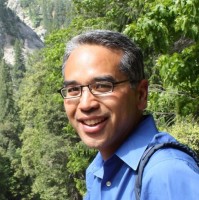
AeroLeads people directory · profile
Patrick Gonzalez Email & Phone Number
Associate Adjunct Professor, Department of Environmental Science, Policy, and Management
at
University of California, Berkeley
1 work email found
@berkeley.edu
LinkedIn matched
✓ Verified July 2026
4 data sources
Profile completeness 86%
Current company
Role
Associate Adjunct Professor, Department of Environmental Science, Policy, and Management
Location
Berkeley, California, United States
Who is Patrick Gonzalez? Overview
A concise factual answer block for searchers comparing this professional profile.
Quick answer
Patrick Gonzalez is listed as Associate Adjunct Professor, Department of Environmental Science, Policy, and Management at University of California, Berkeley, based in Berkeley, California, United States. AeroLeads shows a work email signal at berkeley.edu and a matched LinkedIn profile for Patrick Gonzalez.
Patrick Gonzalez previously worked as Executive Director, Institute for Parks, People, and Biodiversity at University Of California, Berkeley and Assistant Director for Climate and Biodiversity at White House Office Of Science And Technology Policy. Patrick Gonzalez holds Doctor Of Philosophy (Ph.D.), Energy And Resources from University Of California, Berkeley.
Company email context
Email format at University of California, Berkeley
This section adds company-level context without repeating Patrick Gonzalez's masked contact details.
{first_initial}{last}@berkeley.edu
86% confidence
AeroLeads found 1 current-domain work email signal for Patrick Gonzalez. Compare company email patterns before reaching out.
Profile bio
About Patrick Gonzalez
Climate change scientist and forest ecologist advancing solutions for human-caused climate change to protect people and nature. Published new scientific insights on climate change, ecosystems, deforestation, wildfire, and carbon solutions in 23 articles in Science, Proceedings of the National Academy of Sciences of the USA, and other journals, from field research in Africa, South America, and the U.S. Advanced science-based solutions for climate change, forest management, and biodiversity conservation through assistance to 269 U.S. national parks and projects in 26 countries. Contributed science to policy through 16 years of advising policymakers including service with the White House, testimony to the U.S. Congress, and work on the roster of experts of the U.N. Framework Convention on Climate Change and three U.S. delegations to the U.N. Convention to Combat Desertification. Led climate change science for the U.S. National Park Service for 11 years, forest carbon science for the Nature Conservancy for six years, the UC Berkeley Institute for Parks, People, and Biodiversity for two years, and numerous research teams. Stood publicly for scientific integrity, against attempted suppression by 2017-2020 U.S. administration officials. Broadened public understanding of climate change in 149 articles in the New York Times, public radio, and other public media. Communicated climate change science in 343 invited presentations. Lead author on four reports of the Intergovernmental Panel on Climate Change, the science organization awarded a share of the 2007 Nobel Peace Prize.
Current workplace
Patrick Gonzalez's current company
Company context helps verify the profile and gives searchers a useful next step.
12 roles
Patrick Gonzalez work experience
A career timeline built from the work history available for this profile.
Executive Director, Institute For Parks, People, And Biodiversity
• Leading the research, strategic direction, and communications of a university institute to advance science and solutions to halt climate change and conserve biodiversity in national parks.• Conducting research on climate change and ecological impacts across 29 U.S. national parks. Helping National Park Service staff apply the results to improve resilience of park ecosystems under climate change and increase adoption of energy efficiency, renewable energy, and other carbon solutions.• Collaborated on research analyzing climate and vegetation to produce a web site tool that enables natural resource managers in California identify locations to collect plant seeds resilient to projected climate change.• Produced a comprehensive scientific assessment of climate change and forest carbon for a proposed national park in Romania, through a systematic assessment of published scientific research and original spatial analyses.• Communicating the science of climate change and solutions in a column in the publication Parks Stewardship Forum.• Strengthening California policies on climate change and biodiversity conservation by providing scientific advice and guidance to the state government.
Associate Adjunct Professor, Department Of Environmental Science, Policy, And Management
• Advancing science and solutions for anthropogenic climate change through research, publication of new scientific insights, assistance to natural resource managers, advice to policymakers, and communication on climate change, ecosystems, wildfire, and carbon solutions.• Advanced climate change science as an Intergovernmental Panel on Climate Change lead author, through comprehensive assessment of published research on climate change, ecosystems, and carbon, and collaboration with colleagues to publish the results for managers and policymakers.• In collaboration with colleagues, published research on drought-induced tree mortality globally.• In collaboration with colleagues, published analyses of field data of trees across the African Sahel, finding eight species at risk of population extirpations and higher regeneration in government protected areas.• Leading a team conducting research to identify areas in Yosemite and other national parks at high risk of wildfire and biome shifts under climate change, to help prioritize areas for proactive fire management.• Helping train future climate change professionals through development and teaching of a new college course on climate change science, ecosystems, and energy and carbon solutions.• Broadening public understanding of climate change and ecosystems and encouraging action through energy efficiency and conservation, renewable energy, public transit, and other sustainability measures, in 89 invited presentations to the public, managers, policymakers, and scientists and in 101 stories published on my research in the New York Times, public radio, and other media.• Stood publicly for scientific integrity, against attempted suppression by 2017-2020 U.S. administration officials, by continuing research on human-caused climate change and testifying to the U.S. Congress, covered by the New York Times, Washington Post, and Science and recognized by an award from the National Parks Conservation Association.
Assistant Director For Climate And Biodiversity
• Advised staff of the President and Vice President of the United States and other officials responsible for national decisions on the environment, energy, and natural resources.• Provided key scientific advice to develop and implement U.S. national policies, including executive orders, legislation, and federal agency plans, to cut the greenhouse gas emissions from human activities that cause climate change, increase resilience to climate change, and conserve nature.• With colleagues on the Wildland Fire Leadership Council, contributed to potentially reducing wildfire risk under climate change and cutting greenhouse gas emissions, by integrating climate change science, for the first time, into the National Cohesive Wildland Fire Strategy.• With a team of colleagues, contributed to potentially reducing greenhouse gas emissions and environmental damage of cryptocurrency, by assembling essential information on climate change, energy, and environmental impacts, to provide a scientific basis for U.S. national policy decisions on cryptocurrency.• Strengthened U.S. efforts to cut greenhouse gas emissions to net-zero by 2050, through scientific advice and guidance on plans to monitor greenhouse gas emissions and removals, for the Interagency Working Group on Greenhouse Gas Measurement and Monitoring.• Provided scientific advice and guidance for U.S. national policies on halting tropical deforestation, developing a national service for climate information, and launching a national biodiversity assessment.
Aug 2021 - Aug 2022
Principal Climate Change Scientist
• Led climate change science for the U.S. National Park Service, conducting research and helping managers apply the results to protect globally unique ecosystems.• Revealed that anthropogenic climate change has exposed the U.S. national parks to twice the heating of the U.S. as a whole and more extensive aridity, by leading a team of researchers, publishing the first spatial analysis of downscaled climate change trends across all U.S. national parks (417 national parks in 2018).• Comprehensively identified the effects of climate change in U.S. national parks though publication of the first science assessment of observed impacts and projected risks of climate change across all the national parks.• As coordinating lead author, led a team of 14 scientists from universities and other institutions to produce the Southwest Chapter of the 2018 U.S. National Climate Assessment.• With colleagues, published the first global spatial analysis of risks of invasive species under climate change.• Researched and translated climate change science for national park managers, producing 38 park-specific climate change technical reports or summaries of locally relevant information.• Contributed to effective conservation in national parks through individual assistance to field staff of 60 parks, helping them use my published data on climate change to improve the resilience of fire management, habitat conservation, and other actions and to implement energy and carbon solutions.• Contributed to forward-thinking planning by helping 17 national parks integrate park-specific climate change science information into master plans for natural and cultural resource management.• Broadened public understanding of climate change and encouraged action through energy efficiency and conservation, renewable energy, public transit, and other sustainability actions, in 67 invited presentations and 11 public media stories published on my research.
Oct 2015 - Aug 2021
Climate Change Scientist
• Established and led a new climate change science area of work for the U.S. National Park Service.• Advanced climate change science as an Intergovernmental Panel on Climate Change lead author and contributing author, through comprehensive assessment of published research on climate change, ecosystems, and carbon, and collaboration with colleagues to publish the results for managers and policymakers.• With colleagues, published the first spatial analysis of the vulnerability of ecosystems to vegetation biome shifts due to climate change and to habitat loss due to land use, identifying high risk areas and potential refugia.• Revealed that ecosystems across the State of California have been losing more carbon, primarily in wildfires, than they have been gaining, primarily in vegetation growth, by leading a team of researchers to publish the first spatial analysis of ecosystem carbon stocks and changes across the entire wildland area of California.• Researched and translated climate change science for national park managers, producing 310 park-specific climate change technical reports or summaries of locally relevant information.• Contributed to effective conservation in national parks through individual assistance to field staff of 222 parks, helping them use my published data on climate change to improve the resilience of fire management, habitat conservation, and other actions and to implement energy and carbon solutions.• Contributed to forward-thinking national conservation policies by assembling essential information and providing scientific advice to senior leadership of the U.S. National Park Service.• Broadened public understanding of climate change and encouraged action through energy efficiency and conservation, renewable energy, public transit, and other sustainability actions, in 83 invited presentations and 19 public media stories published on my research.
Aug 2010 - Sep 2015
Visiting Scholar
• Advanced action to halt climate change and deforestation through research and publication of new scientific insights on ecological impacts and carbon solutions.• Revealed a global impact of climate change through leadership of a team of scientists to publish the first analysis showing that anthropogenic climate change has caused vegetation biome shifts in tropical, temperate, and boreal ecosystems. The research also identified areas of projected risk and potential refugia.• Revealed a severe impact of climate change by leading a team of researchers to publish the first detection of tree mortality and a vegetation biome shift across the African Sahel and attribution of the cause to anthropogenic climate change. The research combined remote sensing and field data.• Contributed to local efforts to reduce tropical deforestation through leadership of a team to publish research quantifying previously unknown forest carbon densities and biodiversity in a rainforest in the Peruvian Amazon.• Contributed to tropical forest restoration efforts through scientific reviews of forest carbon projects under the Clean Development Mechanism of the U.N. Framework Convention on Climate Change.• Found high ecosystem carbon in Sierra Nevada and redwood forests in California by leading a team of researchers to publish analyses of forest carbon densities and uncertainties, from remote sensing and field data.• Assembled essential information and published a scientific review of biodiversity impacts of energy systems.• Proposed climate change adaptation measures for the U.S. National Wildlife Refuge System, with a team of the U.S. Global Change Research Program.• With colleagues, developed a method to evaluate positive and negative aspects of managed relocation of plants and animals and other climate change adaptation measures.• Broadened public understanding of climate change science and solutions, in 7 invited presentations and 11 public media stories published on my research.
Jan 2009 - Dec 2010

Climate Change Scientist
• Led forest carbon science (6 years) and all climate change science (1½ years) for the Nature Conservancy, conducting research and translating scientific results for 50 U.S. state programs and 34 country programs.• Advanced forest carbon science as an Intergovernmental Panel on Climate Change lead author, through development of international standard methods and compilation of data that countries use to quantify forest carbon under the U.N. Framework Convention on Climate Change.• Developed a new method to quantify baseline forest carbon for reduced emissions from deforestation and degradation (REDD) projects, by leading three multidisciplinary teams to quantify changes in biodiversity and forest carbon in Brazil, Chile, and Peru rainforests, through analyses of field and satellite data.• Improved the landscape conservation planning process by introducing, for the first time, consideration of climate change, integrating downscaled climate change data into conservation planning.• Assembled essential information on climate change science to advise managers and senior leaders.• Contributed to conservation of the Canada lynx by leading a team that spatially analyzed projected habitat changes under climate change, used to help identify critical habitat under the U.S. Endangered Species Act.• Provided scientific advice to help establish new climate change programs for the New Mexico and the North American Great Lakes conservation programs.• Broadened public understanding of climate change science and solutions in 54 invited presentations.
Jan 2003 - Dec 2008

Desertification And Climate Change Advisor
• Contributed to improving food security across 18 countries in Africa by coordinating a team of scientists from the National Aeronautics and Space Administration, the National Oceanic and Atmospheric Administration, and the U.S. Geological Survey to provide remote sensing data for the Famine Early Warning Systems Network (FEWS NET).• Advanced climate change science as an Intergovernmental Panel on Climate Change lead author, through comprehensive assessment of published research on climate change and ecosystems in Africa and collaboration with colleagues to publish the results for managers and policymakers.• Published the first scientific field research to detect a vegetation biome shift in Sénégal, West Africa, attribute the cause to anthropogenic climate change, and quantify the potential for natural regeneration of local trees.• Added long-term environmental change into FEWS NET food security monitoring by integrating, for the first time, information on desertification and climate change.• Assisted in an interdisciplinary monitoring system of field observations, agricultural reports, and satellite data, including the remote sensing-derived normalized difference vegetation index (NDVI).• Provided scientific guidance on ecological monitoring, desertification, and climate change to African staff.• Provided field and scientific expertise to establish a new FEWS NET program in Haiti.
Sep 2000 - Jan 2003

Science, Engineering, And Diplomacy Fellow
• Provided scientific advice and guidance in climate change, biodiversity conservation, tropical forest ecology, and community-based natural resource management to projects in Africa, Asia, and Latin America, and to Washington, DC, staff of the U.S. Agency for International Development (USAID).• Monitored and evaluated effectiveness of results of the Biodiversity Support Program, a collaboration of the World Wildlife Fund, the Nature Conservancy, and World Resources Institute.• Evaluated effectiveness of field results of natural resource management projects in Africa, including the Communal Areas Management Programme for Indigenous Resources (CAMPFIRE), Zimbabwe, and the Senegal Reforestation Project.• Worked with Peace Corps volunteers to monitor impacts of deforestation in Gabon.
Sep 1998 - Aug 2000
Conseilleur Technique, Projet De Boisements Villageois Intégrés À Louga, Bakel, Et Mbacké
Silvi Nova
• Led technical development of a new geographic area for a community-based natural resource management project in West Africa, implemented by Silvi Nova and the U.N. Development Programme, funded by the Swedish International Development Agency.• Led technical development of a new geographic area for a community-based natural resource management project in West Africa.• Conducted interdisciplinary environmental and socioeconomic assessments with rural villages using participatory rural appraisal.• Developed village land-use management plans to address desertification.• Surveyed survival rates of previous reforestation projects.• Surveyed illegal deforestation of the Réserve Sylvo-Pastorale de Mbégué.• Established natural regeneration of local tree species as a key activity.
Oct 1990 - Nov 1991

Forestry Volunteer
• Lived with a family in a subsistence farming village in West Africa and helped 14 villages to protect and restore the vegetation cover in a semi-arid land degraded by drought.• Contributed to resource conservation and people’s livelihoods through village and individual work to establish 15 hectares of natural regeneration of local trees, nursery production of 5600 trees, 3.8 hectares of tree plantations, 440 meters of windbreaks, shade plantings of 460 trees, 41 energy-efficient mud stoves, and 7 vegetable gardens.• Re-directed work from massive plantation of non-native species, which required hard labor and wasted precious drinking water on irrigation, to natural regeneration of local trees, a traditional practice to protect small trees in the fields and raise them to maturity, promoting tree species adapted to aridity and appreciated by local people.• Collected and shared seeds of local tree species.• Secured funding for repair of one water well.• Led a survey of tree survival rates of six years of forestry work of a U.N. Food and Agricultural Organization project.• In cooperation with UNICEF and the non-governmental organization Culture for African Development, developed lesson plans and taught alphabetization to 30 children.• As a cultural exchange, helped Senegalese better understand Americans and helped Americans better understand the Senegalese people.
Jun 1988 - Sep 1990
3 education records
Patrick Gonzalez education
Doctor Of Philosophy (Ph.D.), Energy And Resources
University Of California, Berkeley
Master Of Science - Ms, Environmental Engineering
Stanford University
Bachelor Of Science - Bs, Natural Resources
Cornell University
FAQ
Frequently asked questions about Patrick Gonzalez
Quick answers generated from the profile data available on this page.
What company does Patrick Gonzalez work for?
Patrick Gonzalez works for University of California, Berkeley.
What is Patrick Gonzalez's role at University of California, Berkeley?
Patrick Gonzalez is listed as Associate Adjunct Professor, Department of Environmental Science, Policy, and Management at University of California, Berkeley.
What is Patrick Gonzalez's email address?
AeroLeads has found 1 work email signal at @berkeley.edu for Patrick Gonzalez at University of California, Berkeley.
Where is Patrick Gonzalez based?
Patrick Gonzalez is based in Berkeley, California, United States while working with University of California, Berkeley.
What companies has Patrick Gonzalez worked for?
Patrick Gonzalez has worked for University Of California, Berkeley, White House Office Of Science And Technology Policy, National Park Service, The Nature Conservancy, and U.S. Geological Survey (Usgs).
How can I contact Patrick Gonzalez?
You can use AeroLeads to view verified contact signals for Patrick Gonzalez at University of California, Berkeley, including work email, phone, and LinkedIn data when available.
What schools did Patrick Gonzalez attend?
Patrick Gonzalez holds Doctor Of Philosophy (Ph.D.), Energy And Resources from University Of California, Berkeley.
Find 750M verified contacts
Search by job title, company, industry, location, and seniority. Export verified B2B contact data when you need it.
Start free trial