
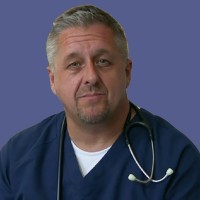
AeroLeads people directory · profile
Paul Middleton Email & Phone Number
Conjoint Professor
at
South West Sydney Clinical Campuses, UNSW
1 work email found
@ambulance.nsw.gov.au
2 phones found area 143 and 043
LinkedIn matched
✓ Verified August 2026
4 data sources
Profile completeness 100%
Current company
Role
Conjoint Professor
Location
Greater Sydney Area, Australia
Company size
Who is Paul Middleton? Overview
A concise factual answer block for searchers comparing this professional profile.
Quick answer
Paul Middleton is listed as Conjoint Professor at South West Sydney Clinical Campuses, UNSW, a with 16 employees, based in Greater Sydney Area, Australia. AeroLeads shows a work email signal at ambulance.nsw.gov.au, phone signal with area code 143, 043, and a matched LinkedIn profile for Paul Middleton.
Paul Middleton previously worked as Director at South Western Emergency Research Institute (Sweri) and Chief Medical Information Officer (CMIO) at South Western Sydney Local Health District. Paul Middleton holds Oxford Artificial Intelligence Programme, Artificial Intelligence from Saïd Business School, University Of Oxford.
Company email context
Email format at South West Sydney Clinical Campuses, UNSW
This section adds company-level context without repeating Paul Middleton's masked contact details.
pmiddleton@ambulance.nsw.gov.au
76% confidence
AeroLeads found 1 current-domain work email signal for Paul Middleton. Compare company email patterns before reaching out.
Profile bio
About Paul Middleton
Professor Paul Middleton is a specialist in emergency medicine, and has worked in critical care retrieval in helicopters, fixed wing aircraft and ground ambulances. He is the Director of the South Western Emergency Research Institute (SWERI) at Liverpool Hospital, Chief Medical Information Officer at SWSLHD, and the Chair of Take Heart Australia, a charity designed to include all Australians in a mission to increase survival from sudden cardiac arrest. He was the Founding Chair of the Emergency Department Epidemiology Network (EDEN) of the Australasian College for Emergency Medicine (ACEM), Immediate Past Chair of the Australian Resuscitation Council NSW branch, and convenor of the R@TP conferences.Current projects include the Comprehensive Epidemiological Dataset for Research, Innovation and Collaboration program (CEDRIC), taking data from all aspects of the EMR via automated pipelines, and linking it all together as patient journeys using tools such as NoSQL databases, Docker, Airflow etc. The CEDRIC program also comprises bespoke databases for clinical colleagues, fulfilling clinical practice and clinical quality registry needs, then linking data to our central repository as a ‘data mesh’ concept with comprehensive ethics approval. CEDRIC has 2 million patient ED attendances, all linked through to discharge, embedding natural language processing and other machine learning / AI tools into the system for pattern recognition, predictive modelling etc. CEDRIC will also ingest unstructured data such as eCG and SpO2 waveforms, using advanced machine learning for signals analysis. We are also working on agent-based models of complex adaptive health systems, machine learning-powered health data analytics, delivered within a health digital twin environment, using even-driven architecture.Paul is Director of the Australian Institute for Clinical Education, which develops clinical educational courses for the health industry, and is Conjoint Professor in the UNSW South Western Sydney Clinical School, Clinical Associate Professor in the U Syd Discipline of Emergency Medicine, and Adjunct Associate Professor with the WSU MARCS Institute for Brain, Behaviour & Development. He holds FRCS(Eng), FRCEM and FACEM, as well as an MD research degree from Imperial College, London and a Master of Medicine in Clinical Epidemiology from the University of Sydney. He has published clinical research on non-invasive assessment of illness, pre-hospital research and clinical trials, epidemiology, health economics and critical patient transport.
Listed skills include Clinical Research, Public Health, Emergency Medicine, Healthcare, and 46 others.
Current workplace
Paul Middleton's current company
Company context helps verify the profile and gives searchers a useful next step.
South West Sydney Clinical Campuses, Unsw
28 roles · 45 years
Paul Middleton work experience
A career timeline built from the work history available for this profile.

Conjoint Professor
Director
Current
South Western Emergency Research Institute (Sweri)
The South Western Emergency Research Institute (SWERI) was developed to lead emergency medicine research in South Western Sydney and further afield. With support from the South Western Sydney Local Health District (SWSLHD) and some unrestricted industry funding, SWERI comprises the Director, an Emergency Physician Research Fellow, two post-doctoral Data Scientists and Biostatisticians, an ACEM accredited Research Registrar, a Research Nurse, 3 PhD students, and and multiple Honours and Independent Learning Project students from UNSW.We are engaged in observational and diagnostic research in areas as diverse as ultrasound measured cardiac output and oxygen delivery in resuscitation, outcomes of fluid bolus therapy, and data visualisation and pattern recognition in physiology, and we are investigating the impact of high temperatures on acute coronary syndromes, and heavy rainfall on motor vehicle trauma. The largest portion of our activity is descriptive and predictive clinical epidemiology based on the use of data collected from emergency department health records linked to data from pathology, radiology, trauma, in-patient records and intensive care. Specifically, we are investigating the impact of cultural and linguistic diversity on ED presentations with a variety of time-dependent conditions such as acute coronary syndromes, stroke, trauma and sepsis in the Multicultural Emergency Medicine Epidemiology (MEME) study, using data from 165,000 ED patients, and developing CEDRIC, described above, and automated 'data mesh' construction of multiple databases with data flowing through pipelines to a central database, using Big Data tools, machine learning and artificial intelligence. We collaborate between professions, hospitals, universities, states and territories, and internationally in an effort to understand and improve outcomes for the millions of people attending emergency departments annually, and about whom we understand nowhere near enough!
Nov 2016 - Present

Chief Medical Information Officer (Cmio)
CurrentThe CMIO role allows me to take a leadership role within information and communications technology in South Western Sydney Local Health District, advocating for medical priorities and engagement with the digital revolution in healthcare in our district. My background in clinical epidemiology, data-centered research, registry evolution and data linkage directly complements the strategic and tactical directions we hope to take.
Jan 2020 - Present

Adjunct Associate Professor
CurrentResponsible for collaborative work between the South Western Emergency Research Institute and the the MARCS. Currently, the SWERI research program includes PhD work on the visualisation and pattern recognition of abnormal physiology in acutely unwell emergency patients, and the development of novel monitoring and diagnostic techniques based on spectral analysis of monitored clinical waveforms. Theoretical signals analyses and cutting-edge mathematical approaches are provided by our collaborators at the MARCS and the WSU School of Mathematics.
Jul 2019 - Present
Conjoint Associate Professor
CurrentDirector of the South Western Emergency Research Institute (SWERI)
Nov 2017 - Present
Clinical Associate Professor
CurrentPerforming research into pre-hospital and in-hospital aspects of emergency medicine, including innovative monitoring and diagnostic technologies, pre-hospital epidemiology, interventional studies including randomised controlled trials, and both descriptive and statistical analyses of large datasets
2009 - Present
~17 yrs 7 mos

Chair
CurrentTake Heart Australia is a public health advocacy and educational organisation founded to increase survival from sudden cardiac arrest (SCA). Cardiac arrest, where the heart stops suddenly, can occur to anyone without warning. Although often seen in older people, victims also range from children to previously healthy adults.Worldwide, survival is approximately 6%, is 10% in NSW and is similar across Australia, compared to up to 62% in Seattle and other parts of the US. Although we have world class emergency services, SCA causes 10% increase in death every 1 minute without treatment, but the solution is simple. THA will facilitate high-quality CPR training in the community, drive Public Access Defibrillation programs, perform research into SCA outcomes, and work with ambulance services and hospitals to optimise treatment of this condition. We aim to see 50% of Australians trained in HQ-CPR in the next 10 years.https://www.facebook.com/takeheartaustralia/photos_stream
May 2014 - Present
Convenor
Current
Resus At The Park Conference
I was the convenor of the first Resus At The Park conference, held at Luna Park in Sydney, and featuring international and national experts on all aspects of resuscitation. Cardiac arrest survivors and their rescuers opened sessions and delegates included doctors, nurses, paramedics and first-aid trainers. www.resusatthepark.com.au
May 2014 - Present
Managing Director
Current
Australian Institute For Clinical Education
The Australian Institute for Clinical Education Pty Ltd ("AICE") is an organisation that develops needs-orientated educational content and courses for health professionals, which specifically focus on meeting the clinical needs of the industry. AICE, and all its material, was conceptualised and developed by working senior doctors in emergency medicine and prehospital care
2008 - Present
~18 yrs 7 mos
Emergency Physician
Current
Emergency Medicine
Managing busy emergency departments and critically ill and injured patients, including resuscitation, major trauma, cardiac arrest, respiratory failure, acute paediatrics and many more. Supervised and taught junior doctors and medical students, and took part in interdisciplinary teaching.
1996 - Present
~30 yrs 7 mos
Senior Fellow
Current
The Simpson Centre For Health Services Research, Ingham Institute Of Applied Medical Research
Jul 2016 - Present
Founding Chair
Classical epidemiology is the study of how often diseases occur in different groups of people and why, but clinical epidemiology is the application of the principles and methods of epidemiology to conduct, appraise or apply clinical research studies focusing on prevention, diagnosis, prognosis, and treatment of disease. Clinical Epidemiology is the basic science of Evidence-based Medicine, but this has been minimally applied or practiced within emergency medicine, outside some specific disease-focused studies.The role of EDEN is in building disease registries, using ED data linked to other information such as ambulance, hospital and primary care datasets; developing Big Data analytic techniques; and collecting data to build models in support of disease surveillance, test discrimination, impact of EM interventions, novel diagnostic strategies, investigation of associations between social determinants of health in emergency care, and patient outcomes related to all the above. In short, EDEN gives us, as emergency clinicians, the data and evidence to support our clinical practice across the spectrum of emergency medicine.EDEN is complementary to the new ACEM Clinical Trials Network, providing the epidemiological and data-centred knowledge described above. EDEN sets the scene for a deep and comprehensive knowledge of the natural history and presenting complaints of patient conditions in the emergency medicine setting, as well as the effectiveness of our interventions and treatments. This will provide a detailed level of granular knowledge that will support and provide the evidence-based background for the implementation of interventional trials.
Jun 2019 - Jan 2021

Chair / Principal Investigator
The DREAM Collaboration is a fundamentally new approach to a problem which is still only partially recognised; knowledge of the epidemiology of emergency medicine patients and practice is an absolute need to enable the understanding of a medical specialty that serves the equivalent of a third of the Australian population each year. We plan to stimulate innovative approaches including multi-disciplinary and multi-organisational collaboration with individual clinicians, universities, health institutions and industry, in a novel plan to implement the ANZICS model of clinical data collection for emergency patients.We plan to work with health economists and policy researchers to leverage the true power of organised and systematic clinical data collection, and to demonstrate the clinical effectiveness, real financial cost and absolute benefit of emergency health care interventions.We plan to form a true collaboration not only of institutions and health organisations, but of individual clinical researchers, and we plan to provide education, mentoring and assistance in the pursuit of academic careerwww.dreamcollaboration.org
Jul 2014 - Nov 2017
Chair
Australian Resuscitation Council Nsw
Chair state wide committee acting as peak body for resuscitation, with representation from clinical groups and multidisciplinary learned colleges, together with volunteer, not-for-profit and for-profit organisations with an interest or a role in resuscitation. Includes clinical practitioners of acute care and trainers in first aid and other disciplines. Responsibility for providing resuscitation leadership and interpretation of evidence for all state-wide needs. ARCNSW training arm provides ARC Advanced Life Support courses 1 and 2 for clinicians. ARCNSW also acts as an advocacy body, advancing the aims of patients in need of resuscitation, or those at risk. Principal topics include the need for a NSW Cardiac Arrest Registry, community Basic Life Support / CPR training, Public Access Defibrillation / AED placement programs, and pool safety. Also moving into a role of public commentary on resuscitation and emergencies in the media, to ensure a place at the top of the public agenda.
2008 - 2016
~8 yrs
Visiting Medical Fellow
Biomedical Systems Laboratory, Unsw
Provided clinical research leadership to a predominantly electrical engineering and signals analysis group, investigating early diagnostic technologies
2004 - Jul 2012
Honorary Research Fellow
The George Institute For International Health
Took part in analyses of large prehospital datasets, in particular to investigate the response of a state-wide ambulance service to major trauma plans and protocols
2007 - Dec 2011
Conjoint Senior Lecturer
School Of Public Health And Community Medicine, Unsw
Collaborated on emergency medicine based public health research and epidemiology
2004 - Dec 2011
Director Of Research
Ambulance Research Institute, Ambulance Service Of Nsw
Set up the Ambulance Research Institute; devised research areas and specific projects, including pre-hospital epidemiology, linked data studies, interventional studies including randomised controlled trials; supervised and trained junior researchers; attracted funding and collaboration for ARI including an ARC Linkage grant and two NHMRC Partnership grants. Represented ARI and Ambulance at international conferences both as delegate and invited speaker.
2008 - Nov 2011
Medical Director
Provided clinical direction and leadership to 3rd largest ambulance service in the world; leadership clinical governance role in maintenance of clinical standards; authored and approved all protocols and pharmacology used by ASNSW paramedics; introduced high-quality eLearning into paramedic education; conceptualised new models of paramedic education based on clinical reasoning. Led Ambulance research program, including setting up the Ambulance Research Institute, and being the inaugural Director of the ARI
2006 - Nov 2011
Consultant In Research And Education
Institute Of Trauma And Injury Management
Bring research and epidemiology expertise to the NSW Institute of Trauma and Injury Management, in order to direct a research and evidence program using the NSW ITIM Trauma Registry, and to design and coordinate a collaborative trauma research program with multi-disciplinary engagement across the state of NSW - Chair of the Strategic Trauma and Research Committee (STaRC).
2009 - 2011
~2 yrs
Committee Member
Nsw Clincal Excellence Commission
Provided expert contribution in the areas of emergency medicine, critical care, pre-hospital care, evidence based practice, epidemiology and research method
2007 - 2011
~4 yrs
Chief Medical Officer
St John Ambulance
Responsibility for clinical protocols used by SJA volunteers across Australia. Member of the Medical Advisory Panel
2008 - 2010
~2 yrs
Emergency Physician
Emergency Medicine, Prince Of Wales Hospital
Managed a busy tertiary emergency department and its patients, including resuscitation, major trauma, cardiac arrest, respiratory failure and many more. Supervised and taught junior doctors and medical students, and took part in interdisciplinary teaching. Performed research into innovative monitoring and diagnostic techniques, sepsis, shock, acute coronary syndromes and much more. Supervised medical students undertaking intercalated research projects.
2003 - 2010
~7 yrs
Emergency Physician
Rockhampton Hospital
Managed a busy regional emergency department and its patients, including resuscitation, major trauma, cardiac arrest, respiratory failure and many more. Supervised and taught junior doctors and medical students, and took part in interdisciplinary teaching.
2008 - 2009
~1 yr
Fellow / Consultant In Medical Retrieval
Prehospital retrieval medicine - stabilisation and transport of critically ill or injured patients, either from the roadside or accident scene, or from small hospitals, to large emergency departments or intensive care units. Including scene rescue, winching, and other time critical interventions, often in entrapped patients. Performed using ground ambulance transport, helicopter or fixed wing aircraft.
2003 - 2007
~4 yrs
Intensive Care Fellow
Performed a senior trainee role in intensive care medicine, supervising junior medical staff and managing general ICU, neurosurgical and cardiothoracic surgery patients. Led Medical Emergency Team for other areas of hospital, and admitted new patients through the Emergency Department. Senior medical responsibility for the running of the ICU under the direction of consultant staff.
2002 - 2003
~1 yr
Student / Staff Nurse
University College Hospital
Trained as a Registered General Nurse, with training experience in medicine, surgery, paediatrics and intensive care
1982 - 1986
~4 yrs
10 education records
Paul Middleton education
Oxford Artificial Intelligence Programme, Artificial Intelligence
Saïd Business School, University Of Oxford
Executive Program, Artificial Intelligence In Health Care
Mit Sloan School Of Management
Md, Physiological And Clinical Implications Of Photoplethysmography Waveforms
Imperial College London
Master Of Medicine, Clinical Epidemiology
University Of Sydney
Facem, Emergency Medicine
Australasian College For Emergency Medicine
Frcem, Emergency Medicine
Royal College Of Emergency Medicine (Uk)
Dipimcrcs(Ed), Prehospital Medical Care
Royal College Of Surgeons Of Edinburgh
Frcs(Eng), Surgery
Royal College Of Surgeons Of England
Mbbs, Medicine
Newcastle University
Rgn, Nursing
University College Hospital, London
FAQ
Frequently asked questions about Paul Middleton
Quick answers generated from the profile data available on this page.
What company does Paul Middleton work for?
Paul Middleton works for South West Sydney Clinical Campuses, UNSW.
What is Paul Middleton's role at South West Sydney Clinical Campuses, UNSW?
Paul Middleton is listed as Conjoint Professor at South West Sydney Clinical Campuses, UNSW.
What is Paul Middleton's email address?
AeroLeads has found 1 work email signal at @ambulance.nsw.gov.au for Paul Middleton at South West Sydney Clinical Campuses, UNSW.
What is Paul Middleton's phone number?
AeroLeads has found 2 phone signal(s) with area code 143, 043 for Paul Middleton at South West Sydney Clinical Campuses, UNSW.
Where is Paul Middleton based?
Paul Middleton is based in Greater Sydney Area, Australia while working with South West Sydney Clinical Campuses, UNSW.
What companies has Paul Middleton worked for?
Paul Middleton has worked for South West Sydney Clinical Campuses, Unsw, South Western Emergency Research Institute (Sweri), South Western Sydney Local Health District, The Marcs Institute For Brain, Behaviour And Development, and South Western Sydney Clinical School, Unsw.
How can I contact Paul Middleton?
You can use AeroLeads to view verified contact signals for Paul Middleton at South West Sydney Clinical Campuses, UNSW, including work email, phone, and LinkedIn data when available.
What schools did Paul Middleton attend?
Paul Middleton holds Oxford Artificial Intelligence Programme, Artificial Intelligence from Saïd Business School, University Of Oxford.
What skills is Paul Middleton known for?
Paul Middleton is listed with skills including Clinical Research, Public Health, Emergency Medicine, Healthcare, Medicine, Hospitals, Critical Care, and Pediatrics.
Find 750M verified contacts
Search by job title, company, industry, location, and seniority. Export verified B2B contact data when you need it.
Start free trial