
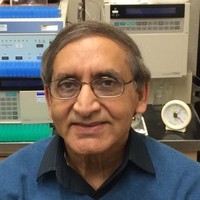
AeroLeads people directory · profile
Prakash Joshi Email & Phone Number
Assistant Research Professor and Research Associate
at
Rensselaer Polytechnic Institute
1 work email found
@rpi.edu
LinkedIn matched
✓ Verified July 2026
4 data sources
Profile completeness 100%
Current company
Role
Assistant Research Professor and Research Associate
Location
Saratoga County, New York, United States
Company size
Who is Prakash Joshi? Overview
A concise factual answer block for searchers comparing this professional profile.
Quick answer
Prakash Joshi is listed as Assistant Research Professor and Research Associate at Rensselaer Polytechnic Institute, a with 4294 employees, based in Saratoga County, New York, United States. AeroLeads shows a work email signal at rpi.edu and a matched LinkedIn profile for Prakash Joshi.
Prakash Joshi previously worked as Assistant Research Professor/Research Associate at Rensselaer Polytechnic Institute and Visiting Professor at Russell Sage College. Prakash Joshi holds Doctor Of Philosophy (Ph.D.), Organic Chemistry, Title Of Ph.D. Thesis: "Studies In Some Aspects Of Abiogenesis Of Amino Acids, from Agra University.
Company email context
Email format at Rensselaer Polytechnic Institute
This section adds company-level context without repeating Prakash Joshi's masked contact details.
{last}@rpi.edu
89% confidence
AeroLeads found 1 current-domain work email signal for Prakash Joshi. Compare company email patterns before reaching out.
Profile bio
About Prakash Joshi
I earned my Bachelors, Masters and Ph.D. degrees in Chemistry from Agra University, India. My Ph.D. research was on “Gas phase photochemical reactions and photodegradation of Biomolecules”. I carried out advanced research at the Rensselaer Polytechnic Institute, John’s Hopkins University and Harvard Medical School (all USA), Queen’s University (UK) and French Atomic Energy Commission (France) during the period of 1974 to 1983. I established a Photobiology Laboratory at the Indian Institute of Toxicology Research (1984) and worked there as a Group Leader till 1997. This laboratory is dedicated to research on the biological effects of stratospheric ozone depletion. I was nominated by the Government of India to the United Nations Environment Program (UNEP) as an expert on ozone (1991). In 1997 I joined the New York Center for Astrobiology, a NASA specialized research center at the Rensselaer Polytechnic Institute, USA. My current focus is on Origins of Life research with particular emphasis on “RNA World” hypothesis. I also hold a joint appointment with the Russell Sage College, Troy, NY where I am promoting undergraduate research with current focus on “DNA damage and oxidative stress”. I am recipient of Kedarnath Laha Memorial award for my contribution in skin photosensitization research. I am a Co-editor of the Journal of Astrobiology & Outreach. My multidisciplinary research has produced 125 research papers in 48 peer reviewed Journals including Science and JACS.
Listed skills include Organic Chemistry, Toxicology, Exobiology, Drug Dna Binding, and 4 others.
Current workplace
Prakash Joshi's current company
Company context helps verify the profile and gives searchers a useful next step.
Rensselaer Polytechnic Institute
12 roles
Prakash Joshi work experience
A career timeline built from the work history available for this profile.
Assistant Research Professor/Research Associate
CurrentResearch summary:Investigating “RNA World” hypothesis, which suggests that RNA was the first biopolymer formed in early Earth with dual properties as a catalyst (protein) and a genetic molecule. This interdisciplinary research program is dedicated to address a central theme in astrobiology i.e. testing the universality and efficacy of key biochemical pathways that led to the formation of life on Earth. I am using montmorillonite clay minerals as catalyst for the production of RNA oligomers of different chain length together with the effect of salinity on the yield. I am also studying the origin of homochirality in biopolymers as an integral molecular attribute of contemporary life’s functions. Serving as a faculty with the NY Center of Astrobiology, Greater Capital Region Teacher Center and the area High Schools to develop ideas, strategies and resources to integrate astrobiological themes into their classrooms (since 2009).Selected publications:1. M. F. Aldersley, P. C. Joshi, et al., (2014) Tetrahedron Lett., 55, 1464-1466.2. M. F. Aldersley and P. C. Joshi (2014) J. Molecular Evolution, 78: 275-278.3. I. Wilke et al. (2014) Applied Clay Science, 87: 61-65.4. S. Jheeta and P. C. Joshi (2014) Life, 4: 318-330.5. P. C. Joshi and M. F. Aldersley (2013) J. Molecular Evolution, 76: 371-379.6. P. C. Joshi et al., (2013) Adv. Space Research, 51: 772-779. 7. M. F. Aldersley and P. C. Joshi (2013) Applied Clay Science, 83-84: 77-82.8. P. C. Joshi et al., Nucleosides, Nucleotides % Nucleic Acids, 31: 536-566.9. P. C. Joshi et al., (2011) Origins of Life and Evolution of Biosphere, 41: 575-579.10. P. C. Joshi et al., (2011) BBRC, 413: 594-598.11. M. F. Aldersley, P. C. Joshi et al., (2011) Applied Clay Sci., 54:1-14.12. P. C. Joshi et al., (2011) Origins of Life and Evolution of Biosphere, 41, 213-236.13. P. C. Joshi et al. (2009) J. Am. Chem. Soc. 131, 13369 - 13374.
Sep 1997 - Present
Visiting Professor
Russell Sage College
Research summary:This research was carried out as a part of undergraduate research program to promote higher education in a women’s college. Studies were carried out on oxidative reactions of DNA analogs by photosensitization of riboflavin and prevention of similar damage by natural antioxidants. Total inhibition of 1O2-induced oxidative damage to guanine bases of DNA/RNA was achieved by turmeric extracts. Ascorbic acid, glutathione, glycolic acid, sorbitol and quercetin also showed remarkable ability to prevent photodegradation of guanine base of DNA/RNA. We used PtTiO2 nanofibers in photosensitized degradation of Rhodamine-B dye as an industrial pollutant. It is expected that photosensitization reactions can be meaningfully utilized in environmental detoxification of other industrial pollutants. Selected publications:1. Prakash C. Joshi, Hsin H. Li, Monique Merchant and Thomas C. Keane (2014) Total inhibition of 1O2-Induced Oxidative Damage to Guanine Bases of DNA/RNA by Turmeric Extracts. Biochemical and Biophysical Research Communications, 452: 515-519.2. E. Obuya, P.C. Joshi, T. Gray, T.C. Keane, W.E. Jones Jr. (2014) Application of Pt.TiO2 Nanofibers in Photosensitized Degradation of Rhodamine B, International Journal of Chemistry, 6, 1-16.3. Prakash C. Joshi, Thomas Gray and Thomas C. Keane (2012) Protection of riboflavin and UVB sensitized degradation of DNA and RNA bases by natural antioxidants, Ecotoxicology and Environmental Safety, 78: 86-90. 4. Prakash C. Joshi and Thomas C. Keane (2010) Investigation of riboflavin sensitized degradation of purine and pyrimidine derivatives of DNA and RNA under UVA and UVB, Biochemical and Biophysical Research Communications, 400, 729-733.
Sep 2008 - Aug 2012
Group Leader (Scientist Eii)
Highlights:1. A “Phototoxicology Laboratory” was established to study the biological effects of solar radiation and artificially simulated UV radiations (1984).2. Recipient of Kedarnath Laha memorial Award for outstanding contribution in skin research (1984).3. My laboratory was recognized by the “International Geosphere Biosphere Program” of the United Nations Environment Program (UNEP) and CSIR as a nodal institution to initiate research in “Biomedical and related aspects of Ozone depletion” (1988). 4. Conducted a national workshop on “Biomedical and related aspects of Ozone depletion” to identify projects of national and international significance for the IGBP program (October 20, 1989).5. Phototoxicology was merged with Phytotoxicology to a “Photobiology Laboratory” under my leadership (1990).6. Nominated by the Government of India, Ministry of Environment & Forest to the UNEP as an expert on Ozone (1991).Research summary:1. Phototoxicity evaluation of endogenous chromophores, food additives, industrial dyes, drugs, polycyclic aromatic hydrocarbons and other pollutants.2. A three year study was conducted to assess the biological effects of stratospheric ozone depletion by monitoring UVB radiation on selected locations all over India (1989 -1992).3. New methods were developed for phototoxicity evaluation using Paramecium Aurelia, Tetrahymena thermophila and Tubifix as an alternative to laboratory animals. 4. Oxidative stress by photosensitization reactions was studied by monitoring the formation of reactive oxygen species (ROS) e.g. singlet molecular oxygen, superoxide radicals, hydroxyl radicals and degradation of G derivatives of DNA. Oxidative damage to DNA is known to lead to cancer, aging and other degenerative diseases. The role of ROS was explored in the degradation of pollutants like lindane, DDT and PCP.5. Role of antioxidants was studied to minimize tROS induced toxicity.6. Supervised 5 Ph.D. students and published 49 research papers.
May 1984 - Aug 1997

Visiting Scientist
Research summary:3-Carbethoxypsoralen (3-CP), a linear tricyclic psoralen, known for its photoreaction with DNA to form monofunctional cyclobutane adducts with pyrimidine bases, was found to produce a highly erective oxygen specie, singlet oxygen to a greater extent than several other linear psoralens such as psoralen, 8-methoxypsoralen, 5-methoxypsoralen or angular psoralens (angelicin) etc. 3-CP also produced superoxide radicals. Singlet oxygen produced by 3-CP was found to oxidize tyrosine to dopa to dopachrome and subsequently their conversion to melanin. It also induced photooxidation of 2’-deoxyguanosine and lipid peroxidation. Topically applied 3-CP to hairless mice skin exposed to UVA radiation was found to be nonphotocarcinogenic agent in contrast to 8-methoxypsoralen, which under similar conditions produced a 70% tumor yield (squamus cell carcinoma). These results were found to be significant in relation to ther skin photosensitizing, nonphotocarcinogenic and photochemotherapeutic potential of 3-CP. Selected publication:1. P.C. Joshi and M.A. Pathak (1995) Photophysical and photobiologic properties of 3-carbethoxypsoralen. Indian Journal of Biochemistry & Biophysics 32: 63-73.
Sep 1993 - Aug 1994
Visiting Scientist
Cea, Département De Recherche Fondamentalke Sur La Matiére Condensee
Research summary:Oxidative reactions of DNA are known to be involvement in mutagenesis, carcinogenesis and lethality. The damage includes base modifications, DNA-strand breaks etc. Most of the DNA damage is induced by reactive oxygen species and radical processes generated in oxidative stress. One particular reactive O2 specie i.e. hydroxyl (·OH) radical, is to a large extent responsible for DNA/RNA damage. We have studied the reactions of ·OH with the guanine (G) derivatives of nucleic acids and focused our attention on the formation of radical oxidation products of 2´-deoxyguanosine: oxazolone and imidazolone nucleosides. 1H, 13C, 15N NMR analysis and several other chemical features were employed to determine the structure of the two primary one-electron oxidation and ·OH-mediated modification products of 2´-deoxyguanosine1-4. Currently, these products are being used as markers to estimate oxidative damage to DNA. Selected publications:1. S. Raoul, M. Berger, G.W. Buchke, B. Morin, P.C. Joshi, M. Weinfild and J. Cadet (1996) Journal of Chemical Society: Perkin Trans II, pp. 371-381.2. J. Cadet, M. Berger, G.W. Buchko, P.C. Joshi, B. Morin, S. Raoul and J.-L. Ravanat (1995) Hydroxyl and one-electron oxidation mediated reactions of the purine bases on DNA and model compounds: Mechanistic aspects. In, Radiation Damage in DNA: Structure/Function Relationship at Early Times, Edited by A.F. Fuciarelli and J.D. Zimbrick, Battelle Press, Columbus, Ohio, USA, pp. 305-312.3 J. Cadet, M. Berger, G.W. Buchko, P.C. Joshi, S. Raoul and J.L. Ravanat (1994) Journal of American Chemical Society 116: 7403-7404.4. J. Cadet, M. Berger, P.C. Joshi, A. Shaw, L. Voiturez, L.S. Kan and R. Wagner (1991) Comparative effects of ultraviolet and ionizing radiations on nucleic acids. In, Photobiology, Ed. by E. Riklis, Plenum Press, New York, pp. 49-59.
Dec 1988 - Mar 1989

Visiting Researcher
Summary of Research Exposure of living cells to UV radiation can have mutagenic or lethal consequences arising mainly from photochemical damage to their genomic DNA molecules, in particular the nucleobases (A, G, C and T). The mechanism of photo-dimerization of adjacent adenine bases on the same DNA strand was investigated by elucidating the mechanism through structural studies of the photoproducts that are formed by UV irradiation of the deoxyadenylate sequence. Photosensitization action of riboflavin and acetone in a 32P-labelled 20-mer d(A3G)5 and a 5’-end labeled 34-mer 32P-CCCAGTAGATTCGTGACAAGCCGCATAACCTCC-3’ sequence revealed base labile lesions at the site of guanine. Selected publications:1. S. Kumar, P.C. Joshi, N.D. Sharma et al. (1991) Adenine photodimerization in deoxyadenylate sequences: Elucidation of the mechanism through structural studies of a major d(ApA) photoproduct. Nucleic Acid Research 19: 2841-2847.2. R.J.H. Davies, P.C. Joshi, S. Kumar and C. Stevenson (1990) Oligonucleotide-sequencing studies of guanine photodamage sensitized by acetone and riboflavin. Biochemical Society Transaction 18: 327-327.
Sep 1988 - Dec 1988
Visiting Scientist
Harvard University, Harvard Medical School and Massachusetts General HospitalBoston, MA 02114, USA.Research summary (September 1986 - December 1986):The role of reactive oxygen in skin photosensitizing and tanning reaction was examined. Riboflavin, hematoporophyrin, 3-carbethoxypsoralen and 8-methoxypsoralen, upon photoexcitation under aerobic conditions, produced singlet oxygen and superoxide anion radical, which were found to oxidize tyrosine and DOPA to dopachrome and subsequently their conversion to melanin. These observations appeared to have relevance to the oxygen-requiring immediate tanning reactions of the skin stimulated by solar radiation and in the induction of skin photosensitization.Selected publications:1. P.C. Joshi and M.A. Pathak (1987) Skin photosensitizing effects of riboflavin and its photodegradation products. Photochemistry and Photobiology 45: 99S.2. P.C. Joshi, C. Carraro and M.A. Pathak (1987) Involvement of reactive oxygen species in the oxidation of tyrosine and dopa to melanin and in skin tanning. Biochemical and Biophysical Research Communications 142: 265-274.
Sep 1986 - Dec 1986
Research Associate/ Visiting Scientist
Research summary:Furocoumarins (psoralns) are potent skin photosensitizing agents that are used in combination with long-wavelength ultraviolet radiation (320-400 nm) to treat psoriasis, vitiligo, eczema and other skin diseases. Skin sensitization activities of various linear and angular psoralens and of other photoactive chemicals were assessed by examining their interstrand cross-linking with double stranded DNA, ability to generate 1O2, O2-. and formation of mono-functional and bi-functional adducts with the thymine base of DNA. The free radicals were also found to be responsible in the oxidation of tyrosine and DOPA to melanin and in skin tanning.Selected publications:1. M.A. Pathak and P.C. Joshi (1992) Pharmacologic and photobiologic aspects of psoralen photochemotherapy. In, Photochemotherapy in Dermatology, Ed. by E.A. Abel, Igaku-Shoin, New York, pp. 33-51.2. M.A. Pathak, M. Dalle Carbonare and P.C. Joshi (1988) Clinical Res. 36: 378A.M.A. Pathak, P.C. Joshi and Z. Zarebaska (1985) Clinical Res. 33: 201A.3. M.A. Pathak, P.C. Joshi and M.P. Mullen (1984) Photochem. Photobiol. 39: 59S.4. M.A. Pathak and P.C. Joshi (1984) Biochem. Biophys. Acta 798: 115-126.5. P.C. Joshi & M.A. Pathak (1984) J. Investigative Dermatology 82: 67-73. 6. P. C. Joshi & M.A. Pathak (1983) BBRC 112: 638-646.7. M.A. Pathak & P.C. Joshi (1983) J. Investigative Dermatology 80: 66-74S.8. P.C. Joshi & M.A. Pathak (1983) Clinical Res. 31: 577A.9. P.C. Joshi & M.A. Pathak (1983) J. Investigative Dermatology 80: 317.10. P.C. Joshi & M.A. Pathak (1983) Clinical Res. 80: 595A.11. P.C. Joshi & M.A. Pathak (1983) J. Investigative Dermatology 80: 320.12. P.C. Joshi & M.A. Pathak (1983) Photochemistry and Photobiology 37: S78.
Apr 1981 - Mar 1983

Visiting Scientist
Research SummaryPlant products “furocoumarins” commonly known as “psoralen” have been used in phototherapy for the treatment of various skin diseases (psoriasis, vitiligo, eczema etc.). The ability of psoralen to intercalate in native DNA and form interstrand cross-links are believed to be an important process in their photobiological effects. We examined the properties, structure and stereochemistry of the interaction of 8-methoxypsoralen with the thymine derivatives of DNA by NMR and other analytical techniques1-4. Research publications1. P.C. Joshi, S.Y. Wang, W.R. Midden, L. Voituriez and J. Cadet (1984) Heterodimers of 8-methoxypsoralen and thymine. Photobiochemistry and Photobiophysics 8: 51-60.2. J. Cadet, L. Voituriez, J. Ulrich, P.C. Joshi and S.Y. Wang (1984) Isolation and characterization of the mono-heterodimers of 8-methoxypsoralen and thymidine involving the pyrone moiety. Photobiochemistry and Photobiophysics 8: 35-49.3. P.C. Joshi, J. Cadet, L. Voituriez and S.Y. Wang (1982) Isolation and characterization of thymidine and thymine photoadducts to 8-methoxypsoralen. American Society for Photobiology 19: 109-110.4. B.S. Hahn, P.C. Joshi, L.S. Kan and S.Y. Wang (1981) Heterodimers of psoralen and thymine derivatives. Properties, structure and stereochemistry. Photobiochemistry and Photobiophysics 3: 113-124.
Sep 1980 - Apr 1981
Research Fellow
Summary of Research: A series of base-coupled purine biribonucleosides derived from adenosine, guanosine, inosine and xanthosine were synthesized by substituting the C(8) position of the purine with the free radical produced on UV photolysis of 8-bromo purine nucleoside to give (8-8´) coupled biribonucleosides. Selected publications:1. P.C. Joshi and R.J.H. Davies (1981) Base-coupled purine biribonucleosides derived from adenosine, guanosine, inosine and xanthosine. Journal of Chemical Research S: 227; M: 2701-2732.
Sep 1978 - Aug 1980
Postdoctoral Research Fellow
Research summary:My studies revealed HCN, a single source of carbon, hydrogen and nitrogen in the early Earth, formed HCN polymers, which upon hydrolysis gave released purine, pyrimidine and amino acids. HCN polymers have been shown to be present in comets and asteroids besides Earth by other researchers. The formation of purine and pyrimidine might have helped to produce nucleic acids, which obtain the genetic blueprint of living organisms. One of the pyrimidine produced was orotic acid, which resembled uracil, one of the building blocks of RNA. When orotic acid is exposed to UV light, it is converted into uracil. This unusual reaction could well have been the first method of production of uracil, since the atmosphere of primitive Earth allowed the penetration of large amounts of UV light from the sun. The reaction proceeded much faster in the presence of iron or copper compounds, which could have been abundant on the Earth’s surface. The yield of the reaction is not affected if orotic acid is in low concentration, as it would have been on the primitive Earth. Several compounds derived from orotic acid also undergo this reaction, giving compounds derived from uracil, which implies several possible routs for the formation of uracil. Selected publications:1. J.P. Ferris, E.H. Edelson, P.C. Joshi and J.M. Ayeung (1981) Journal of Molecular Evolution 17: 67-77.2. J.P. Ferris and P.C. Joshi (1979) Journal of Organic Chemistry, 44: 2133-2136.3. J.P. Ferris, E.H. Edelson, P.C. Joshi and J.M. Auyeung (1979) Polymer Preprints, American Chemical Society 20: 8-11.4. J.P. Ferris and P.C. Joshi (1978) Science 201: 361-362.5. J.P. Ferris, P.C. Joshi, E.H. Edelson and J.G. Lawless (1978) Journal of Molecular Evolution 11: 293-311.6. J.P. Ferris, P.C. Joshi and J.G. Lawless (1978) In, Origin of Life, Edited by H. Noda, Japan Scientific Societies Press, pp. 187-191.7. J.P. Ferris, P.C. Joshi and J.G. Lawless (1977) Biosystems 9: 81-86.
Sep 1974 - Aug 1978
3 education records
Prakash Joshi education
Doctor Of Philosophy (Ph.D.), Organic Chemistry, Title Of Ph.D. Thesis: "Studies In Some Aspects Of Abiogenesis Of Amino Acids,
Agra University
Master Of Science (M.Sc.), Organic Chemistry
Agra University
Bachelor Of Science (B.Sc.), Physics, Chemistry, And Mathematics
Agra University
FAQ
Frequently asked questions about Prakash Joshi
Quick answers generated from the profile data available on this page.
What company does Prakash Joshi work for?
Prakash Joshi works for Rensselaer Polytechnic Institute.
What is Prakash Joshi's role at Rensselaer Polytechnic Institute?
Prakash Joshi is listed as Assistant Research Professor and Research Associate at Rensselaer Polytechnic Institute.
What is Prakash Joshi's email address?
AeroLeads has found 1 work email signal at @rpi.edu for Prakash Joshi at Rensselaer Polytechnic Institute.
Where is Prakash Joshi based?
Prakash Joshi is based in Saratoga County, New York, United States while working with Rensselaer Polytechnic Institute.
What companies has Prakash Joshi worked for?
Prakash Joshi has worked for Rensselaer Polytechnic Institute, Russell Sage College, Indian Institute Of Toxicology Research, Harvard University, and Cea, Département De Recherche Fondamentalke Sur La Matiére Condensee.
How can I contact Prakash Joshi?
You can use AeroLeads to view verified contact signals for Prakash Joshi at Rensselaer Polytechnic Institute, including work email, phone, and LinkedIn data when available.
What schools did Prakash Joshi attend?
Prakash Joshi holds Doctor Of Philosophy (Ph.D.), Organic Chemistry, Title Of Ph.D. Thesis: "Studies In Some Aspects Of Abiogenesis Of Amino Acids, from Agra University.
What skills is Prakash Joshi known for?
Prakash Joshi is listed with skills including Organic Chemistry, Toxicology, Exobiology, Drug Dna Binding, "Rna World" Hypothesis, Photobiology, Oxidative Stress And Antioxidants, and Photochemistry Of Dna.
Find 750M verified contacts
Search by job title, company, industry, location, and seniority. Export verified B2B contact data when you need it.
Start free trialPeople with similar names
Check these profiles if this is not the Prakash Joshi you were looking for.
View similar profiles