
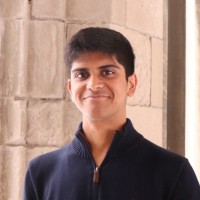
AeroLeads people directory · profile
Purav Gupta Email & Phone Number
Machine Learning Researcher
at
Vector Institute
LinkedIn matched
✓ Verified Jul 2026
3 data sources
Profile completeness 86%
Current company
Role
Machine Learning Researcher
Location
Toronto, Ontario, Canada
Company size
Who is Purav Gupta? Overview
A concise factual answer block for searchers comparing this professional profile.
Quick answer
Purav Gupta is listed as Machine Learning Researcher at Vector Institute, a with 539 employees, based in Toronto, Ontario, Canada. AeroLeads shows a matched LinkedIn profile for Purav Gupta.
Purav Gupta previously worked as Research Assistant at University Of Cambridge and Programs Director at Toronto Bioinformatics Hackathon. Purav Gupta holds Bachelor Of Science - Bs, Computational Biology And Molecular Genetics from University Of Toronto.
Company email context
Email format at Vector Institute
This section adds company-level context without repeating Purav Gupta's masked contact details.
Vector Institute
Review company-level records connected to Purav Gupta before choosing the right outreach path.
Profile bio
About Purav Gupta
Purav Gupta is a Machine Learning Researcher at Vector Institute.
Current workplace
Purav Gupta's current company
Company context helps verify the profile and gives searchers a useful next step.
Vector Institute
7 roles
Purav Gupta work experience
A career timeline built from the work history available for this profile.

Research Assistant
Department of Pathology, Division of VirologyProject Title: Automated detection and annotation of RNA virus subgenomic RNAs through analysis of public RNA-seq dataFunding: "Early Career Researcher Seed Fund Award" granted by the C2D3 Cambridge Centre for Data-Driven DiscoveryProject Description: Many +ssRNA viruses, such as SARS-CoV-2, Zika virus, Dengue virus, etc., produce one or more shorter transcripts (alongside their main polyprotein), known as sub-genomic RNAs (sgRNAs), from which additional viral proteins are translated. These sgRNAs are essential to the pathogenicity of many viruses, including the coronaviruses and flaviviruses and are important targets in drug and vaccine development.In order to understand and target viral sgRNAs, we first need to be able to identify them, however, current methods are time consuming and expensive. Publicly available RNA-seq transcriptomic datasets offer a way forward. Thus, the main aim is to develop robust computational methods to leverage publicly available high throughput sequencing data to systematically determine the sgRNA landscape of thousands of viral species. To achieve this, this project will involve the development of a computational pipeline, incorporating AI-based classification, to predict the sgRNAs for viruses found in high throughput RNA-sequencing (RNA-seq) datasets.Overall, the development of this pipeline will expand our knowledge of the molecular biology of poorly studied virus groups. It will also improve genome annotations of better known virus groups (such as coronaviruses), leading to a better understanding of the pathogenesis of these viruses and potentially allowing for novel treatment options or vaccine targets. It will also expedite the identification of sgRNAs in newly identified viruses, increasing our preparedness for future viral outbreaks.
Jul 2024 - Sep 2024

Programs Director
Co-founded the Toronto Bioinformatics Hackathon: Toronto's first in-person computational biology hackathon, to be held from September 27-29.Key roles included planning the event's programs and schedule, acting as their undergraduate liaison and successfully garnering sponsorships from several UofT departments and clubs
Dec 2023 - Sep 2024

Research Assistant
Transitioned to a full-time summer research assistant position where I led the work on a project co-sponsored by Dr. Artem Babaian's RNAlab and Dr. Marc Meneghini's lab. Project Details:Saccharomyces cerevisiae, also known as Brewer's yeast, was the first eukaryote to have its genome fully sequenced, and is an extremely common model organism for scientific research. Viruses are the ultimate parasite, infecting virtually every single organism in nature. Fungi as well are infected by a plethora of mycoviruses (viruses which infect fungi), however, due to the commonality of Saccharomyces cerevisiae use in the lab, it is imperative to understand the complete virome of these organisms. In this study, I use the datasets generated by the 1000 yeast project—a study aiming to sequence and characterize the complete range of yeast diversity. By characterizing the RNA specific elements, I found 7 new RNA elements, including 5 novel viruses, 1 novel retrotransposon and a completely novel RNA element which we named ‘Osiris’. Through wet-lab characterization and further analysis, this will generate the complete set of RNA-based infectious agents of Saccharomyces cerevisiae
May 2024 - Jul 2024
Research Assistant
Continued working as a research assistant at the ‘RNAlab’ run by Dr. Artem Babaian, for the entirety of my year at UofT. This position was a part of the Work Study Program offered by UofT. I worked part-time ~15/week at this lab, working mainly on two projects:1. Tightening up some of the datasets and figures that we created for the Toxoplasma gondii associated Virus paper. This included:- Depositing the new viral sequences into genbank- Redoing Figures 1, 2 and 3 to reflect new evidence that was discovered.- Responding to and rewriting the paper after the reviews came back from the journal2. Investigating and creating novel detection algorithms, such as HMM models for the detection of novel Ribozymes in Viroid-like RNA molecules.
Sep 2023 - May 2024
Research Assistant
During my summer at the RNA-Based Lifeforms Lab, I worked closely with Dr. Artem Babaian and co-authored my first First-Author research paper titled: A Parasite Odyssey: An RNA virus concealed in Toxoplasma gondii. By the end of the summer, with a lot of effort from the entire lab of undergraduates to software engineers, we released our pre-print marking the lab's first publication as well!Project Abstract:There are roughly 10^12 distinct virus species on Earth, making them as abundant as there are stars in the Milky Way. Advancements in computing have ushered us into the “Platinum Age of Virus Discovery”, an era marked by exponential growth in the discovery of viruses. Stemming from this advancement, we aimed to characterize novel RNA viruses infecting neuron-associated tissue. Our hypothesis: neurological diseases of unknown etiology are caused by an infection of uncharacterized, novel RNA viruses. From a global screen for human neuron-associated viruses, we identified a novel narnavirus—Achaeavirus odysseus (Ao)—which likely infects the neurotropic parasite Toxoplasma gondii. In this study, we present in silico evidence that Ao is a plausible pro-inflammatory factor in mouse and human cells infected by T. gondii. T. gondii infects billions of people worldwide, yet prognosis of toxoplasmosis disease is highly variable, and viruses like Ao could function as a hitherto undescribed hypervirulence factor. Moreover, we explored phylogenetically proximal viruses to Ao and discovered 18 new viral species which all fall under a new genus of viruses which this paper is presenting: Achaeavirus. Overall, in this study, we rapidly analyzed millions of datasets from which we distilled a mechanistically, ecologically, and phylogenetically refined hypothesis. We predict this highly diverged Ao RNA virus is biologically a T. gondii infection, and that Ao, and other viruses like it, will modulate this disease which afflicts billions worldwide.
Jul 2023 - Aug 2023
Student Researcher
For a large part of my Grade 12 year in high school, I worked as a student researcher in the ‘Laboratory for RNA-Based Lifeforms’ run by Dr. Artem Babaian at the University of Toronto's Terrence Donnelly Centre for Cellular & Biomolecular Research. This lab is based in the intersection of computational biology and virus discovery. As a part of this lab, I analyze the genomes of various unknown RNA based viruses with tools and methodologies commonly used in computational biology.
Nov 2022 - Jun 2023
Team & coworkers
Colleagues at Vector Institute
Other employees you can reach at vectorinstitute.ai. View company contacts for 539 employees →
JA
 João Atz Dick
Colleague at Vector InstituteToronto, Ontario, Canada
View →
MS
João Atz Dick
Colleague at Vector InstituteToronto, Ontario, Canada
View →
MS
 Marvin Silva
Colleague at Vector InstituteCanada
View →
AF
Marvin Silva
Colleague at Vector InstituteCanada
View →
AF
 Adibvafa Fallahpour
Colleague at Vector InstituteToronto, Ontario, Canada
View →
EH
Adibvafa Fallahpour
Colleague at Vector InstituteToronto, Ontario, Canada
View →
EH
 Emrul Hasan
Colleague at Vector InstituteToronto, Ontario, Canada
View →
AS
Emrul Hasan
Colleague at Vector InstituteToronto, Ontario, Canada
View →
AS
 Anton Sugolov
Colleague at Vector InstituteCanada
View →
SR
Anton Sugolov
Colleague at Vector InstituteCanada
View →
SR
 Shaina Raza, Phd
Colleague at Vector InstituteCanada
View →
IG
Shaina Raza, Phd
Colleague at Vector InstituteCanada
View →
IG
 Ian Gormely
Colleague at Vector InstituteToronto, Ontario, Canada
View →
SO
Ian Gormely
Colleague at Vector InstituteToronto, Ontario, Canada
View →
SO
 Sageev Oore
Colleague at Vector InstituteHalifax, Nova Scotia, Canada
View →
H(
Sageev Oore
Colleague at Vector InstituteHalifax, Nova Scotia, Canada
View →
H(
 Haozhe (Marko) Huang
Colleague at Vector InstituteToronto, Ontario, Canada
View →
RX
Haozhe (Marko) Huang
Colleague at Vector InstituteToronto, Ontario, Canada
View →
RX
 Ronald Xie
Colleague at Vector InstituteGreater Toronto Area, Canada
View →
Ronald Xie
Colleague at Vector InstituteGreater Toronto Area, Canada
View →
João Atz Dick
Colleague at Vector InstituteToronto, Ontario, Canada
View →
MS
Marvin Silva
Colleague at Vector InstituteCanada
View →
AF
Adibvafa Fallahpour
Colleague at Vector InstituteToronto, Ontario, Canada
View →
EH
Emrul Hasan
Colleague at Vector InstituteToronto, Ontario, Canada
View →
AS
Anton Sugolov
Colleague at Vector InstituteCanada
View →
SR
Shaina Raza, Phd
Colleague at Vector InstituteCanada
View →
IG
Ian Gormely
Colleague at Vector InstituteToronto, Ontario, Canada
View →
SO
Sageev Oore
Colleague at Vector InstituteHalifax, Nova Scotia, Canada
View →
H(
Haozhe (Marko) Huang
Colleague at Vector InstituteToronto, Ontario, Canada
View →
RX
Ronald Xie
Colleague at Vector InstituteGreater Toronto Area, Canada
View →
4 education records
Purav Gupta education
Bachelor Of Science - Bs, Computational Biology And Molecular Genetics
Ontario Secondary School Diploma, Student
The Woodlands Secondary School

Pre-College Program, Epigenetics And Gene Regulation

Innovator
FAQ
Frequently asked questions about Purav Gupta
Quick answers generated from the profile data available on this page.
What company does Purav Gupta work for?
Purav Gupta works for Vector Institute.
What is Purav Gupta's role at Vector Institute?
Purav Gupta is listed as Machine Learning Researcher at Vector Institute.
Where is Purav Gupta based?
Purav Gupta is based in Toronto, Ontario, Canada while working with Vector Institute.
What companies has Purav Gupta worked for?
Purav Gupta has worked for Vector Institute, University Of Cambridge, Toronto Bioinformatics Hackathon, and University Of Toronto.
Who are Purav Gupta's colleagues at Vector Institute?
Purav Gupta's colleagues at Vector Institute include João Atz Dick, Marvin Silva, Adibvafa Fallahpour, Emrul Hasan, and Anton Sugolov.
How can I contact Purav Gupta?
You can use AeroLeads to view verified contact signals for Purav Gupta at Vector Institute, including work email, phone, and LinkedIn data when available.
What schools did Purav Gupta attend?
Purav Gupta holds Bachelor Of Science - Bs, Computational Biology And Molecular Genetics from University Of Toronto.
Find 750M verified contacts
Search by job title, company, industry, location, and seniority. Export verified B2B contact data when you need it.
Start free trialPeople with similar names
Check these profiles if this is not the Purav Gupta you were looking for.
View similar profiles