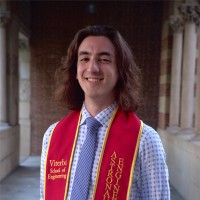
Chief Systems Engineer
CurrentLead Systems Engineer for Arkisys, overseeing the development of the first Port Module for launch to LEO.
Jan 2021 - Present
Please complete the CAPTCHA to continue
A concise factual answer block for searchers comparing this professional profile.
Rahul Rughani, Ph.D. is listed as Chief Systems Engineer at Arkisys at Arkisys, a with 2 employees, based in Los Angeles, California, United States. AeroLeads shows a matched LinkedIn profile for Rahul Rughani, Ph.D..
Rahul Rughani, Ph.D. previously worked as Chief Systems Engineer at Arkisys and Systems Engineer - Contractor at Arkisys. Rahul Rughani, Ph.D. holds Doctor Of Philosophy - Phd, Astronautical Engineering from University Of Southern California Viterbi School Of Engineering.
This section adds company-level context without repeating Rahul Rughani, Ph.D.'s masked contact details.
Review company-level records connected to Rahul Rughani, Ph.D. before choosing the right outreach path.
Rahul is a recent graduate of the University of Southern California, having received a doctorate in astronautical engineering. His dissertation was on orbital optimization techniques for spacecraft swarms. The focus of his research is to enable in-orbit manufacturing, satellite aggregation, and close-quarters robotic inspection of spacecraft, using swarms of small and medium sized satellites in Earth orbit. He has also worked as a systems engineer on CubeSat projects for the University of Southern California’s Space Engineering Research Center (SERC), and has performed in-depth analysis of past, present, and future methods of spacecraft Rendezvous and Proximity Operations (RPO) for the CONFERS consortium, through funding provided by DARPA. He is currently working with Arkisys to build an autonomous research outpost in low Earth orbit.
Listed skills include Computational Fluid Dynamics, Siemens Nx, Catia, Solidworks, and 19 others.
Company context helps verify the profile and gives searchers a useful next step.
A career timeline built from the work history available for this profile.
Los Angeles Metropolitan Area
Lead Systems Engineer for Arkisys, overseeing the development of the first Port Module for launch to LEO.
Los Angeles Metropolitan Area
Developed the initial Port Module prototype system for Arkisys by taking a holistic approach to spacecraft bus design. Performed trade studies for Mechanical, Thermal, Orbital Dynamics, and payload reconfiguration optimization to arrive at the first functional prototype Port Module built to full scale
Greater Los Angeles Area
Systems engineer overseeing a group of graduate and undergraduate students to design and build a 1U cubesat for launch in 2020, measuring and characterizing the Earth's magnetic field from low earth orbit. Sizing of power requirements, testing of hardware, and integration of systems into the cubesat vehicle.
Los Angeles, California, United States
As the lead RF engineer for the USC Satellite Communications Ground Station, I am in charge of configuring and maintaining radio equipment for communications with spacecraft, including future and present CubeSats at USC, and for training students in the ASTE-566 hands-on lab course. https://www.isi.edu/centers/serc/satellite_ground_communicationsThe ground station consists of two antennas, a 4.5m S-Band mesh dish, and a 2.5m UHF/VHF yagii pair, with upgrades underway to allow for L- and… Show more As the lead RF engineer for the USC Satellite Communications Ground Station, I am in charge of configuring and maintaining radio equipment for communications with spacecraft, including future and present CubeSats at USC, and for training students in the ASTE-566 hands-on lab course. https://www.isi.edu/centers/serc/satellite_ground_communicationsThe ground station consists of two antennas, a 4.5m S-Band mesh dish, and a 2.5m UHF/VHF yagii pair, with upgrades underway to allow for L- and C- bands on the 4.5m dish Show less
Greater Los Angeles Area
The Consortium for Execution of Rendezvous and Servicing Operations (CONFERS) is an industry-led initiative with initial seed funding provided by the Defense Advanced Research Projects Agency (DARPA) that aims to leverage best practices from government and industry to provide the foundation for a new commercial repertoire of robust space-based capabilities and a future in-space economy.From September 2017 – October 2019 the USC Space Engineering Research Center was contracted to perform… Show more The Consortium for Execution of Rendezvous and Servicing Operations (CONFERS) is an industry-led initiative with initial seed funding provided by the Defense Advanced Research Projects Agency (DARPA) that aims to leverage best practices from government and industry to provide the foundation for a new commercial repertoire of robust space-based capabilities and a future in-space economy.From September 2017 – October 2019 the USC Space Engineering Research Center was contracted to perform fundamental research towards the past, present, and future state of the RPO and OOS industries, as well as provide technical details to form the foundation of any future standards or regulations for RPO and OOS. Throughout the course of this research, I analyzed all publicly available data on past RPO and docking missions in Earth orbit and Cis-Lunar space. Using this data, I created a set of unitless metrics to define safety criteria for spacecraft of any shape and size, so as not to restrict the future of spacecraft RPO and OOS to large monolithic spacecraft. The results from these two years of research were presented at the International Astronautical Congress and the International Association for the Advancement of Space Safety conferences.As part of the first year initiative for the CONFERS project, The technical team at USC surveyed all previous published rendezvous and proximity operations past missions in both public and private sector settings (manned and unmanned), and created a database of flight identified methodologies, with the goal of finding commonalities between the missions to create safe guidelines for future RPO operations. Evaluation of initial characteristics of a planned rendezvous yielded a safety posture that focused on two major areas, contact actions and remote influence/interference. One of these metrics considered the act of remote influence from a Servicing spacecraft onto a Client spacecraft, in the form of a thruster plume impingement. Show less
Greater Los Angeles Area
Systems engineer leading a group of graduate and undergraduate students to design and build a 3U cubesat, providing a platform for our commercial partner to launch their payload to low earth orbit. Sizing of power requirements, testing of hardware, and integration of systems into the cubesat vehicle.
Greater Los Angeles Area
Perform design and analysis for liquid rocket engines to ensure all systems will perform optimally during test runs, ensuring that the final product will reach peak performance. I oversee a group of a dozen or so members working collectively to achieve this goal. We use CFD and Thermal Flow analysis, along with FEA and Matlab simulations to achieve this. Currently we are working on a LOX/IPA regeneratively cooled engine, to be mounted on a launch vehicle with our partners at the Kyushu… Show more Perform design and analysis for liquid rocket engines to ensure all systems will perform optimally during test runs, ensuring that the final product will reach peak performance. I oversee a group of a dozen or so members working collectively to achieve this goal. We use CFD and Thermal Flow analysis, along with FEA and Matlab simulations to achieve this. Currently we are working on a LOX/IPA regeneratively cooled engine, to be mounted on a launch vehicle with our partners at the Kyushu Institute of Technology in Japan. Show less
Greater Los Angeles Area
Performing CFD and Thermal flow analysis for a student run design team. LPL designs, manufactures, and tests liquid propulsion rocket engines designed by USC students. We are currently working on a LOX/IPA regeneratively cooled engine. My focus is to perform computational analyses in order to perform an iterative design process without making physical prototypes of each iteration.
Greater Los Angeles Area
Design of a 12U cubesat by a group of undergraduate and graduate students, led by myself, with the objective of aiding a satellite servicing mission in geostationary orbit. The 12U cubesat, titled Theia for the Greek goddess of sight and heavenly light, was designed to be attached to a servicing robot, and to be sent ahead to scout the damaged satellite using Radar, LADAR, and optical imagery. It is designed to be self propelled, using monopropellant hydrazine as its propellant, with a backup… Show more Design of a 12U cubesat by a group of undergraduate and graduate students, led by myself, with the objective of aiding a satellite servicing mission in geostationary orbit. The 12U cubesat, titled Theia for the Greek goddess of sight and heavenly light, was designed to be attached to a servicing robot, and to be sent ahead to scout the damaged satellite using Radar, LADAR, and optical imagery. It is designed to be self propelled, using monopropellant hydrazine as its propellant, with a backup Ion Electrospray thruster. The design and analysis was performed over 3 months during the summer of 2016 in collaboration with Palski & Associates, who funded the design study.Design and development of a 3U cubesat by a team of graduate students and professors, supported by a group of external advisors. The purpose of this mission is to send the satellite to low earth orbit, deploy a payload, and perform scientific measurements. My function for this mission is to determine our power requirements and subsequently find components to suit these requirements, as well as to determine what payloads we can send without depleteing the batteries in eclipse. In order to do this I have created a Matlab simulation to analyze all power inputs and outputs, using additional data gathered from STK simulations. Show less

Mcgill University
The McGill Baja Racing Team is a student-run engineering design team at McGill University that competes in the Collegiate SAE Mini Baja competition. The vehicle is a single-seat offroad vehicle, powered by a 10hp Briggs and Stratton engine. There are 3 competitions held each year across the United States which we compete in. We placed first overall (out of 140 teams) in the 2013 Rochester, NY competition, as well as numerous top 10 finishes in the past 5 years.For the McGill Baja Racing… Show more The McGill Baja Racing Team is a student-run engineering design team at McGill University that competes in the Collegiate SAE Mini Baja competition. The vehicle is a single-seat offroad vehicle, powered by a 10hp Briggs and Stratton engine. There are 3 competitions held each year across the United States which we compete in. We placed first overall (out of 140 teams) in the 2013 Rochester, NY competition, as well as numerous top 10 finishes in the past 5 years.For the McGill Baja Racing Team, I led a group working the on creating an improved aerodynamic shape for the vehicle, in order to reduce the drag on the vehicle. We worked on reducing flow separation behind the vehicle, primarily using CFD analysis techniques, as well as scale model wind tunnel testing using 3D printed models. We were able to create and manufacture carbon fiber panels to place on the car that reduce the air drag on the vehicle by 25%. Show less
Montreal, Canada Area
Assembly of plastic debris chutes and creation of custom orders for clients

Verdun, Qc
Analysis of online search results and mainframe program output.Implementation of SQL database filtering as well as the use of Access database forms to facilitateanalysis and querying of data.
Other employees you can reach at arkisys.com. View company contacts for 2 employees →

I have recently completed my PhD in Astronautical Engineering, focusing my research on enabling in-orbit manufacturing, satellite.
Activities and Societies: Ad Astra Society, Liquid Propulsion Lab (LPL) I pursued a Master of Science degree at USC in Astronautical.
Activities and Societies: I was a member of the McGill Baja Racing Team for the duration of my degree program at McGill (4 years). I.
Quick answers generated from the profile data available on this page.
Rahul Rughani, Ph.D. works for Arkisys.
Rahul Rughani, Ph.D. is listed as Chief Systems Engineer at Arkisys at Arkisys.
Rahul Rughani, Ph.D. is based in Los Angeles, California, United States while working with Arkisys.
Rahul Rughani, Ph.D. has worked for Arkisys, Usc Space Engineering Research Center, Usc Liquid Propulsion Lab, Mcgill Baja Racing Team, and Superchute.
Rahul Rughani, Ph.D.'s colleagues at Arkisys include Maxi Manikis, Noah Gladden, and Michael Spielman, Pmp, Csm®.
You can use AeroLeads to view verified contact signals for Rahul Rughani, Ph.D. at Arkisys, including work email, phone, and LinkedIn data when available.
Rahul Rughani, Ph.D. holds Doctor Of Philosophy - Phd, Astronautical Engineering from University Of Southern California Viterbi School Of Engineering.
Rahul Rughani, Ph.D. is listed with skills including Computational Fluid Dynamics, Siemens Nx, Catia, Solidworks, Matlab, Stk, Tutoring, and Ansys.
Search by job title, company, industry, location, and seniority. Export verified B2B contact data when you need it.
Start free trial Search contacts