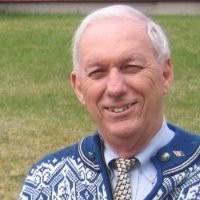
Dr. Robert W. Corell is a Principal at the Global Environment Technology Foundation, Professor II at both the University of the Arctic’s new Institute of Circumpolar Reindeer Husbandry and the University of Tromso, Head of the U.S. Office for the Global Energy Assessment. In 2010, Dr. Corell founded the non-profit Global Science Associates, an interdisciplinary nucleus for the world’s best science experts and collaboratories. In 1996, he was awarded the Brazilian Order of Scientific Merit by the President of Braziln 2 and i 2003, a Mountain region in Antarctic was named the “Corell Cirque” in his honor. Further, he was recognized with the other scientists for the 2007 Nobel Peace Prize for his work with the IPCC assessments. In 2010, Dr. Corell was awarded an Honorary Doctor of Veterinarian Medicine by tNorwegian School of Veterinarian Science.He was Vice President for Programs and Policy at the Heinz Center from 2006 to 2009 and recently, he completed an appointment as a Senior Research Fellow in the Belfer Center for Science and International Affairs at Harvard University’s Kennedy School of Government. Dr. Corell is also a Senior Policy Fellow at the Policy Program of the American Meteorological Society. He Chaired the Arctic Climate Impact Assessment (ACIA). Dr. Corell was Assistant Director for Geosciences at the National Science Foundation where he had oversight for the Atmospheric, Earth, and Ocean Sciences and Lead the global change programs for the Federal government. Dr. Corell is an oceanographer and engineer by background and training, having received Ph.D., M.S., and B.S. degrees at Case Western Reserve University and MIT. He has also held appointments at the Woods Hole Institution of Oceanography, the Scripps Institution of Oceanography, the University of Washington, and Case Western Reserve University.Specialties: Dr. Corell is actively engaged in research concerned with the sciences of global change and the interface between science and public policy, particularly research activities that are focused on global and regional climate change, related environmental issues, and science to facilitate understanding of vulnerability and sustainable development.
Listed skills include Climate Change, Sustainable Development, Public Policy, Environmental Policy, and 37 others.