
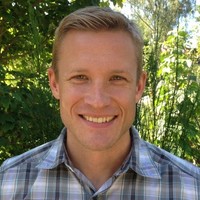
AeroLeads people directory · profile
Robert Almstrand Email & Phone Number
Analyst Environmental Auditing
at
Havs- och vattenmyndigheten
1 work email found
@cmb.gu.se
LinkedIn matched
✓ Verified August 2026
4 data sources
Profile completeness 100%
Current company
Role
Analyst Environmental Auditing
Location
Greater Gothenburg Metropolitan Area, Sweden
Who is Robert Almstrand? Overview
A concise factual answer block for searchers comparing this professional profile.
Quick answer
Robert Almstrand is listed as Analyst Environmental Auditing at Havs- och vattenmyndigheten, based in Greater Gothenburg Metropolitan Area, Sweden. AeroLeads shows a work email signal at cmb.gu.se and a matched LinkedIn profile for Robert Almstrand.
Robert Almstrand previously worked as Analyst Water Management (Eutrophication) at Havs- Och Vattenmyndigheten and Postdoctoral Researcher at Swedish University Of Agricultural Sciences. Robert Almstrand holds Doctor Of Philosophy (Phd), Microbiology from University Of Gothenburg.
Company email context
Email format at Havs- och vattenmyndigheten
This section adds company-level context without repeating Robert Almstrand's masked contact details.
{first}.{last}@cmb.gu.se
86% confidence
AeroLeads found 1 current-domain work email signal for Robert Almstrand. Compare company email patterns before reaching out.
Profile bio
About Robert Almstrand
Robert Almstrand is a Analyst Environmental Auditing at Havs- och vattenmyndigheten. He possess expertise in lifesciences, molecular biology, cell biology, pcr, microbiology and 4 more skills. He is proficient in Spanish, German and English.
Listed skills include Lifesciences, Molecular Biology, Cell Biology, Pcr, and 5 others.
Current workplace
Robert Almstrand's current company
Company context helps verify the profile and gives searchers a useful next step.
7 roles
Robert Almstrand work experience
A career timeline built from the work history available for this profile.
Analyst Environmental Auditing
-Miljöbalksprövning med fokus på mineralutvinning och utsläpp av näringsämnen-Tillsyn vattenlevande GMO-Tillsynsvägledning vattenbruk
Analyst Water Management (Eutrophication)
På HaV har jag sedan 2016 främst arbetat med övergödningsfrågor inom både vatten- och havsförvaltningen. Som exempel kan nämnas:- Finansiering, planering och utvärdering av åtgärder mot övergödning- Miljöbalksprövningar, yttranden och vägledning- Regeringsuppdrag- Expert i utredning ”Stärkt lokalt åtgärdsarbete – att nå målet ingen övergödning” (SOU 2020:10)- Internbelastningsfrågor- Vattenbruk- Särskilda satsningar- Lokal samverkan (LEVA) - Nationell samverkan (universitet, myndigheter och intresseorganisationer)- Internationell samverkan (HELCOM samt EU:s Östersjöstrategi EUSBSR)- Samverkan och beslutsunderlag avseende SMHI:s arbete inom vattenförvaltningen - Samverkan och beslutsunderlag avseende Vatteninformationssystem Sverige (VISS) (Förvaltningsledare 2018)
Oct 2016 - Aug 2022
Postdoctoral Researcher
Nitrogen removal in mining-impacted watersMining impacted waters (MIW), and more specifically acid mine drainage (AMD) and nitrogen (N) emissions, discharged as a function of current or legacy mining activities represents a significant threat to human health, the ecology of receiving waters, and economic prosperity. The low pH and high concentration of sulfate and metals released through AMD is one of the most important mining-related pollution problem in the world with a global treatment cost in the order of tens of billions of U.S. dollars. Thus, the impact of AMD-generation must be controlled and treatment options applied. Similarly, N-pollution from mining activities, such as leaching from undetonated ammonium nitrate fuel oil (ANFO) or degradation of cyanide used in gold extraction processes, may cause eutrophication of recipient waters, toxification of fish, and the release of N2O, which in addition to being a greenhouse gas is the most important ozone-depleting substances of our century. To address these issues, the specific objectives are:1. Revealing the geochemical zonation linked to spatial distribution of microorganisms affecting performance of sulfate reducing bioreactors (SRBRs) treating acid mine drainage. 2. Development of treatment strategies for biological sulfate reduction in SRBRs receiving AMD.3. Estimation of actual and potential greenhouse gas emissions (CH4 and N2O) from SRBRs and denitrifying barrier systems. 4. New methods for the analysis of distributional patterns of i) microbe-mineral interactions and ii) functional groups in denitrifying biofilms in N-removing barrier systems, coupled to process performance and N2O-emissions
Jan 2014 - Sep 2016
Post-Doc
Microbe-Mineral interactions, Mitigation of Mining Impacted Waters.Mining impacted waters (MIW), and more specifically acid mine drainage (AMD) and nitrogen (N) emissions, discharged as a function of current or legacy mining activities represents a significant threat to human health, the ecology of receiving waters, and economic prosperity. The low pH and high concentration of sulfate and metals released through AMD is one of the most important mining-related pollution problem in the world with a global treatment cost in the order of tens of billions of U.S. dollars. Thus, the impact of AMD-generation must be controlled and treatment options applied. Similarly, N-pollution from mining activities, such as leaching from undetonated ammonium nitrate fuel oil (ANFO) or degradation of cyanide used in gold extraction processes, may cause eutrophication of recipient waters, toxification of fish, and the release of N2O, which in addition to being a greenhouse gas is the most important ozone-depleting substances of our century. To address these issues, the specific objectives are:1. Revealing the geochemical zonation linked to spatial distribution of microorganisms affecting performance of sulfate reducing bioreactors (SRBRs) treating acid mine drainage. 2. Development of treatment strategies for biological sulfate reduction in SRBRs receiving AMD.3. Estimation of actual and potential greenhouse gas emissions (CH4 and N2O) from SRBRs and denitrifying barrier systems. 4. New methods for the analysis of distributional patterns of i) microbe-mineral interactions and ii) functional groups in denitrifying biofilms in N-removing barrier systems, coupled to process performance and N2O-emissions
Feb 2013 - Dec 2015
Phd Student
Efficient nitrogen removal at wastewater treatment plants (WWTPs) is necessary to avoid eutrophication of recipient waters. The most commonly used approach consists of aerobic nitrification and subsequent anaerobic denitrification resulting in the release of dinitrogen gas into the atmosphere. Nitrification is a two-step process performed by ammonia-oxidizing bacteria (AOB) and nitrite-oxidizing bacteria (NOB) often grown in biofilms at WWTPs. An alternative approach is anaerobic ammonium oxidation (anammox) where anammox bacteria convert ammonium and nitrite directly into dinitrogen gas. These groups of bacteria grow very slowly and are sensitive to perturbations, which may result in decreased efficiency or even breakdown of the process. Therefore, the ecology and activity of these bacteria and the structure of the biofilms in which they grow require detailed investigation to improve the understanding of nitrification and to facilitate the design of efficient nitrogen-removal strategies.To facilitate such studies of relevance for wastewater treatment, a nitrifying pilot-plant was built where environmental conditions and especially ammonium concentrations could be controlled.In an experiment on model nitrifying trickling filters (NTFs), it was shown that biofilms subjected to intermittent feeding regimes of alternating high and low ammonium concentration in the water, could maintain a higher nitrification potential than biofilms constantly fed with low ammonium water. Such ammonium feed strategies can be used to optimize wastewater treatment performance.Different AOB populations within the N. oligotropha lineage were shown to respond differently to changes in environmental conditions, indicating microdiversity within this lineage which may be of importance for wastewater treatment. This diversity was further investigated through the development of new image analysis methods for analyzing bacterial spatial distribution in biofilms.
Feb 2005 - Feb 2012
Microbiologist
Analycen Nordic Ab
Sep 2004 - Dec 2004
2 education records
Robert Almstrand education
Doctor Of Philosophy (Phd), Microbiology
Master Of Science (Msc), Molecular Biology
FAQ
Frequently asked questions about Robert Almstrand
Quick answers generated from the profile data available on this page.
What company does Robert Almstrand work for?
Robert Almstrand works for Havs- och vattenmyndigheten.
What is Robert Almstrand's role at Havs- och vattenmyndigheten?
Robert Almstrand is listed as Analyst Environmental Auditing at Havs- och vattenmyndigheten.
What is Robert Almstrand's email address?
AeroLeads has found 1 work email signal at @cmb.gu.se for Robert Almstrand at Havs- och vattenmyndigheten.
Where is Robert Almstrand based?
Robert Almstrand is based in Greater Gothenburg Metropolitan Area, Sweden while working with Havs- och vattenmyndigheten.
What companies has Robert Almstrand worked for?
Robert Almstrand has worked for Havs- Och Vattenmyndigheten, Swedish University Of Agricultural Sciences, Colorado School Of Mines, University Of Gothenburg, and Analycen Nordic Ab.
How can I contact Robert Almstrand?
You can use AeroLeads to view verified contact signals for Robert Almstrand at Havs- och vattenmyndigheten, including work email, phone, and LinkedIn data when available.
What schools did Robert Almstrand attend?
Robert Almstrand holds Doctor Of Philosophy (Phd), Microbiology from University Of Gothenburg.
What skills is Robert Almstrand known for?
Robert Almstrand is listed with skills including Lifesciences, Molecular Biology, Cell Biology, Pcr, Microbiology, Cell Culture, Scientific Writing, and Science.
Find 750M verified contacts
Search by job title, company, industry, location, and seniority. Export verified B2B contact data when you need it.
Start free trial