
AeroLeads people directory · profile
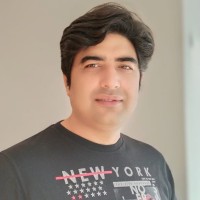
Sandeep Kumar Email & Phone Number
Research Scientist (Group Deputy Head)
at
Helmholtz-Zentrum Berlin
1 work email found
@uni.lu
LinkedIn matched
✓ Verified August 2026
4 data sources
Profile completeness 86%
Current company
Role
Research Scientist (Group Deputy Head)
Location
Berlin, Germany
Company size
Who is Sandeep Kumar? Overview
A concise factual answer block for searchers comparing this professional profile.
Quick answer
Sandeep Kumar is listed as Research Scientist (Group Deputy Head) at Helmholtz-Zentrum Berlin, a with 855 employees, based in Berlin, Germany. AeroLeads shows a work email signal at uni.lu and a matched LinkedIn profile for Sandeep Kumar.
Sandeep Kumar previously worked as Research Scientist at Helmholtz-Zentrum Berlin and Research Scientist at Ugent. Sandeep Kumar holds Doctor Of Philosophy - Phd, Theoretical And Computational Condensed Matter Physics, A from Indian Institute Of Technology, Bombay.
Company email context
Email format at Helmholtz-Zentrum Berlin
This section adds company-level context without repeating Sandeep Kumar's masked contact details.
{first}.{last}@uni.lu
86% confidence
AeroLeads found 1 current-domain work email signal for Sandeep Kumar. Compare company email patterns before reaching out.
Profile bio
About Sandeep Kumar
Owing to my computational physics background, I have acquired extensive analytical and computational skills during my doctoral and postdoctoral training. I have international industrial experience having worked with two prestigious companies namely Umicore, Belgium, and IEE S.A. Luxembourg. I have rich experience in collecting, data cleansing, analyzing, interpreting large datasets, building data-driven applications using Python and machine learning, critical problem solving, academic writing, strong attention to detail, and a significant ability to work in a team. Based on my scientific career, I have had the opportunity to code with Python, FORTRAN, Matlab, Scilab, Shell Scripting, Message Passing Interface (MPI) for parallel programming, SQL/No-SQL, etc. During our research project at the University of Luxembourg and IEE S.A Luxembourg, I have worked on high-throughput density functional theory (DFT) calculations based on hybrid-functional to calculate the optical and electronic properties of hundreds of semiconductor materials and to provide detailed information on the strength of the various light-matter interaction mechanisms present in the infrared (IR) spectral range. The aim of this project was to explore new materials that might be suitable to produce cheaper and more efficient cameras for night vision and automatic driving. To handle the big database, I have used numerical methods as well as analytical calculations. Utilizing data Handling and visualization tools such as Python, Machine Learning, Monte Carlo algorithm, Shell Scripting, Matlab, Scilab, FORTRAN, Pandas, Seaborn, Matplotlib and High-performance computing were important tools to accomplish the projects. Consequently, I am motivated to pursue my career as a Computational Physicist/ Researcher/Data Scientist/Analyst/Materials Scientist.I have rich experience working with multinational groups in four different countries (India, Israel, Luxembourg, Belgium, and Germany) which enhances my communication skills, teamwork skills, technical skills, project management skills as well as other desired skills. I have also experience working with multiple projects simultaneously and managing them successfully using project management strategies. More than 14 peer-reviewed scientific publications are the demonstration of my strong problem-solving, creative thinking, and analytical skills resulting in the timely completion of challenging projects. As a computational and analytical physicist, I am confident that my skills and qualifications will make me an asset to your company/institution.
Current workplace
Sandeep Kumar's current company
Company context helps verify the profile and gives searchers a useful next step.
Helmholtz-Zentrum Berlin
8 roles
Sandeep Kumar work experience
A career timeline built from the work history available for this profile.
Research Scientist
The computation of X-ray absorption (XAS) and resonant inelastic X-ray scattering (RIXS) spectra plays a critical role in elucidating the electronic structure and dynamic properties of inorganic solids. This study leverages the Density Functional Theory (DFT) combined with the Restricted Open-Shell Configuration Interaction Singles (ROCIS) method to accurately simulate XAS and RIXS spectra for a range of inorganic materials, including transition metal oxides, rare earth compounds, and complex oxides.Our computational approach integrates ML/DFT/ROCIS to account for the detailed electronic interactions and core-hole effects crucial for X-ray spectroscopy. The ROCIS method, known for its robust treatment of excited states and core-level spectroscopy, is particularly suited for capturing the intricate nature of core-electron excitations and subsequent inelastic scattering processes in RIXS. The study includes a thorough examination of computational parameters such as the choice of exchange-correlation functional, basis sets, and the treatment of core-hole effects, ensuring comprehensive and accurate spectral simulations.Finally, we will validate our methodology against experimental XAS and RIXS spectra of various prototypical inorganic solids.

Research Scientist
We have worked on the screening of electrolytes for solid-state Li-ion batteries in experimental collaboration with a large industrial company (Umicore, Belgium). The tool of choice is high-throughput (HT) screening using density-functional theory (DFT), supported by machine learning. Furthermore, solid-state batteries are considered the next generation of batteries, but they still suffer from high interfacial resistance. Challenges include continuous interfacial side reactions, limited electrochemical windows, contact issues, side reactions in moisture, and cracks or pulverization issues. In this direction, structure optimization, energy above the hull, phase stability, average cathode voltage, interface stability, and (electro)-chemical stability have been investigated to discover the new electrolytes for the better performance of solid-state Li-ion batteries.
Apr 2022 - Apr 2024

Research Scientist
We have worked on high-throughput density functional theory (DFT) methodology and Machine learning to calculate thousands of semiconductor materials' electronic and optical properties and provide detailed information on the strength of the various light-matter interaction mechanisms present in the Infrared (IR) spectral range. The project was an experimental collaboration with an industrial company ( IEE SA Luxembourg)This project aimed to explore new materials that might be suitable to produce cheaper and more efficient cameras for night vision and automatic driving. To handle the big database, we have used numerical methods as well as analytical calculations. Utilizing data Handling and visualization tools such as Python, Machine Learning, Monte Carlo algorithm, Shell Scripting, Matlab, Scilab, FORTRAN, Pandas, Seaborn, Matplotlib, and High-performance computing were important tools to accomplish the projects.
Dec 2018 - Mar 2022

Research Scientist
We have worked intensely on the theoretical and computational study of Li-ion battery properties using high-level quantum mechanical calculations. This work has been done in collaboration with the experimental group at the Weizmann Institute of Science (WIS), Israel.
Mar 2017 - Oct 2018

Research Scholar
In my doctoral work, we have studied the ground state properties of ordered and disordered alloys. In particular, we have focused on how chemical doping affects the electronic, magnetic, and superconducting properties of iron-based superconductors and their substitutional alloys. We have used state-of-the-art DFT calculations by employing the Green's function-based Korringa–Kohn–Rostoker method formulated within atomic sphere approximation (KKR-ASA) to study these superconducting alloys. The coherent potential approximation (CPA), virtual crystal approximation (VCA), and special quasirandom structures (SQS) have been used to account for the disordered on each lattice site. However, one can also study this type of disorder by using supercell calculations, which are generally more time-consuming and computationally expensive calculations. In addition, chemical doping has become an indispensable tool and it can facilitate one in characterization, control, and design of the different properties of materials.
Jan 2011 - Feb 2017
Research Associate
Jun 2016 - Nov 2016

Apr 2010 - Jan 2011
Team & coworkers
Colleagues at Helmholtz-Zentrum Berlin
Other employees you can reach at helmholtz-berlin.de. View company contacts for 855 employees →
KD
 Kang Dong
Colleague at Helmholtz-Zentrum BerlinBerlin, Germany
View →
SG
Kang Dong
Colleague at Helmholtz-Zentrum BerlinBerlin, Germany
View →
SG
 Sonja Green
Colleague at Helmholtz-Zentrum BerlinBerlin, Germany
View →
AK
Sonja Green
Colleague at Helmholtz-Zentrum BerlinBerlin, Germany
View →
AK
 Avela Kunene, Phd
Colleague at Helmholtz-Zentrum BerlinBerlin Metropolitan Area, Germany
View →
PP
Avela Kunene, Phd
Colleague at Helmholtz-Zentrum BerlinBerlin Metropolitan Area, Germany
View →
PP
 Pramila Patil
Colleague at Helmholtz-Zentrum BerlinBerlin, Germany
View →
MK
Pramila Patil
Colleague at Helmholtz-Zentrum BerlinBerlin, Germany
View →
MK
 Markus Kubin
Colleague at Helmholtz-Zentrum BerlinBerlin, Germany
View →
JP
Markus Kubin
Colleague at Helmholtz-Zentrum BerlinBerlin, Germany
View →
JP
 Jens Pfeiffer
Colleague at Helmholtz-Zentrum BerlinBerlin, Germany
View →
DW
Jens Pfeiffer
Colleague at Helmholtz-Zentrum BerlinBerlin, Germany
View →
DW
 Deniz Wong
Colleague at Helmholtz-Zentrum BerlinGermany
View →
AZ
Deniz Wong
Colleague at Helmholtz-Zentrum BerlinGermany
View →
AZ
 Axel Zuber
Colleague at Helmholtz-Zentrum BerlinPoitiers, Nouvelle-Aquitaine, France
View →
AF
Axel Zuber
Colleague at Helmholtz-Zentrum BerlinPoitiers, Nouvelle-Aquitaine, France
View →
AF
 Annica Freytag
Colleague at Helmholtz-Zentrum BerlinBerlin, Germany
View →
MG
Annica Freytag
Colleague at Helmholtz-Zentrum BerlinBerlin, Germany
View →
MG
 Mathias Gasper
Colleague at Helmholtz-Zentrum BerlinBerlin Metropolitan Area, Germany
View →
Mathias Gasper
Colleague at Helmholtz-Zentrum BerlinBerlin Metropolitan Area, Germany
View →
Kang Dong
Colleague at Helmholtz-Zentrum BerlinBerlin, Germany
View →
SG
Sonja Green
Colleague at Helmholtz-Zentrum BerlinBerlin, Germany
View →
AK
Avela Kunene, Phd
Colleague at Helmholtz-Zentrum BerlinBerlin Metropolitan Area, Germany
View →
PP
Pramila Patil
Colleague at Helmholtz-Zentrum BerlinBerlin, Germany
View →
MK
Markus Kubin
Colleague at Helmholtz-Zentrum BerlinBerlin, Germany
View →
JP
Jens Pfeiffer
Colleague at Helmholtz-Zentrum BerlinBerlin, Germany
View →
DW
Deniz Wong
Colleague at Helmholtz-Zentrum BerlinGermany
View →
AZ
Axel Zuber
Colleague at Helmholtz-Zentrum BerlinPoitiers, Nouvelle-Aquitaine, France
View →
AF
Annica Freytag
Colleague at Helmholtz-Zentrum BerlinBerlin, Germany
View →
MG
Mathias Gasper
Colleague at Helmholtz-Zentrum BerlinBerlin Metropolitan Area, Germany
View →
2 education records
Sandeep Kumar education
Doctor Of Philosophy - Phd, Theoretical And Computational Condensed Matter Physics, A

Master Of Technology - Mtech, A
FAQ
Frequently asked questions about Sandeep Kumar
Quick answers generated from the profile data available on this page.
What company does Sandeep Kumar work for?
Sandeep Kumar works for Helmholtz-Zentrum Berlin.
What is Sandeep Kumar's role at Helmholtz-Zentrum Berlin?
Sandeep Kumar is listed as Research Scientist (Group Deputy Head) at Helmholtz-Zentrum Berlin.
What is Sandeep Kumar's email address?
AeroLeads has found 1 work email signal at @uni.lu for Sandeep Kumar at Helmholtz-Zentrum Berlin.
Where is Sandeep Kumar based?
Sandeep Kumar is based in Berlin, Germany while working with Helmholtz-Zentrum Berlin.
What companies has Sandeep Kumar worked for?
Sandeep Kumar has worked for Helmholtz-Zentrum Berlin, Ugent, University Of Luxembourg, Bar Ilan Institute For Nanotechnology And Advanced Materials (Bina), Bar Ilan University, and Indian Institute Of Technology, Bombay.
Who are Sandeep Kumar's colleagues at Helmholtz-Zentrum Berlin?
Sandeep Kumar's colleagues at Helmholtz-Zentrum Berlin include Kang Dong, Sonja Green, Avela Kunene, Phd, Pramila Patil, and Markus Kubin.
How can I contact Sandeep Kumar?
You can use AeroLeads to view verified contact signals for Sandeep Kumar at Helmholtz-Zentrum Berlin, including work email, phone, and LinkedIn data when available.
What schools did Sandeep Kumar attend?
Sandeep Kumar holds Doctor Of Philosophy - Phd, Theoretical And Computational Condensed Matter Physics, A from Indian Institute Of Technology, Bombay.
Find 750M verified contacts
Search by job title, company, industry, location, and seniority. Export verified B2B contact data when you need it.
Start free trialPeople with similar names
Check these profiles if this is not the Sandeep Kumar you were looking for.
View similar profiles


