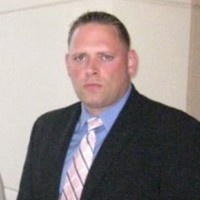
AeroLeads people directory · profile
Stephen Cranwell Email & Phone Number
PHD Student
at
The Babraham Institute
LinkedIn matched
✓ Verified July 2026
3 data sources
Profile completeness 86%
Current company
Role
PHD Student
Location
Cambridge, England, United Kingdom
Company size
Who is Stephen Cranwell? Overview
A concise factual answer block for searchers comparing this professional profile.
Quick answer
Stephen Cranwell is listed as PHD Student at The Babraham Institute, a with 301 employees, based in Cambridge, England, United Kingdom. AeroLeads shows a matched LinkedIn profile for Stephen Cranwell.
Stephen Cranwell previously worked as Tutor at Ucl and Graduate Research Student at Ucl. Stephen Cranwell holds Doctor Of Philosophy - Phd, Molecular Biology from University Of Cambridge.
Company email context
Email format at The Babraham Institute
This section adds company-level context without repeating Stephen Cranwell's masked contact details.
The Babraham Institute
Review company-level records connected to Stephen Cranwell before choosing the right outreach path.
Profile bio
About Stephen Cranwell
I have never had a mind-set other than to go into research as I always want to be at the forefront of science. My primary interest is the basic biology of ageing research. Answering how cells age at the molecular level will have implications on some of the most debilitating and common killers (e.g. cancer, atherosclerosis, and neurological degeneration). It will be fascinating to see how the technological and pharmaceutical industries will address significantly increased life/ health spans in the future. With this in mind, I am undertaking a PhD in the laboratory of Rahul Samant at the Babraham Institute studying the relationship between cellular senescence and proteostasis.
Current workplace
Stephen Cranwell's current company
Company context helps verify the profile and gives searchers a useful next step.
The Babraham Institute
9 roles
Stephen Cranwell work experience
A career timeline built from the work history available for this profile.
Phd Student
My research currently focuses on cell non-autonomous effects of the senescence-associated secretory phenotype on the proteostasis quality control network using novel systems.

Tutor
During Oct-Dec I tutor small groups of students (undergraduate and postgraduate) for Professor David Gems Biology of Ageing course at University College London.
Graduate Research Student
Building on the finding that RNA Polymerase III inhibition extends lifespan downstream of TOR, my project investigated what transcription factors mediate the above lifespan extension. The project involved knocking down key transcription factors via RNAi using a modified GAL4-UAS system. The project will entailed a bioinformatics aspect to investigate the relevance of genetic variants associated with longevity in humans. The analysis was performed in R by first obtaining eQTL data of variants… Show more Building on the finding that RNA Polymerase III inhibition extends lifespan downstream of TOR, my project investigated what transcription factors mediate the above lifespan extension. The project involved knocking down key transcription factors via RNAi using a modified GAL4-UAS system. The project will entailed a bioinformatics aspect to investigate the relevance of genetic variants associated with longevity in humans. The analysis was performed in R by first obtaining eQTL data of variants hypothesised to be associated with longevity, followed by linkage disequilibrium pruning and mendelian randomization. See "Mendelian randomization analyses implicate biogenesis of translation machinery in human aging" for more information. Show less
Sep 2020 - Sep 2021

Senior Assistant Analyst
As a senior analyst in the immunobiology group, I worked to support pre-clinical and clinical safety and efficacy testing of gene therapies. Using qPCR and RT-qPCR, I assessed viral vector biodistribution, as well as mRNA and miRNA expression changes as a result of dosing or toxicity. My time at Charles River allowed me to gain a deeper understanding of experimental processes by developing assays from the ground up, to yield the highest quality data while maintaining regulatory compliance… Show more As a senior analyst in the immunobiology group, I worked to support pre-clinical and clinical safety and efficacy testing of gene therapies. Using qPCR and RT-qPCR, I assessed viral vector biodistribution, as well as mRNA and miRNA expression changes as a result of dosing or toxicity. My time at Charles River allowed me to gain a deeper understanding of experimental processes by developing assays from the ground up, to yield the highest quality data while maintaining regulatory compliance. Along with the technical skills I learned, my extensive time in the laboratory refined my ability to troubleshoot problems and identify bottlenecks. This resulted from the extensive investment of fully developing and validating assays from the ground up while maintaining GLP compliance. Show less
Jan 2017 - Oct 2020

Graduate Student
My postgraduate research project investigated the enzyme capacity of exosomes. I chose to undertake this project as I was intrigued by the emerging evidence these vesicles could contain oncogenic messengers. There had also been recent studies indicating their role in senescence and their increased release in concert with the SASP. As well as uncovering new mechanisms of malignancy and senescence, they had the possibility of being used diagnostically and as possible vectors for therapeutic… Show more My postgraduate research project investigated the enzyme capacity of exosomes. I chose to undertake this project as I was intrigued by the emerging evidence these vesicles could contain oncogenic messengers. There had also been recent studies indicating their role in senescence and their increased release in concert with the SASP. As well as uncovering new mechanisms of malignancy and senescence, they had the possibility of being used diagnostically and as possible vectors for therapeutic oligonucleotides, averting some of the undesirable restraints of commonly used AAVs. The expanding science of exosomes and their use to uncover new mechanisms of action, and possible therapeutic effects fascinated me. I also appreciated the novelty of the project to study the intravesicular enzyme capacity of these increasingly important vesicles. The project allowed me to develop new techniques including mammalian cell culture, ultracentrifugation, TEM microscopy, and enzyme assay optimisation. My time in the Buck lab was of great benefit to me, large parts of the project were independent, and I learned to scrutinise literature to determine how to optimise my assay Show less
Sep 2015 - Aug 2016
Student
My final year undergraduate project investigated the role of a heat shock proteins influence on drought response in the model organism Arabidopsis thaliana. I investigated whether a knockout variation produced an altered drought tolerance phenotype. This introduced me to a number of standard techniques that I was able to perform routinely with success including CTAB DNA extraction, the creation of primers, PCR, cDNA synthesis, SDS-PAGE, and GeneOntology analysis.
Oct 2012 - Jul 2015
Nerc (National Environmental Research Council) Internship
During the summer of 2013 I worked at Oceanlab, an institute of the University of Aberdeen. Working there gave me experience in science outside of the lab. Here I learned to program with R and Brodgar and analyse decades of survey data from fisheries by completing data exploration and performing generalised additive modelling. I also wrote progress reports and gave a presentation on my work. This placement allowed me to attend the 2013 MASTS (Marine Alliance for Science and Technology for… Show more During the summer of 2013 I worked at Oceanlab, an institute of the University of Aberdeen. Working there gave me experience in science outside of the lab. Here I learned to program with R and Brodgar and analyse decades of survey data from fisheries by completing data exploration and performing generalised additive modelling. I also wrote progress reports and gave a presentation on my work. This placement allowed me to attend the 2013 MASTS (Marine Alliance for Science and Technology for Scotland) conference in Edinburgh. Show less
Jun 2013 - Sep 2013
Laboratory Assisstant
In the year between school and university I worked full time as a lab assistant at the John Innes Centre, an independent, international centre of research in plant science and microbiology. I learnt many skills including laboratory safety and methods such as PCR, gel electrophoresis, and DNA isolation. I also worked with fluorescent microscopes, attended lectures presented by my colleagues and visiting researchers, and had weekly discussions about the progress and problems in the lab. This was… Show more In the year between school and university I worked full time as a lab assistant at the John Innes Centre, an independent, international centre of research in plant science and microbiology. I learnt many skills including laboratory safety and methods such as PCR, gel electrophoresis, and DNA isolation. I also worked with fluorescent microscopes, attended lectures presented by my colleagues and visiting researchers, and had weekly discussions about the progress and problems in the lab. This was a fantastic introduction to laboratory work and strengthened my resolve work in a scientific environment. Show less
Oct 2011 - Mar 2012
5 education records
Stephen Cranwell education
Doctor Of Philosophy - Phd, Molecular Biology
Mres, Biology Of Ageing, Distinction
Master Of Science (Msc), Biotechnology, Distinction
Bachelor Of Science (Bsc), Genetics, 1
Education record
Clydebank High School
FAQ
Frequently asked questions about Stephen Cranwell
Quick answers generated from the profile data available on this page.
What company does Stephen Cranwell work for?
Stephen Cranwell works for The Babraham Institute.
What is Stephen Cranwell's role at The Babraham Institute?
Stephen Cranwell is listed as PHD Student at The Babraham Institute.
Where is Stephen Cranwell based?
Stephen Cranwell is based in Cambridge, England, United Kingdom while working with The Babraham Institute.
What companies has Stephen Cranwell worked for?
Stephen Cranwell has worked for The Babraham Institute, Ucl, Charles River Laboratories, The University Of Edinburgh, and University Of Essex.
How can I contact Stephen Cranwell?
You can use AeroLeads to view verified contact signals for Stephen Cranwell at The Babraham Institute, including work email, phone, and LinkedIn data when available.
What schools did Stephen Cranwell attend?
Stephen Cranwell holds Doctor Of Philosophy - Phd, Molecular Biology from University Of Cambridge.
Find 750M verified contacts
Search by job title, company, industry, location, and seniority. Export verified B2B contact data when you need it.
Start free trialPeople with similar names
Check these profiles if this is not the Stephen Cranwell you were looking for.
View similar profiles