
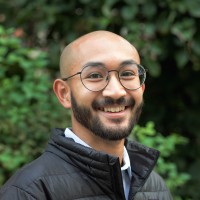
AeroLeads people directory · profile
Suyash Handa Email & Phone Number
Active Chassis Controls Engineer
at
Lucid Motors
LinkedIn matched
✓ Verified August 2026
3 data sources
Profile completeness 86%
Current company
Role
Active Chassis Controls Engineer
Location
New York, United States
Company size
Who is Suyash Handa? Overview
A concise factual answer block for searchers comparing this professional profile.
Quick answer
Suyash Handa is listed as Active Chassis Controls Engineer at Lucid Motors, a with 31 employees, based in New York, United States. AeroLeads shows a matched LinkedIn profile for Suyash Handa.
Suyash Handa previously worked as Software, Simulation, and Controls Engineer at Columbia University Formula Racing and Suspension Lead at Columbia University Formula Racing. Suyash Handa holds Master Of Science - Ms, Mechanical Engineering from Columbia University.
Company email context
Email format at Lucid Motors
This section adds company-level context without repeating Suyash Handa's masked contact details.
Lucid Motors
Review company-level records connected to Suyash Handa before choosing the right outreach path.
Profile bio
About Suyash Handa
I am a master's student in mechanical engineering with a concentration in robotics and control at Columbia University, having completed my bachelor's degrees in physics and electrical engineering from Colgate University and Columbia respectively. With professional experience in the defense sector as a software engineer working on a legacy radar system, internship experience in mechatronics and control in the medical devices and healthcare diagnostics sphere, club experience through FSAE, and research experience as an undergrad, I am poised to add value in roles related to data, system modeling, and control system design. While deeply interested in the automotive engineering space, particularly in vehicle dynamics, I am most broadly interested in how we may leverage fundamental physical concepts to tackle problems and engineer solutions accordingly.
Current workplace
Suyash Handa's current company
Company context helps verify the profile and gives searchers a useful next step.
Lucid Motors
15 roles
Suyash Handa work experience
A career timeline built from the work history available for this profile.

Software, Simulation, And Controls Engineer
Co-leading an effort to incorporate more software and rigorous modelling and characterization in the design process when developing a vehicle each year. Current work includes development of an in-house model of the current drivetrain using PLECS and Simscape to better characterize efficiency losses and predict vehicle performance, diagnosis of low-speed shuddering resulting from poorly tuned PID through development of a model of the motor, inverter, and Id and Iq controllers, and implementation of Kalman filtering on wheel speed and acceleration for torque vectoring. Working toward creation of a complete software-defined vehicle digital twin, anticipating a transition from single-motor drive to a dual-motor topology.
Suspension Lead
Responsibilities include collaborating with vehicle dynamics chief to determine backlog of work and assess how best to delegate tasks to team members, as well as supporting projects and efforts already in progress to ensure deadlines are hit for manufacturing, build, and test. Work has ranged from simulation-oriented to more physical/manufacturing-oriented efforts.Design/simulation work includes development of numerous Matlab scripts for vehicle parameter calculations such as suspension component loads under different scenarios, load transfer distribution, spring selection, tire selection, and ARB specification; development of a suspension kinematics model in Solidworks for design of the 2025 vehicle's suspension layout; validation of dynamics using VI-grade and Optimum Kinematics; and running FEA and topology optimization on suspension components and mounting hardware to assess component strength and reduce mass using both Solidworks and Altair Inspire.Physical/manufacturing work includes rebuilding dampers, and development and documentation of various processes related to machining and stress-testing suspension components such as control arms and pushrods, using Solidworks for CAD and Fusion 360 and HSMWorks for CAM.
Vehicle Dynamics Engineer
Spearheading data analysis related to vehicle dynamics but also in an effort to debug mechanical and electrical faults related to power delivery (e.g. sensor calibration, motor control PID tuning, tolerances introducing efficiency loss).Iterated on the 2024 suspension design for the 2025 car in collaboration with other functional areas within dynamics as well as other subteams to ensure proper system integration of the entire vehicle dynamics package. Targeting a 15 percent increase in cornering performance and implementation of front and rear anti-roll bars.Designed the entire suspension system for the 2026 vehicle which is slated to be a dual-motor, rear-wheel, direct-drive concept. Preliminary work was started during the course ELEN E4906, Electric Vehicle Drivetrain Laboratory. Consulted for other subteams on component selection and packaging to ensure a solid baseline for vehicle dynamics, working closely with the powertrain and frame teams.Iterated upon 2023 suspension design for the team's 2024 electric vehicle with tunability and more rigorous understanding of the effects of adjustable parameters on vehicle handling in mind. Redesign focused on running softer springs, introducing an ARB, and gaining better knowledge of damper tuning.Previously worked on developing a decoupled suspension system for the 2025 car. Utilized 2D studies in Solidworks to understand the overall design concept and how geometries affect decoupling of the rotational axes associated with pitch and roll, and rapidly prototyped a proof of concept model with 3D-printed parts.

Mechatronics And Control Intern
Worked in the Simulation, Mechatronics, and Structures group under the Core Lab Solutions R&D business area where I developed an indirectly sensed force feedback control scheme for an in-house servo-based gripper to be used in the Atellica lineup of sample handlers. I leveraged Simulink and Matlab to create a hardware-in-the-loop model of the entire mechanism (servomotor, inverter, gripper, finger pads) and to deploy firmware to a TI C2000 MCU (Delfino with F28379D processor).The motivation for this project was to replace the existing open-loop architecture with a solution that promises increased robustness, precision, consistency, and throughput in the transport of test tubes within the sample handlers. The current mechanisms use stepper motors with an empirically determined motion profile for each known test tube diameter that achieves a target position setpoint associated with a target gripping force, hence the usage of closed-loop force estimation would ensure such a gripping force is achieved consistently and robustly. An additional motivation is to replace the current implementation without the need for significant changes to build footprint through the addition of sensors and other hardware, promising essentially a drop-in enhancement.My work was largely focused on modeling the system in Simulink, with a bit of code generation toward the end. I implemented a two-stage control architecture with a position controller and a force controller working in tandem to drive a BLDC using FOC, where the force feedback was provided by a simple full-state Luenberger observer. For the position controller I explored mimicking the existing implementation with PID control driven by a motion profile as well as an LQR driven by just a position reference. The force controller is a PID controller. I also laid the foundation for generating code through Simulink, eliminating the need for the firmware team to write bespoke code by hand and thus cutting down on development time.
May 2024 - Aug 2024

Course Assistant - Advanced Machine Dynamics (Mece 6400)
Devoted 10 hours per week to teach students the Newtonian and Lagrangian formalisms of classical mechanics in the context of engineering problems, involving both conservative and non-conservative forces. Held office hours and also fielded questions outside of office hours to provide support on homework assignments and exams.
Jan 2024 - May 2024

Software Engineer Ii
Developed and maintained embedded software for a fielded radar system, working in close concert with systems engineers to architect novel capabilities and triage time- and mission-critical system defects in an Agile environment.As a result of the initiative I took during an extended period of staff shortage due to turnover and retirements, I was promoted a year earlier than usual for an early career software engineer. While the nature of my work did not change, my responsibilities shifted slightly in the direction of training newer engineers (internal transfers and re-hires) to bring them up to speed on the capabilities of our functional area and the associated algorithms and processing threads, especially when software and system design documentation did not explicitly align as a consequence of software design for a resource-constrained system.In the months following my promotion leading up to when I left the company to pursue grad school, I collaborated closely with these newer engineers to ensure they had the support required to eventually become more self-sufficient, all the while prioritizing and delegating responsibility amongst the team to maintain sprint velocity and meet customer-imposed deadlines. This eventually manifested itself in a 3x increase in sprint velocity as the team expanded from two to four full-time engineers. This was in spite of the two engineers new to the team assuming additional off-team responsibilities, serving as a testament to the rate at which these engineers became fully productive as a result of my guidance (within 6 months for the re-hire and within a year for the internal transfer).
Apr 2023 - Aug 2023
Software Engineer I
This section describes the technical work that I performed during the entirety of my employment, not specific to my role as a Software Engineer I. The content of my work did not change as a result of my promotion.Software design work of note includes a concept I architected which allowed for over an 80-percent reduction in thread throughput by bypassing a particular processing thread which would no longer need to be run based on the decisions made by this novel concept, as well as a rework of how system constants were being instantiated and utilized in different files, resulting in a 5-percent reduction in software build footprint (a non-trivial reduction in a heavily resource-constrained system).I also oversaw the triage of defects of a concept which could override resource-intensive legacy processing in three different ways, leveraging newer hardware to make time-critical calculations and decisions with greater speed and higher precision. Due to the complexity of the concept and its usage of system resources shared by a multitude of processing threads and algorithms during normal system operation, the concept spawned bugs and edge cases throughout my employment. As a result of high turnover and a subsequent prolonged period of staff shortage, our team decreased to two full-time engineers including myself, and so I tackled all associated bugs almost single-handedly while a Software Engineer I. I became a software SME for the concept by working closely with senior systems and software engineers to understand our functional area's capabilities from a broader system perspective and how this particular concept fit into the bigger picture.By assuming increased responsibility and managing and navigating my team through this period, I was promoted to Software Engineer II, at which point the size of our team increased to four full-time engineers and my efforts shifted more toward teaching and bringing the newer engineers up to speed.
Jun 2021 - Apr 2023
Low Voltage Engineer
My electrical engineering capstone project. Developed a network of microcontroller units (MCUs) to communicate data via CAN bus to a central MCU in charge of controlling all on-board electronics. Working remotely, I handled the software while in close communication with those on campus with access to the garage working on the associated hardware and peripheral electronics.Multiple areas of the vehicle (main hoop, pedals, dashboard, and accumulator) have electronics which are generating signals and telemetry, and all the data needs to be aggregated so the appropriate control signals can be output by the main low voltage (LV) box to control all the different subsystems. Previous practice involved adding Arduinos wherever and whenever convenient throughout the vehicle chassis, so this project was aimed at streamlining and standardizing the datalogging process for easier debugging and tweaking of parameters later down the road, all the while maintaining rules compliance and proper function of the vehicle.The MCUs corresponding with three of the aforementioned areas of the vehicle (pedals, dash, accumulator) simply act as waypoints for data coming from "local" electronics in the immediate periphery of each MCU, and each of these waypoints will transmit data to a central MCU located in the main LV box which is in charge of actually controlling all electronic systems. Firmware was developed for the Texas Instruments TMS320F28379D C2000 microcontroller, utilizing Simulink for model-based design to translate high-level block diagrams into C code.
Jan 2021 - Apr 2021
High Voltage Engineer
Collaborated with high voltage team members to develop systems requiring, supplying, or monitoring voltage greater than 12V, including the batteries, battery management system, various activity lights, and the motor and inverter. Personal work included 3D-modeling in CAD software (Onshape and Solidworks) to create a mounting solution for the tractive system active light (TSAL), as well as battery wiring and cable management.
Sep 2019 - Mar 2020
Undergraduate Researcher
Colgate University Department Of Physics And Astronomy
Laid the groundwork for the usage of drones in the context of surveying the local white-tailed deer population in and around Hamilton, New York under mentorship of Prof. Enrique Galvez.Work included gathering information on thermal infrared imaging, familiarization with FAA guidelines for Part 107 commercial drone piloting, and participating in flights supervised by Part 107-licensed pilots to capture sample images at regular intervals to simulate real-world data collection. Devised a roadmap with plans to fully automate process of counting deer through synthesis of data from visual-spectrum and infrared imagery and usage of various image processing techniques to aid in statistical analysis of overpopulation.
Jun 2019 - Jul 2019
Teaching/Lab Assistant, Tutor - Electronics (Phys 336)
Colgate University Department Of Physics And Astronomy
Devoted 8-12 hours per week to supplement lectures by providing assistance to students during and outside of laboratory hours. Provided further instruction of course material and troubleshooted digital (Arduino-controlled, TTL-based) and analog (op-amp, diode, transistor) circuits. Hosted weekly tutoring sessions outside of regularly scheduled class periods for homework assignments and exam preparation.
Jan 2019 - May 2019
Orchestra Librarian
Colgate University Orchestra
Worked with two other musicians to maintain orchestra’s library of music. Was responsible for preparation of music (bowings, photocopies, etc.), and distribution/collection of music to/from students and professionals at the beginning and end of a concert cycle.
Sep 2017 - Apr 2019
Undergraduate Research Assistant
University Of Minnesota Twin Cities Department Of Earth Sciences
Explored implementation of MEMS sensors in cost-efficient datalogging devices to replace analog geophones in detection of sub-1 Hz oscillations (in the context of geomorphology and seismology research) under mentorship of Prof. Andrew Wickert.Work involved writing and reading bit data to and from memory registers of sensors and analog-digital converters with Python for sensor frequency response characterization. Built a simple pendulum setup, leveraging the small-angle approximation to compare predicted and actual amplitude measurements. Sensors, geophones, and ADCs were interfaced primarily with Raspberry Pi and later Arduino via SPI and I2C communication protocols. Data was stored on the embedded systems via an SD card (native storage on Raspberry Pi, separate module for Arduino) to simulate the conditions of a remote datalogging scenario.Assessed goodness-of-fit of data against expected peak amplitude for a specific frequency of oscillation (set by pendulum length). Statistics were performed in MATLAB, primarily involving usage of in-built Fourier transform functions and other functions useful in spectral analysis to determine signal-to-noise ratios. Behavior of the sensors while in motion was contrary to what was expected, thus future goals would include rectifying those errors, determining necessity of Kalman filtering or other methods of increasing SNR, and determining possible optimizations to minimize performance overhead associated with data collection and storage. Overall we concluded that MEMS-based data collection affords a significant price-to-performance and packaging benefit compared to conventional geophone-based datalogging systems.
May 2018 - Aug 2018
Undergraduate Research Assistant
Colgate University Department Of Physics And Astronomy
Supported the development of a NASA-funded spaceflight mass spectrometer for in-situ dating of extraterrestrial rock specimens, using laser ablation and resonance ionization for radioisotopic geochronology under mentorship of Prof. Jonathan Levine.Project is aimed at developing the laser technology and compactifying the apparatus to eliminate the need to collect samples on missions and send them back to Earth for further processing and analysis. Work primarily involved analyzing trends in previously taken data from larger apparatus and aiding development of more robust algorithms to produce more accurate age estimations for lunar samples of known age. This was done as a means of verifying the accuracy of the apparatus and overall ablation and ionization process. Other work involved developing models based on hypothetical reasons for erroneous behavior of smaller apparatus and assessing goodness-of-fit of these models against previously taken data. All work was done in MATLAB.
May 2017 - Jul 2017
Team & coworkers
Colleagues at Lucid Motors
Other employees you can reach at columbiafsae.org. View company contacts for 31 employees →
HP
 Hadley Pade
Colleague at Lucid MotorsNew York, United States
View →
RL
Hadley Pade
Colleague at Lucid MotorsNew York, United States
View →
RL
 Rosnel Leyva-Cortes
Colleague at Lucid MotorsHackensack, New Jersey, United States
View →
JM
Rosnel Leyva-Cortes
Colleague at Lucid MotorsHackensack, New Jersey, United States
View →
JM
 Jada Michel
Colleague at Lucid MotorsBrooklyn, New York, United States
View →
SW
Jada Michel
Colleague at Lucid MotorsBrooklyn, New York, United States
View →
SW
 Samantha Wilder
Colleague at Lucid MotorsHamilton, New York, United States
View →
NK
Samantha Wilder
Colleague at Lucid MotorsHamilton, New York, United States
View →
NK
 Nio Kwan
Colleague at Lucid MotorsUnited States
View →
AD
Nio Kwan
Colleague at Lucid MotorsUnited States
View →
AD
 Alex Deli-Ivanov
Colleague at Lucid MotorsUnited States
View →
JE
Alex Deli-Ivanov
Colleague at Lucid MotorsUnited States
View →
JE
 Jan Espelien
Colleague at Lucid MotorsNew York, United States
View →
WQ
Jan Espelien
Colleague at Lucid MotorsNew York, United States
View →
WQ
 Winston Qin
Colleague at Lucid MotorsNew York, United States
View →
CK
Winston Qin
Colleague at Lucid MotorsNew York, United States
View →
CK
 Clayton Ketcher
Colleague at Lucid MotorsSacramento, California, United States
View →
ST
Clayton Ketcher
Colleague at Lucid MotorsSacramento, California, United States
View →
ST
 Steven Tian
Colleague at Lucid MotorsNew York, United States
View →
Steven Tian
Colleague at Lucid MotorsNew York, United States
View →
Hadley Pade
Colleague at Lucid MotorsNew York, United States
View →
RL
Rosnel Leyva-Cortes
Colleague at Lucid MotorsHackensack, New Jersey, United States
View →
JM
Jada Michel
Colleague at Lucid MotorsBrooklyn, New York, United States
View →
SW
Samantha Wilder
Colleague at Lucid MotorsHamilton, New York, United States
View →
NK
Nio Kwan
Colleague at Lucid MotorsUnited States
View →
AD
Alex Deli-Ivanov
Colleague at Lucid MotorsUnited States
View →
JE
Jan Espelien
Colleague at Lucid MotorsNew York, United States
View →
WQ
Winston Qin
Colleague at Lucid MotorsNew York, United States
View →
CK
Clayton Ketcher
Colleague at Lucid MotorsSacramento, California, United States
View →
ST
Steven Tian
Colleague at Lucid MotorsNew York, United States
View →
3 education records
Suyash Handa education

Master Of Science - Ms, Mechanical Engineering
Bachelor Of Science - Bs, Electrical Engineering

Bachelor’S Degree, Physics
FAQ
Frequently asked questions about Suyash Handa
Quick answers generated from the profile data available on this page.
What company does Suyash Handa work for?
Suyash Handa works for Lucid Motors.
What is Suyash Handa's role at Lucid Motors?
Suyash Handa is listed as Active Chassis Controls Engineer at Lucid Motors.
Where is Suyash Handa based?
Suyash Handa is based in New York, United States while working with Lucid Motors.
What companies has Suyash Handa worked for?
Suyash Handa has worked for Lucid Motors, Columbia University Formula Racing, Siemens Healthineers, Columbia University Mechanical Engineering, and Raytheon Technologies.
Who are Suyash Handa's colleagues at Lucid Motors?
Suyash Handa's colleagues at Lucid Motors include Hadley Pade, Rosnel Leyva-Cortes, Jada Michel, Samantha Wilder, and Nio Kwan.
How can I contact Suyash Handa?
You can use AeroLeads to view verified contact signals for Suyash Handa at Lucid Motors, including work email, phone, and LinkedIn data when available.
What schools did Suyash Handa attend?
Suyash Handa holds Master Of Science - Ms, Mechanical Engineering from Columbia University.
Find 750M verified contacts
Search by job title, company, industry, location, and seniority. Export verified B2B contact data when you need it.
Start free trialPeople with similar names
Check these profiles if this is not the Suyash Handa you were looking for.
View similar profiles