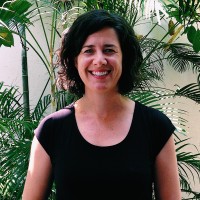
AeroLeads people directory · profile
Tamara Jackson Email & Phone Number
Senior Research Fellow
at
University of Adelaide
1 work email found
@adelaide.edu.au
LinkedIn matched
✓ Verified July 2026
4 data sources
Profile completeness 86%
Current company
Role
Senior Research Fellow
Location
Everard Park, South Australia, Australia
Who is Tamara Jackson? Overview
A concise factual answer block for searchers comparing this professional profile.
Quick answer
Tamara Jackson is listed as Senior Research Fellow at University of Adelaide, based in Everard Park, South Australia, Australia. AeroLeads shows a work email signal at adelaide.edu.au and a matched LinkedIn profile for Tamara Jackson.
Tamara Jackson previously worked as ACIAR SDIP Program Manager at Australian Centre For International Agricultural Research (Aciar) and Consultant at University Of Adelaide. Tamara Jackson holds Doctor Of Philosophy (Phd), Applied Hydrology from Charles Sturt University.
Company email context
Email format at University of Adelaide
This section adds company-level context without repeating Tamara Jackson's masked contact details.
{first}.{last}@adelaide.edu.au
86% confidence
AeroLeads found 1 current-domain work email signal for Tamara Jackson. Compare company email patterns before reaching out.
Profile bio
About Tamara Jackson
Tamara Jackson is a Senior Research Fellow at University of Adelaide.
Current workplace
Tamara Jackson's current company
Company context helps verify the profile and gives searchers a useful next step.
9 roles
Tamara Jackson work experience
A career timeline built from the work history available for this profile.
Senior Research Fellow
CurrentAt the University of Adelaide, I lead two projects in South Asia funded by the Australian Government. The Rupantar project - Transforming Food Systems in the Eastern Gangetic Plains (EGP) – is a $4.6m project funded by the Australian Centre for International Agricultural Research (ACIAR). The aim of the project is to define the processes and practices (technical options, scaling interventions, policy settings and implementation) that can be applied to achieve sustainable, efficient, diversified food systems at scale in the EGP. As Project Leader, I coordinate the project through the University of Adelaide, collaborating with seven partners in South Asia.With funding provided by the Australian Government Department of Education, the Developing Critical Agricultural Skills Courses in India initiative brings together a team of highly skilled agricultural education and research professionals from Australia’s University of Adelaide, the Agricultural Skills Council of India (ASCI) and the National Skills Foundation of India (NSFI). The project aims to strengthen the bilateral relationships between Australia and India through the delivery of pilot training courses in partnership with stakeholders from the Australian and Indianeducation and agriculture sectors. The project will be conducted from March 2023 to June2024.
Oct 2021 - Present

Aciar Sdip Program Manager
The Sustainable Development Investment Portfolio (SDIP) was a program funded by the Department of Foreign Affairs and Trade (DFAT), of which ACIAR was a partner. The $17m+ ACIAR SDIP program aimed to maximise agriculture’s contribution to sustainable food systems through improved food, energy and water management in the Eastern Gangetic Plains (EGP). Under SDIP, ACIAR coordinated a program of research on sustainable intensification of agriculture, which aimed to drive innovation around the incentives, policies, market mechanisms and extension approaches required to scale-up the adoption of more resilient, sustainable, inclusive and profitable food systems across the EGP. The program consisted of a portfolio of projects that contributed to improved regional analysis, informed policy dialogue and strengthened technical capabilities to support sustainable intensification of agriculture. The program included an integrated set of activities across local, meso and national scales, including strategic analysis and dialogue, foresighting activities, policy and institutional studies, and field research. My role as Program Manager was contracted by ACIAR to take primary responsibility for management of and reporting on all program activities to deliver an integrated program of work which addresses the SDIP portfolio objectives. This included compiling synthesis reports for cross-cutting themes within the program, for example on Climate Change Impacts, and Contributions to improved Food, Energy and Water Security for Sustainable Food Systems. I help to facilitate the suite of projects within the program, and ensure that capacity building, gender equality, and monitoring and evaluation were supported and integrated into the implementation of each component. Additionally, I led the development of a multi-faceted communication plan to ensure that results and achievements were communicated coherently.
Jan 2018 - Sep 2021
Consultant
I was engaged as a consultant on the ACIAR project ‘Improving market engagement, postharvest management and productivity of Cambodian and Lao PDR vegetable industries’ (ASEM/2012/081). One of the project’s objectives was to foster communication and collaboration between government, NGO and private sector industry stakeholders. My contribution to the project was to help local partners convene the first in a series of vegetable forums in Cambodia and Laos. This included developing an implementation plan, initiating and facilitating cross-sectoral organising committees, identifying and securing funding for the events, hosting the events and reviewing and reporting on them. The first forums were held in October 2017, attracting financial support from NGOs in both countries. Both events gathered together a good cross-section of stakeholders within the sector, and importantly generated clear plans for future steps towards the development of a sustainable vegetable sector, including policy recommendations.
Mar 2017 - Feb 2018

Research Fellow
I was the project leader for an agricultural systems projects funded by the Australian Centre for International Agricultural Research (ACIAR), and worked in conjunction with the National Agricultural and Forestry Research Institute (NAFRI) in Laos. The ‘Crop-livestock systems platform for capacity building, testing practices, commercialisation and community learning’ project focused on improving capacity, technical knowledge and stakeholder engagement for implementing improved crop-livestock systems in southern Laos. This project incorporated on-farm research into integrated crop-livestock systems and capacity building to enhance systems understandings. These outcomes were applied in multi-stakeholder groups (Innovation Platforms) to enhance agricultural innovation, requiring facilitation, negotiation and adaptive project management skills.
Jan 2015 - Apr 2017
Research Fellow
Charles Sturt University
I previously worked on the ACIAR project ‘Developing improved farming and marketing systems in rainfed regions of southern Lao PDR’, in the final stages as the Project Leader responsible for synthesis and delivery of project information to key stakeholders. This project was a large, multi-disciplinary project that worked across the farming system in crops, forage and livestock, socio-economics and marketing, water and hydrology and knowledge sharing. Within this project I played a strong role in the leadership of the Knowledge Sharing component. This role helped to link diverse disciplinary components, and created space within the project for integrated approaches to be applied.
Nov 2011 - Dec 2014
Postdoctoral Fellow
I was involved with several research projects within the International Centre of Water for Food Security, which gave me experience working with multi-disciplinary teams to achieve numerous complementary outcomes. Projects included resource allocation modelling for the Cooperative Research Centre (CRC) for Irrigation Futures System Harmonisation project; the AusAID funded Knowledge Sharing for Food and Water Security in Asia and the CSIRO Water for a Healthy Country Flagship.
Mar 2009 - Aug 2010
Phd Candidate
One way of improving agricultural water use efficiency is to install more efficient pressurised irrigation systems, however this can have unintended consequences, such as increasing in energy use and therefore higher greenhouse gas emissions. This thesis aimed to determine water use efficiency, energy consumption and greenhouse gas emission relationships for different irrigation systems, and to understand the ways in which uncertainty of different parameters impacts on these relationships. Two Australian irrigation areas were studied: a surface-water supplied region in New South Wales; and a groundwater dependent region in South Australia. Results showed that there was a general trend of increasing energy consumption with increasing water use; this trend was more pronounced in groundwater dependent regions. Where conversions are made from gravity to pressurised irrigation methods, water consumption is reduced but there is an increase in energy consumption and greenhouse gas emissions, especially in surface water irrigation regions. In groundwater dependent irrigated areas, the opposite is true; the use of pressurised irrigation methods can reduce water and energy consumption and greenhouse gas emissions. The results provide valuable knowledge relating to the farm scale water-energy nexus in the Australian context. On the basis of this study, it is recommended to increase irrigation efficiency in groundwater dependent systems to reduce energy inputs and greenhouse gas emissions. In the case of surface water sourced irrigation regions, efficient gravity based irrigation methods coupled with good management practices are recommended to conserve water and energy and reduce greenhouse gas emissions. Simplified tools aimed at promoting comprehensive understanding of the water-energy nexus are essential to allow irrigated agriculture to keep pace with production requirements while simultaneously minimising resource use and environmental impacts.
Mar 2006 - Mar 2009
Intern
During my internship I was based in the Division of Water Sciences, within the International Hydrological Programme. My tasks during this time included applying skills learnt during my PhD and attending an International Symposium on the Water-Energy Nexus. I also gained a greater understanding of the breadth of UNESCO activities through interactions with staff members and other interns.
Oct 2008 - Dec 2008
4 education records
Tamara Jackson education
Doctor Of Philosophy (Phd), Applied Hydrology
Graduate Certificate In Research Management
Southern Cross University
Bachelor Of Agriculture (Irrigation)
Bachelor Of Applied Science (Hons)
FAQ
Frequently asked questions about Tamara Jackson
Quick answers generated from the profile data available on this page.
What company does Tamara Jackson work for?
Tamara Jackson works for University of Adelaide.
What is Tamara Jackson's role at University of Adelaide?
Tamara Jackson is listed as Senior Research Fellow at University of Adelaide.
What is Tamara Jackson's email address?
AeroLeads has found 1 work email signal at @adelaide.edu.au for Tamara Jackson at University of Adelaide.
Where is Tamara Jackson based?
Tamara Jackson is based in Everard Park, South Australia, Australia while working with University of Adelaide.
What companies has Tamara Jackson worked for?
Tamara Jackson has worked for University Of Adelaide, Australian Centre For International Agricultural Research (Aciar), Charles Sturt University, and Unesco Water Science Sector.
How can I contact Tamara Jackson?
You can use AeroLeads to view verified contact signals for Tamara Jackson at University of Adelaide, including work email, phone, and LinkedIn data when available.
What schools did Tamara Jackson attend?
Tamara Jackson holds Doctor Of Philosophy (Phd), Applied Hydrology from Charles Sturt University.
Find 750M verified contacts
Search by job title, company, industry, location, and seniority. Export verified B2B contact data when you need it.
Start free trialPeople with similar names
Check these profiles if this is not the Tamara Jackson you were looking for.
View similar profiles