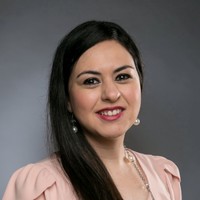

AeroLeads people directory · profile
Veronica Gonzalez-Pena Email & Phone Number
Clinical Life Research Scientist
at
Stanford University
2 work emails found
@stanford.edu
1 phone found area 650
LinkedIn matched
✓ Verified August 2026
4 data sources
Profile completeness 100%
Current company
Role
Clinical Life Research Scientist
Location
Stanford, California, United States
Who is Veronica Gonzalez-Pena? Overview
A concise factual answer block for searchers comparing this professional profile.
Quick answer
Veronica Gonzalez-Pena is listed as Clinical Life Research Scientist at Stanford University, based in Stanford, California, United States. AeroLeads shows a work email signal at stanford.edu, phone signal with area code 650, and a matched LinkedIn profile for Veronica Gonzalez-Pena.
Veronica Gonzalez-Pena previously worked as Staff Scientist at St. Jude Children'S Research Hospital and Post Doctoral Scholar at Stanford University. Veronica Gonzalez-Pena holds Ph.D, Pharmacology And Toxicology from University Of Arizona.
Company email context
Email format at Stanford University
This section adds company-level context without repeating Veronica Gonzalez-Pena's masked contact details.
*@stanford.edu
71% confidence
AeroLeads found 2 current-domain work email signals for Veronica Gonzalez-Pena. Compare company email patterns before reaching out.
Profile bio
About Veronica Gonzalez-Pena
Veronica Gonzalez-Pena is a Clinical Life Research Scientist at Stanford University. She possess expertise in confocal microscopy, immunohistochemistry, rodent handling, blood processing, macs and 45 more skills.
Listed skills include Confocal Microscopy, Immunohistochemistry, Rodent Handling, Blood Processing, and 46 others.
Current workplace
Veronica Gonzalez-Pena's current company
Company context helps verify the profile and gives searchers a useful next step.
9 roles · 26 years
Veronica Gonzalez-Pena work experience
A career timeline built from the work history available for this profile.
Clinical Life Research Scientist

Staff Scientist
Applies single-cell genomics and transcriptomics to characterize tissue and tumor development at a single-cell resolution.
Feb 2015 - Aug 2019
Post Doctoral Scholar
• Studied lung cancer development by immunohistochemistry, multi-color flow cytometry, single cell genomics, and confocal microscopy.• Collected, cryopreserved, and processed tissues from several murine organs including: lung, thymus, liver, and spleen.• Operated FACS-sorters to purify various cell types from murine tissues including lung epithelial cells, HSC's, tissue resident macrophages and other hematopoietic cells for in vivo and in vitro studies.• Performed immunophenotyping experiments by analytical flow cytometry & fluorescence microscopy.• Assessed lung tumor development in mice by H&E and immunofluorescence tissue staining.• Routinely operated FACS Aria II cytometers, Cryotomes, Vibrotomes, Light, Fluorescence and Confocal Microscopes to process and analyze tissue samples.• Utilized FlowJo, ImageJ, Photoshop, Illustrator, Excel, PowerPoint, and Word to perform data analysis and generate reports.• Collected, Interpreted and presented findings at lab meetings and conferences.• Trained students.• Initiated a study and collaboration with experts in microfluidics to examine the mutational spectrum of lung tumors at the single-cell level to map tumor clonal evolution in humans and mice.
Aug 2011 - Jan 2015

Post Doctoral Scholar
• Assessed the activity of several organophosphate-metabolizing enzymes in a large cohort of farmworkers.• Performed and optimized enzyme kinetic assays to determine the activity of several enzymes in human samples.• Collaborated with experts in public health and statistics to examine the relationship between the activity of various enzymes and host factors, such as obesity, age, and gender in a large cohort of women and children. • Co-managed a bio-repository containing thousands of biological samples.• Initiated a study to determine the expression profile of circulating microRNAs in fresh and frozen plasma samples.• Trained several undergraduate students to perform enzyme kinetics, ELISA, and mRNA expression analysis.• Interpreted data and summarized findings in a manuscript for publication in the Journal of Exposure Science and Environmental Epidemiology.
2010 - 2011
~1 yr

Graduate Research Associate
• Conducted hypothesis-driven investigations on the transcriptional regulation of oncogenes.• Researched the scientific literature to create hypothesis and models of mechanism of action. • Designed molecular biology and biochemistry experiments to answer specific questions. • Gained extensive working experience in protein engineering (cloning, plasmid construction, recombinant protein expression) as well as in purification of mammalian and recombinant proteins.• Identified and characterized proteins of interest by using various types of column chromatography, electrophoresis, and mass spectrometry.• Performed gene expression analysis by cDNA microarray, siRNA, and real-time PCR.• Cultured a number of adherent and suspension cancer cell lines. • Performed dual-luciferase reporter assays to determine the effect of specific proteins on gene transcription.• Studied protein-DNA interactions by chromatin immunoprecipitation (ChIP) and circular dichroism.• Contributed to the better understanding of the mechanism of action of CX-3543 (Quarfloxin) in cancer cells. • Presented findings in periodic laboratory meetings, department seminars, and scientific conferences.• Trained various undergraduate and graduate students on recombinant technology, as well as various radioactivity-based biochemistry techniques such as EMSA, filter-binding, polymerase stop assay, and in vitro transcription.• Wrote reports and manuscripts, and contributed significantly to the writing of a grant proposal.• Published three first-author scientific articles in high-quality peer-reviewed journals.
Aug 2004 - Apr 2010
Student Research Assistant
• Studied the differential gene expression profile of hematopoietic stem cells in human cord blood.• Developed and optimized a protocol to purify human cord blood stem cells from cord blood mononuclear cells. • Purified stem cells from cord blood mononuclear cells.• Isolated, amplified, quantified, and reverse transcribed mRNA for cDNA microarray studies.• Maintained a small colony of mouse models of cancer• Collected and evaluated tumors in mice.• Co-authored two scientific publications in high-quality peer-reviewed science journals.
2003 - 2004
~1 yr
Student Research Assistant
• Studied the mechanisms of action by which several dietary isothiocyanates (ITCs) exert their anticancer activity.• Determined the IC50s of several ITCs in multiple cancer cell lines.• Demonstrated that Allyl-ITC and Benzyl-ITC block cell cycle progression and induce apoptosis. • Showed that both Ally-ITC and Benzyl-ITC are potent and time-independent chemopreventive agents.• Determined the expression of glutathione S-tranferases in various cell lines. • Gained proficiency in cell culture, protein expression analysis, and enzyme kinetics. • Used flow cytometry to study the effect of several ITCs on cell cycle and apoptosis.• Co-authored two scientific publications in high-quality peer-reviewed science journals.
2001 - 2002
~1 yr
Summer Research Intern
• Studied the effects that phenylalanine accumulation in the blood of mouse models of PKU have on brain cholesterol levels, which are required for neuron myelination.• Handled, weaned, genotyped, and collected brains from PKU transgenic mice.• Isolated, separated and quantified the levels of esterified and unesterified cholesterol, as well as protein, in mice brains across various age groups by thin layer chromatography and spectrophotometry.
May 2000 - Aug 2000
2 education records
Veronica Gonzalez-Pena education
Ph.D, Pharmacology And Toxicology
B.S., Chemistry/Molecular And Cellular Biology
FAQ
Frequently asked questions about Veronica Gonzalez-Pena
Quick answers generated from the profile data available on this page.
What company does Veronica Gonzalez-Pena work for?
Veronica Gonzalez-Pena works for Stanford University.
What is Veronica Gonzalez-Pena's role at Stanford University?
Veronica Gonzalez-Pena is listed as Clinical Life Research Scientist at Stanford University.
What is Veronica Gonzalez-Pena's email address?
AeroLeads has found 2 work email signals at @stanford.edu for Veronica Gonzalez-Pena at Stanford University.
What is Veronica Gonzalez-Pena's phone number?
AeroLeads has found 1 phone signal(s) with area code 650 for Veronica Gonzalez-Pena at Stanford University.
Where is Veronica Gonzalez-Pena based?
Veronica Gonzalez-Pena is based in Stanford, California, United States while working with Stanford University.
What companies has Veronica Gonzalez-Pena worked for?
Veronica Gonzalez-Pena has worked for Stanford University, St. Jude Children'S Research Hospital, University Of California, Berkeley, University Of Arizona, and The University Of Arizona.
How can I contact Veronica Gonzalez-Pena?
You can use AeroLeads to view verified contact signals for Veronica Gonzalez-Pena at Stanford University, including work email, phone, and LinkedIn data when available.
What schools did Veronica Gonzalez-Pena attend?
Veronica Gonzalez-Pena holds Ph.D, Pharmacology And Toxicology from University Of Arizona.
What skills is Veronica Gonzalez-Pena known for?
Veronica Gonzalez-Pena is listed with skills including Confocal Microscopy, Immunohistochemistry, Rodent Handling, Blood Processing, Macs, Flow Cytometry, Cell Culture, and Transfection.
Find 750M verified contacts
Search by job title, company, industry, location, and seniority. Export verified B2B contact data when you need it.
Start free trialPeople with similar names
Check these profiles if this is not the Veronica Gonzalez-Pena you were looking for.
View similar profiles