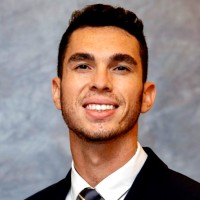
William Ríos López
AeroLeads people directory · profile

William Ríos López Email & Phone Number

Mechanical Engineering Graduate Student at Lawrence Livermore National Laboratory
Location: Penuelas, Puerto Rico 11 work roles 2 schools
LinkedIn matched
✓ Verified Jul 2026 3 data sources Profile completeness 86%

Contact Signals

LinkedIn Profile matched
3 free lookups remaining · No credit card
Role
Mechanical Engineering Graduate Student
Location
Penuelas, Puerto Rico
Company size

Who is William Ríos López? Overview

A concise factual answer block for searchers comparing this professional profile.

Quick answer

William Ríos López is listed as Mechanical Engineering Graduate Student at Lawrence Livermore National Laboratory, a with 6681 employees, based in Penuelas, Puerto Rico. AeroLeads shows a matched LinkedIn profile for William Ríos López.

William Ríos López previously worked as MSIIP Graduate Student Intern at Lawrence Livermore National Laboratory and Graduate Research Assistant at University Of Puerto Rico-Mayaguez. William Ríos López holds Bachelor Of Engineering - Be, Mechanical Engineering from University Of Puerto Rico-Mayaguez.

Company email context

Email format at Lawrence Livermore National Laboratory

This section adds company-level context without repeating William Ríos López's masked contact details.

Lawrence Livermore National Laboratory

Review company-level records connected to William Ríos López before choosing the right outreach path.

Profile bio

About William Ríos López

Curiosity. Such a word could be used to define the core human of evolution. The urge to understand the incomprehensible; the passion to discover what lies beneath plain sight. These are the sparks that I used to ignite the fuel that drives my personal and academic life.In the past few years, I had the amazing opportunity to collaborate with multiple academic and private institutions (such as Cornell University, US Nuclear Regulatory Commission, SLAC National Accelerator Laboratory, University of Texas at El Paso, and Eli Lilly and Company). In addition, I have been exposed to a variety of topics outside of the core field of mechanical engineering such as high energy physics, optics, electromagnetism, and nondestructive structural health monitoring. These experiences have helped me develop leadership and communication soft skills, which are crucial when working in a multidisciplinary environment. I am skillful with numerous programming and engineering software programs like MATLAB, Python, NX/SolidEdge, COMSOL Multiphysics, and Ansys, among others. I am independently motivated, yet I appreciate team efforts and collaborating productively within groups. Resilience and autodidact are two attributes which had forged my character and helped me to stand out. Nowadays, problem-solving comes to me as second nature. I tackle each challenge with a pure merit work ethic and I'm unscared of steep learning curves. More importantly, all of my greatest accomplishments have come as a result of a self-taught personality and a good project management skill set.During the winter of 2021, I received a fellowship award from the United States Nuclear Regulatory Commission to continue with my graduate studies. After finishing my master's, I plan to pursue a Ph.D. in a research field related to wave physics and engineering, targeting my research project to a particular need of the high-energy physics community.Updated [08/23/2023]
Current workplace

William Ríos López's current company

Company context helps verify the profile and gives searchers a useful next step.

Lawrence Livermore National Laboratory
Mechanical Engineering Graduate Student
livermore, california, united states
Website
Employees
6681
AeroLeads page
11 roles

William Ríos López work experience

A career timeline built from the work history available for this profile.

Msiip Graduate Student Intern

Current

Livermore, California, United States

National Ignition Facility Division. Enhancements in magnetron sputtering for B4C capsules promise to increase NIF’s ICF capabilities. The impact of the rotation speed on the formation of nodular defects on the capsule surface was examined with a mechanical setup in the coater chamber that ensured continuous rotation during the sputtering process. Confocal image analysis showed that faster substrate rotation speed increases the size, distribution, and density of nodular defects on the ablators' surface. Sponsored by the NNSA Minority Serving Institute Internship Program.

Jun 2024 - Present

Graduate Research Assistant

Current

Puerto Rico

In 2022 I started a master’s thesis project under the supervision of UPRM Mechanical Engineer professors Silvina Cancelos and Carlos Marin in collaboration with the US Nuclear Regulatory Commission. The research aims to develop and optimize a new generation of acoustic tension metastable fluid neutron detector. Acoustic Tension Metastable Fluid Detectors (ATMFDs) employs piezoelectric components that excites the working fluid pressure field towards a low resonance mode, prescribing the scale of the cavitation energy barrier. By correlating incident fast neutron flux to cavitation events in an acoustic chamber the detector is capable of determining the radiation level and trajectory. Current work is focused on pinpointing the most critical structural parameters of the detector and maximize the neutron detection efficiency for a desire voltage source. Further, the new ATMFD design is being proposed to ascertain neutron directionality.

Jan 2022 - Present

Doe Scholar Fellow

Carlsbad, New Mexico, United States

During the second academic period of 2023-2024 I was selected as a 2024 DOE Scholar Fellow. The hybrid program aim was to provide support to the Carlsbad Field Office at the Waste Isolation Pilot Plant (WIPP). Under the guidance of Ph.D. Hung Chiou, an expert in radiation control, and Leon Duquella, the head of the Safety Program Division, the project's goal was to optimize the operation and maintenance of the radiation air monitor protocol for the WIPP Underground Ventilation System (UVS). By the end of the semester, the group had come up with both immediate and long-term fixes to reduce the amount of salt dust clogging the passivated ion-implanted planar silicon radiation detectors while maintaining the airflow threshold in the nuclear repository panels.

Jan 2024 - May 2024

Summer Intern

Menlo Park, California, United States

During the summer of 2023, I took part in the LCLS Summer Internship Program at SLAC National Accelerator Laboratory. I worked as a Design Engineer in the Matter in Extreme Condition (MEC) experimental hutch. This experimental hutch provides revolutionary capabilities to study the transient behavior of matter in extreme conditions of pressure and temperature. MEC phase contrast imaging is a diagnostic technique to measure the propagation of shock waves through a solid medium. For my internship project, I redesigned the Phase Contrast Imaging Detector optical lens system to increase the illuminations per pixel of the hutch's sCMOS camera without compromising the field of view of the shock wave. This novel design reduces external light noise, improves optical lens compactness and alignment configuration, and facilitates overall maintenance. By implementing an infinite optical system the numerical aperture was increased by 40% while the linear magnitude of the image remained fixed at the desired value.

Jun 2023 - Aug 2023

Undergraduate Research Assistant

Puerto Rico

Throughout this research experience, I worked under the guidance of Dr. David Serrano, a UPRM mechanical engineering professor. The research topic was electromagnetic eddy current generation, and my work aimed to determine critical optimization parameters of an electromagnetic heat induction design and use COMSOL Multiphysics Software to simulate the transient performance of the heater using a moving mesh. Systematic numerical studies showed great agreement of the simulation results with previously published experimental data.

Jan 2021 - Aug 2021

Summer Intern

United States

My mentor throughout this program was UTEP mechanical engineering professor Dr. Norman Love and my research project that I worked on as part of the Consortium of Hybrid and Resilient Energy Systems (CHRES) summer program was titled “Improving the Efficiency of Supercritical Carbon Dioxide Recompression Closed Brayton Cycle (RCBCs)”. The main objective was to design and validate theoretical and computer-simulated models for the supercritical CO2 RCBCs Power Plant used at Sandia National Laboratory to study the longevity of this technology in the nuclear energy generation field. Using ASPEN Plus a model the thermodynamic cycle was generated with excellent correlation with theoretical and published experimental data. The main compressor inlet parameters were optimized to increase the cycle’s overall thermal efficiency by 2%. It was concluded that the computer model serves as a basic guideline for improvement of the RCBC cycle efficiency.

May 2021 - Jul 2021

Undergraduate Research Assistant

Throughout this research experience, I worked under the guidance of UPRM mechanical engineering professor Dr. David Serrano. The research topic was electromagnetic eddy current generation and the aim of my work was to determine critical optimization parameters of an electromagnetic heat induction design and use COMSOL Multiphysics Software to simulate the transient performance of the heater using a moving mesh. Validation studies showed great agreement of the simulation results with previously published experimental data.

Jan 2020 - May 2020

Site Reliability Engineer

Eli

Puerto Rico

The main project consisted of the installation and validation of an online condition monitoring program for the Utility building critical equipment. The implementation of this novel vibration sensor allowed near real-time monitoring and automated continuous analysis of vital mechanical components of the plant's water and glycol chillers. As a result, this technology proved to be capable of substituting previous vibration monitoring techniques, optimizing predictive maintenance, and reducing the probability of unwanted reactive maintenance. Additional side projects include the establishment of a data repository of build-of-material for all HVAC units, vibration collection and analysis of particular equipment, and determining suitable condition-based monitoring routes for future work orders.

Jun 2019 - Dec 2019

Undergraduate Research Assistant

Mayaguez, Puerto Rico

During the semester of the 2018-2019 academic year I worked alongside civil engineer Dr. Rossana Martinez on an undergraduate research project for Structural Health Monitoring (SHM) of Critical Load-Carrying Members. A novel flexibility matrix eigen-decomposition code (developed by Dr. Martinez) was used as a vibration-based method to determine structure damage. Migration of the code from MATLAB's proprietary programming language to Wolfram Mathematica was achieved. Critical data filtering built-in functions from MATLAB's Signal Processing Toolbox were also programmed and validated. The completion of these milestones was a key step for the development of a novel low-budget structural monitoring cyber-physical system.

Aug 2018 - Dec 2018

Undergraduate Research Assistant

Mayaguez, Puerto Rico

During the second semester of my second academic year, I joined Ph.D. Sudhir Malik subatomic particle research group at the University of Puerto Rico at Mayagüez's Physic Department. The group specializes in the analysis and post-processing of data from the diagnostic systems in CERN's Compact Muon Solenoid (CMS) Detector. I was first introduced to the basics of particle physics theory and the experimental efforts done at the Large Hadron Collider (LCS) synchrotron in Geneva, Switzerland. In addition, CMS Phase 2 Upgrade for the Inner and Outer Track was studied in detail to understand the new capabilities of the diagnostic subsystems. Finally, data from the CMS open-source repository was extracted using Python code to determine the momentum of different subatomic particles.

Feb 2018 - Dec 2018

Undergraduate Research Assistant

Ithaca, New York

During the summer we aim to study the material composition of the cooling system that removed the heat of the sensors located at the Inner Tracker of the CMS. One of the most crucial discoveries was theprobability of inducing small percentages of martensite (a ferromagnetic material phase of stainless steel) given the small diameter of the cooling tubes, extreme low temperature conditions and the deformations that the tubes were subjected to. Future experimental milestones were established to determine the magnitude of the CMS magnetic field's forces on the bent tubes generated and some alternative solution materials were proposed.

Jul 2018 - Aug 2018
Team & coworkers

Colleagues at Lawrence Livermore National Laboratory

Other employees you can reach at llnl.gov. View company contacts for 6681 employees →

2 education records

William Ríos López education

FAQ

Frequently asked questions about William Ríos López

Quick answers generated from the profile data available on this page.

What company does William Ríos López work for?

William Ríos López works for Lawrence Livermore National Laboratory.

What is William Ríos López's role at Lawrence Livermore National Laboratory?

William Ríos López is listed as Mechanical Engineering Graduate Student at Lawrence Livermore National Laboratory.

Where is William Ríos López based?

William Ríos López is based in Penuelas, Puerto Rico while working with Lawrence Livermore National Laboratory.

What companies has William Ríos López worked for?

William Ríos López has worked for Lawrence Livermore National Laboratory, University Of Puerto Rico-Mayaguez, Department Of Energy, Carlsbad Field Office (Cbfo), Slac National Accelerator Laboratory, and The University Of Texas At El Paso.

Who are William Ríos López's colleagues at Lawrence Livermore National Laboratory?

William Ríos López's colleagues at Lawrence Livermore National Laboratory include Eric Ziebarth, Tiziana Conese Bond, Jeffrey Connors, William Buckley, and Ben Baker.

How can I contact William Ríos López?

You can use AeroLeads to view verified contact signals for William Ríos López at Lawrence Livermore National Laboratory, including work email, phone, and LinkedIn data when available.

What schools did William Ríos López attend?

William Ríos López holds Bachelor Of Engineering - Be, Mechanical Engineering from University Of Puerto Rico-Mayaguez.

Find 750M verified contacts

Search by job title, company, industry, location, and seniority. Export verified B2B contact data when you need it.

People with similar names

Check these profiles if this is not the William Ríos López you were looking for.

View similar profiles