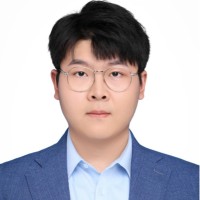
Yucheng Yang Email and Phone Number
Got a B.S degree in Chemistry from Southeast University (Nanjing, CN) and a M.S degree in ChemE from Columbia University (New York, US). Studying for a Ph.D degree in MechE in Columbia now. Researches focus on applying Porous Organic Materials (MOF&COF) and 2D Nano Materials on BioMEMS and Biosensors.During graduate studies in Columbia, employed by the Applied Physics and Applied Mathematics department as a RA, applied COF film to inhibit lithium dendrite in lithium anode-free batteries. Worked over two years as a RA in the BioMEMS lab in the MechE department.During undergraduate studies, employed by the Chinese University of HongKong (Shenzhen) as a RA, explored the synthesis and catalytic effects of MOF@graphdiyne composite materials. Worked over three years as a student assistant and student team leader in labs of Southeast University for organometallic chemistry and green organic chemistry. Simulated and analyzed thermal conductivities of 2D nano materials (graphene) with computational models in Northwestern University (Online). Invited to conduct a report on molecular dynamics simulation of 2D nano materials at the 10th Undergraduate Symposium of Southeast University.Proficient at lab skills, eg. Sensor Fabrication, Glove Box, TLC, Column Chromatography, IR, XRD, UV, NMR, HPLC, XPS, Raman, SEM, EDS, TEM, BET, EDX, TGA. Skilled in C++, LAMMPS, Moldy, ChemDraw, Origin, MestReNova, Endnote, SciFinder and MS Office.

-
Research AssistantColumbia University Mechanical EngineeringNew York, Ny, Us
-
 Research AssistantColumbia University Mechanical Engineering May 2023 - PresentNew York, United States·BioMEMS and Biosensor@BioMEMS Lab
 -
 Research AssistantApplied Physics And Applied Mathematics At Columbia University Feb 2023 - Nov 2023New York, United States·Synthesized TAPB-PDA and Tp-Tta COF film through self-assembly on copper foil substrate. Characterization with SEM, XRD, FIB. Test the mechanical property and chemical stability in electrolyte of the COF. Choose Cu with TAPB-PDA COF film as current collector to manufacture the anode-free pouch cell.·Adjust the morphology and thickness of COF film on Cu with different reaction time and condition. Find 16h COF(0.7um) significantly increase the number of battery cycles with essentially no reduction in battery efficiency in 10g/Ah electrolyte. The mechanism is COF film allows Li ions to pass through it selectively with its pore size(1.4nm) and inhibits the Li dendrite grow on the Cu through its mechanical strength.·Use 5wt% TMP-TMA polymer to solidify/lock the LiDFOB/LiBF4( in FEC-DEC) dual-salt electrolyte to improve its stability to resist the puncture of Li dendrite, increasing the durability and safety of battery. Wet the pore of COF with electrolyte to avoid polymer blockage in it, because the blockage will prevent Li ion to pass through the film and increase the cell polarization.
 -
 Student ResearcherColumbia Engineering Sep 2022 - Dec 2022New York, United States·Synthesized Ni(HITP)2 particle and seperated with nafion and water. Dropped the liquild on SiO2 substrate and heated it to make a membrane with great electricity conductivity, achieved convenient and rapid preparation of MOF electrodes for biosensor. Characterized it with XRD, SEM and TEM.·Explored the best nafion ratio, added a nafion layer on the electrode to make it work efficiently and stably.·Attached aptamer on MOF electrode to measure the concentration change of biomarker, applied the sensor to monitor the molecules, cells and environment change in body(cooperate with Columbia Vagelos College).
 -
 Graduation ProjectSoutheast University Feb 2022 - Jun 2022Nanjing, Jiangsu, China•Synthesizing DBP lithium salt: synthesizing LiN(TMS)2 with n-Bu-Li and NH(TMS)2, using LiN(TMS)2 and 2,6-(t-Bu)2ArOH to synthesize 2,6-(t-Bu)2ArOLi(DBP lithium salt).•Synthesizing new structure silylene: applying tBuN=C=NtBu , PhLi as raw materials to synthesize R-Li (R=PhC(NtBu)2), using R-Li and SiHCl3 to synthesize RSiHCl2, using LiN(TMS)2 to remove LiCl and NH(TMS)2 in toluene to obtain RSiCl, using RSiCl and DBP lithium salt to synthesize new structural and stable silylene 2,6-(t-Bu)2ArO-Si-R. Characterized it with Single Crystal XRD and NMR. •Reacted 2,6-(t-Bu)2ArO-Si-R(LSiR) with O-N(CH3)3, PhC≡CPh, (Ph)2C=O to obtain a series of new compounds LRSi=O ester, C-Si-C ring,C-Si-O ring. Characterized with NMR.
 -
Project ResponsibleSoutheast University Sep 2020 - May 2022Nanjing, Jiangsu, China•Conducted pyridine nitrogen oxidation reactions of 2,3,5-trimethylpyridine and 3,5-dimethylpyridine, 4-position nitration reaction, methoxy substitution reaction, acetic anhydride acylation, and rearrangement reaction, etc. to synthesize 2-hydroxymethylpyridine. Used column chromatography for purification and proceeded IR, HNMR for qualitative analysis.•Improved the synthesis route by replacing methanol solvent with water, replacing toluene extractant with DCM, and replacing methylation reagent dimethyl sulfate with dimethyl carbonate (DMC) to finish methylation in an environment-friendly way.•Improved methylation activity of DMC by introducing substituents, enhancing basicity, increasing temperature, applying polar non-proton solvents, and molecular sieve catalysts based on the BAL2 methylation mechanism of DMC.
-
Student ResearcherSoutheast University Oct 2019 - May 2021Nanjing, Jiangsu, China•Synthesizing new structure silylenes and carbenes: applying diisopropylaniline as raw material, introducing different substituents into N by TMSCl, Pivaloyl chloride, etc.; applied SiHCl3 and CHCl3 to connect-SiHCl2 and-CHCl2 on the other side of N, used LiN(TMS)2 to remove HCl under alkaline conditions to obtain a series of stable silylenes and carbenes with -N(TMS)2 substituents. Utilized Single Crystal XRD and NMR for structure characterizations. •Replaced LiN(TMS)2 with LiN(Ph)TMS, LiN(Ph)2 to increase steric hindrance of substituents and regulate frontier molecular orbitals on Si, explored the influence of steric hindrance on electron reactivity and frontier orbitals properties on Si of silylenes.•Respectively reacted synthesized silylenes with hydrogen, alkynes, CO2 to activate small molecules and synthesize silicon-containing derivatives; synthesized disilene of a special structure by silylenes.
-
 Research AssistantThe Chinese University Of Hong Kong, Shenzhen 香港中文大学(深圳) Jun 2021 - Sep 2021Shenzhen, Guangdong, China•Prepared graphdiyne through Glaser-Hay Coupling reaction with Me3Si-C≡CH, ZnCl and n-BuLi, purified the medium (HEB-TMS) by column chromatography.•Prepared thin-films and nano-wall morphology graphdiyne based on foam substrate of Cu, produced the frame with acid-wash method, prepared Cu-MOF (HKUST-1) and loaded it on graphdiyne through self-assembly, added polymer membrane on the surface to prepare catalyst (GDY-HKUST-1-P) for improving water-phase catalysis effect. •Compared catalytic of GDY-HKUST-1-P, GDY-P, HKUST-1-P, and HKUST-1 on H2O2 oxidizing phenol for verifying the catalysis-enhancement mechanism is promoting electronic transfer and that polymer enhances stability in aqueous catalysis.•Catalyzed the reaction of NBS oxidizing benzyl alcohol and ring-opening reaction of ethylene oxide with GDY-HKUST-1, achieved a yield of >95%.
 -
 Student ResearcherNorthwestern University Feb 2021 - May 2021Illinois, United States•Constructed computational models of graphene structure parameters based on Monte-Carlo and Molecular dynamics to simulate thermal conductivity of graphene on nanoscale through Material Studio based on armrest (AGNRs) and zigzag (ZGNRs).•Selected potential energy models, e.g. Tersoff, Rebo, Airebo for graphene simulation through Lammps and NEMD, studied the relationship of model size with thermal conductivity, discovered the thermal conductivity increases with length and width due to proton transfer in the heat transfer process. •Simulated the relationship of temperature and thermal conductivity with the settled mode size (8.52*4.92 nm), set a series of initial temperatures, fit the temperature gradient by the least square method in Origin, found thermal conductivity increases with temperature, and it causes by the plane structure of graphene.
Yucheng Yang Education Details
-
Chemical Engineering
-
 Nanotechnology
Frequently Asked Questions about Yucheng Yang
What company does Yucheng Yang work for?
Yucheng Yang works for Columbia University Mechanical Engineering
What is Yucheng Yang's role at the current company?
Yucheng Yang's current role is Research Assistant.
What schools did Yucheng Yang attend?
Yucheng Yang attended Columbia University In The City Of New York, 美国哥伦比亚大学, 东南大学, Osaka University.
Not the Yucheng Yang you were looking for?
-
-
 1concordhospital.org
 -

Yucheng Yang
Duke University Ms Ece 2022-2024 | Actively Seeking 2024 Full-Time Sde OpportunitiesDurham, Nc -

Yucheng Yang
Ph.D. Candidate In Computer Engineering @ University Of Wisconsin-Madison | Mobile System Design And User Privacy | Passionate About Designing Innovative Applications For User Security And SafetyMadison, Wi1wisc.edu
Free Chrome Extension
Find emails, phones & company data instantly
Download 750 million emails and 100 million phone numbers
Access emails and phone numbers of over 750 million business users. Instantly download verified profiles using 20+ filters, including location, job title, company, function, and industry.
Start your free trial