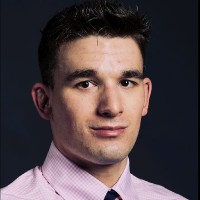
Brian Evans
AeroLeads people directory · profile

Brian Evans Email & Phone Number

Speaking for myself as a private individual at The University of Texas at Austin
Location: Austin, Texas, United States 10 work roles 3 schools
1 work email found @ece.utexas.edu LinkedIn matched
✓ Verified August 2026 4 data sources Profile completeness 100%

Contact Signals · 1 work email

Work email b****@ece.utexas.edu
LinkedIn Profile matched
3 free lookups remaining · No credit card
Role
Speaking for myself as a private individual
Location
Austin, Texas, United States

Who is Brian Evans? Overview

A concise factual answer block for searchers comparing this professional profile.

Quick answer

Brian Evans is listed as Speaking for myself as a private individual at The University of Texas at Austin, based in Austin, Texas, United States. AeroLeads shows a work email signal at ece.utexas.edu and a matched LinkedIn profile for Brian Evans.

Brian Evans previously worked as President at Texas Conference Of The American Association Of University Professors (Aaup) and Interim President at Texas Conference Of The American Association Of University Professors (Aaup). Brian Evans holds Phd, Electrical Engineering from Georgia Institute Of Technology.

Company email context

Email format at The University of Texas at Austin

This section adds company-level context without repeating Brian Evans's masked contact details.

{first_initial}{last}@ece.utexas.edu
86% confidence

AeroLeads found 1 current-domain work email signal for Brian Evans. Compare company email patterns before reaching out.

Profile bio

About Brian Evans

Dr. Brian Evans is the President of the Texas Conference of the American Association of University Professors (AAUP). Since 1915, AAUP has been the central organizing force in US higher ed in its widely adopted principles on academic freedom and shared governance. AAUP has 42,000 members and 500 campus chapters championing these principles and organizing all faculty to promote economic security and quality education. AAUP advocates for free inquiry, free expression, and open dissent, which are critical for student learning and the advancement of knowledge, and against infringement on academic freedom and its safeguards of tenure, due process, and shared governance. AAUP is affiliated with the American Federation of Teachers, and Texas AAUP is affiliated with Texas AFT. Here's the link to join Texas AAUP-AFT: https://connect.aft.org/app/memberforms/8041A/JoinTheFightDr. Brian Evans is the Engineering Foundation Professor of Electrical and Computer Engineering and a founding member of the 6G@UT Research Center (2021-present) and the Wireless Networking and Communications Group (2002-present) at The University of Texas at Austin. His research and teaching interests are to increase connection speeds and reliability in 6G communication systems. To achieve this, he develops signal processing theory, fast algorithms, and prototype implementations in the hope that academic groups, companies, and government labs can build on the ideas. Prof. Evans has published more than 280 refereed conference and journal papers, and graduated 32 PhD and 13 MS students. He was elevated to IEEE Fellow (2009) for his research in improving cellular and wired communication systems, and printed and displayed image quality. He teaches courses in signal processing and embedded systems. He has won several best/top paper awards and teaching awards. In 2019-20, he served as the President of the Faculty Senate at UT Austin. In 2021, he won the Civitatis Award "in recognition of dedicated and meritorious service to the university above and beyond the regular expectations of teaching, research and service" from UT Austin President Jay Hartzell.

Listed skills include Signal Processing, Matlab, Algorithms, Embedded Systems, and 41 others.

Current workplace

Brian Evans's current company

Company context helps verify the profile and gives searchers a useful next step.

The University of Texas at Austin
The University Of Texas At Austin
Speaking for myself as a private individual
AeroLeads page
10 roles · 40 years

Brian Evans work experience

A career timeline built from the work history available for this profile.

President

Current
Texas Conference Of The American Association Of University Professors (Aaup)

Texas, United States

This is a volunteer position for the organization for all AAUP members in Texas. The AAUP is a nonprofit membership association of faculty and other academic professionals. Founded in 1915, AAUP has helped to shape American higher education by developing the standards and procedures that maintain education quality and academic freedom in this country’s colleges and universities. AAUP (representing faculty) jointly formulated with the American Association of Colleges and Universities (representing Presidents) the gold standard for academic freedom and tenure adopted by more than 1,000 colleges and universities and endorsed by more than 250 higher ed organizations. In August 2022, AAUP affiliated with the American Federation of Teachers (1.7M members including 148,000 professors). Follow us on Twitter @TexasAaup and on our blog https://aaup-utaustin.org/ and Web site https://aaup-texas.org/.

Jun 2024 - Present

Interim President

Texas Conference Of The American Association Of University Professors (Aaup)

Texas, United States

Jun 2023 - May 2024

Vice President

Texas Conference Of The American Association Of University Professors (Aaup)

Texas, United States

Jun 2022 - May 2023

Professor

Current

Austin, Texas, United States

As part of the 6G@UT Research Center and Wireless Networking Communication Group, we focus on signal processing and machine learning for 5G/6G physical layer communication systems to improve data throughput, reliability and coverage. We developed deep reinforcement learning algorithms for downlink cellular communications for (1) joint beamforming, power control and interference coordination; (2) multicell basestation coordination; and (3) switching between sub-6 GHz bands and millimeter wave bands. We also derived mixed analog/digital signal processing methods to improve communication performance in energy-efficient hybrid analog/digital beamforming architectures. On the 6G roadmap, we are also pursuing adaptive algorithms and reinforcement learning for reconfigurable intelligence surfaces and full duplex transmission. In these research efforts, we develop mathematical models, fast algorithms, system simulations, and prototype implementations. We develop algorithms with implementation constraints, and perform simulations and prototypes to quantify communication performance vs. run-time complexity tradeoffs to identify practical algorithms. We also conducted research in 3G/4G communication systems, Wi-Fi, and smart grid communication systems (2005-2018) as well as image/video processing (2005-2017). This previous research in communication systems included improving connection speeds for Wi-Fi, cellular and smart grid communication systems by mitigating interference and investigating large sensor arrays to improve cellular and underwater communications. The previous research in image/video processing included Improving visual quality when acquiring video on a smart phone by mitigating rolling shutter artifacts and assessing visual quality in computer graphics and high-dynamic range (HDR) images. For communication and image professing systems, we prototyped ideas in testbeds. We also developed design automation tools for distributed embedded systems.

Sep 2005 - Present

Associate Professor

Austin, Texas, United States

Developed research and education program in embedded signal and image processing systems, esp. in multicarrier wireless and wireline communication systems, and image acquisition and rendering systems. Also conducted research in perceptual image hashing and network tomography. Graduated 10 Ph.D. students and one MS report student in rank as an Associate Professor. Chaired first major undergraduate ECE curriculum reform to take place in more than two decades.Researched the design and real-time implementation of ADSL transceivers. Developed off-line algorithms to design single, dual, and filterbank equalizers to reach the upper bound on achievable bit rate. Developed real-time on-line algorithms for single and dual path equalizers to achieve 95% of the matched filter bound. Released freely distributable ADSL transceiver design toolbox for Matlab.Conducted research in the design and real-time implementation of desktop printer pipelines. Made major contributions in improving the visual quality of halftoning by error diffusion in printer pipelines for both grayscale and color images. Developed still image quality measures useful for evaluating and optimizing halftoning methods. Integrated visual quality measures into the halftoning algorithms themselves. Released several versions of a image halftoning design toolbox for Matlab.To support a research and education program in embedded signal and image processing systems, taught graduate courses Multidimensional Digital Signal Processing and Embedded Software Systems and undergraduate courses Real-Time Digital Signal Processing Lab and Linear Systems and Signals.Directed the Embedded Signal Processing Laboratory, which is part of the Wireless Networking and Communications Group and Center for Perceptual Systems.Offered and accepted Visiting Associate Professor positions at the American University of Beirut in summer 2005 and Cornell University in fall 2002.

Sep 2000 - Aug 2005

Assistant Professor

Austin, Texas, United States

Developed a research and education program in embedded signal and image processing systems. In research, developed theory, fast algorithms, embedded software, and design automation tools for signal processing, image processing, and communication systems. For communication systems, developed multicarrier equalizers and smart antennas. For signal processing systems, developed acoustic echo cancellers, dual-tone multi-frequency (touchtone) detectors, phase locked loops, and sonar beamformers. For image processing, developed image halftoning and quality assessment methods. Graduated three Ph.D. students and five MS report students.In the curriculum, introduced three new courses:Multidimensional Digital Signal Processing (graduate course) presents theory, algorithms, and design tradeoffs in image, video, seismic, and tomographic processing;Embedded Software Systems (graduate course) introduces system-level design: dataflow, synchronous/reactive, and discrete-event models; cosimulation; software synthesis; and CAD tools.Real-Time Digital Signal Processing Laboratory (junior/senior elective) describes the design tradeoffs in mapping signal processing and communication algorithms onto programmable digital signal processor architectures. In the lab component, students design, implement, and test a voiceband transceiver using digital signal processor boards and development tools.Taught Linear Systems and Signals (sophomore required course), which gives students a mathematical foundation for analyzing linear signal processing, communication, and control systems. Also, supervised senior design project students.Founded and directed the Embedded Signal Processing Laboratory, which was part of the Center for Telecommunications and Signal Processing Research and Center for Vision and Image Sciences.
Sep 1996 - Aug 2000

President

Aaup Chapter At The University Of Texas At Austin

Austin, Texas, United States

Nov 2022 - Aug 2023

Co-Convener

Aaup Chapter At The University Of Texas At Austin

Austin, Texas, United States

Co-convened the UT Austin AAUP Chapter 2021-22 with the late Dr. Pat Somers. Prior to Fall 2021, the UT Austin AAUP chapter had been dormant for over 40 years.

Sep 2021 - Nov 2022

Post-Doctoral Researcher

San Francisco Bay Area

Researched electronic design automation for signal processing and communication systems. Prototyped research ideas in the Ptolemy Classic and Mathematica. Developed frameworks for optimizing 2-D decimation systems, M-D signal processing algorithm implementation, and 1-D analog filters. Developed seamless Ptolemy Classic interfaces to Matlab and Mathematica. Wrote proposals, directed student research, and taught a course.

Oct 1993 - Aug 1996

Graduate Student

Greater Atlanta Area

Conducted doctoral research in formalizing simplification and rearrangement rules for multidimensional multirate systems and encoding the rules by computer. Wrote Fortran programs to automate testing for lead and asbestos content in samples. Helped port an expert system to NExpert that diagnosed coronary disease. Coded a symbolic signal processing system in Lisp. Began a similar implementation in Mathematica. Applied pattern recognition and image processing to part identification using C and an image processing board. Developed an expert system for diagnosing problems in a computer network.

1987 - 1993 ~6 yrs
3 education records

Brian Evans education

Masters, Electrical Engineering

Activities and Societies: Catholic Center, Inter-Varsity Christian Fellowship, Intramural Basketball

Bachelor'S, Electrical Engineering And Computer Science

Activities and Societies: Alpha Phi Omega, Catholic Center, Inter-Varsity Christian Fellowship, School Newspaper

FAQ

Frequently asked questions about Brian Evans

Quick answers generated from the profile data available on this page.

What company does Brian Evans work for?

Brian Evans works for The University of Texas at Austin.

What is Brian Evans's role at The University of Texas at Austin?

Brian Evans is listed as Speaking for myself as a private individual at The University of Texas at Austin.

What is Brian Evans's email address?

AeroLeads has found 1 work email signal at @ece.utexas.edu for Brian Evans at The University of Texas at Austin.

Where is Brian Evans based?

Brian Evans is based in Austin, Texas, United States while working with The University of Texas at Austin.

What companies has Brian Evans worked for?

Brian Evans has worked for Texas Conference Of The American Association Of University Professors (Aaup), The University Of Texas At Austin, Aaup Chapter At The University Of Texas At Austin, University Of California, Berkeley, and Georgia Institute Of Technology.

How can I contact Brian Evans?

You can use AeroLeads to view verified contact signals for Brian Evans at The University of Texas at Austin, including work email, phone, and LinkedIn data when available.

What schools did Brian Evans attend?

Brian Evans holds Phd, Electrical Engineering from Georgia Institute Of Technology.

What skills is Brian Evans known for?

Brian Evans is listed with skills including Signal Processing, Matlab, Algorithms, Embedded Systems, Digital Signal Processing, Image Processing, C, and Simulations.

Find 750M verified contacts

Search by job title, company, industry, location, and seniority. Export verified B2B contact data when you need it.

People with similar names

Check these profiles if this is not the Brian Evans you were looking for.

View similar profiles