
Postdoctoral Researcher
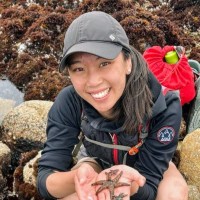
CurrentGenomic improvement of plants cultivated for food, fuel, fiber, and greenhouse gas drawdown in the lab of Todd Michael
Jun 2023 - Present
Please complete the CAPTCHA to continue
@stanford.edu
✓
LinkedIn matched
A concise factual answer block for searchers comparing this professional profile.
Heidi Chen is listed as Postdoctoral Researcher at Salk Institute for Biological Studies, a with 1010 employees, based in San Diego, California, United States. AeroLeads shows a work email signal at stanford.edu and a matched LinkedIn profile for Heidi Chen.
Heidi Chen previously worked as Graduate Student in the Department of Developmental Biology at Stanford University School Of Medicine and Life Sciences Research Assistant at Stanford University. Heidi Chen holds Doctor Of Philosophy - Phd, Developmental Biology from Stanford University School Of Medicine.
This section adds company-level context without repeating Heidi Chen's masked contact details.
AeroLeads found 1 current-domain work email signal for Heidi Chen. Compare company email patterns before reaching out.
Heidi Chen is a Postdoctoral Researcher at Salk Institute for Biological Studies. She possess expertise in whole mount confocal microscopy, immunohistochemistry, qrt pcr, aav and lentivirus production, adobe illustrator and 10 more skills.
Listed skills include Whole Mount Confocal Microscopy, Immunohistochemistry, Qrt Pcr, Aav And Lentivirus Production, and 11 others.
Company context helps verify the profile and gives searchers a useful next step.
A career timeline built from the work history available for this profile.
Genomic improvement of plants cultivated for food, fuel, fiber, and greenhouse gas drawdown in the lab of Todd Michael

Understanding the DNA sequence basis of fin morphology in percomorph fish via computational and functional comparative genomics experiments in the labs of Dr. Gill Bejerano and Dr. David Kingsley

Department Of Biology, Red-Horse Lab
Life Sciences Research Assistant in the lab of Prof. Kristy Red-Horse to elucidate the cellular and molecular mechanisms involved in coronary artery development. Job responsibilities include (but are not limited to) managing a mouse colony (breeding, genotyping etc.), setting up new techniques from the ground up (in situ hybridization, co-immunoprecipitation + SDS-PAGE + western blotting, chick embryo New Culture, neonatal mouse AAV injection via open heart survival surgery) in our relatively young lab, performing whole-mount confocal microscopy, acting as lab (bio)safety and APLAC/IACUC adherence coordinator (writing protocols, understanding compliance requirements), assisting with manuscript drafting/editing/submission and figure preparation, training/mentoring new lab members, managing/performing experiments with collaborators, cell/tissue culture, assisting with experimental design, data analysis, presenting lab meeting/journal club.
Department Of Biology, Red-Horse Lab
Characterized coronary artery development using tissue culture and immunohistochemical techniques (confocal imaging of immunofluorescence-stained section and whole-mount tissue)

Lab Of Kari Alitalo, Wihuri Research Institute
Investigated the role of VEGF-C in sinus venosus-derived coronary vessel sprouting and in coronary artery stem development as a visiting researcher in the lab of Prof. Kari Alitalo. Methods of inquiry included the generation of VEGF-C knockout mice, whole-mount confocal microscopy, SDS-PAGE of immunoprecipitated ligands to explore extent of post-translational proteolytic processing.
Developmental Biology Department, Talbot Lab
Forward genetic screen in zebrafish to identify genes involved in microglia development and regulation using various genetic techniques (bulk segregant analysis, high-resolution mapping, candidate gene sequencing)

Herman B. Wells Center, Department Of Pediatrics, Yoder Lab
Used Cre-Lox technology to lineage trace Hand1 expressing cells (via a constitutively expressed Hand1 promoter-driven Cre recombinase crossed to a YFP reporter) in mice to determine if this transcription factor regulates formation of the hemogenic endothelium of the dorsal aorta. Methods of interrogation included cryo-sectioning, immunofluorescence staining, FACS analysis, confocal microscopy. Found that, indeed, Hand1 is expressed at the right time and right place in the dorsal aorta and, notably, in hematopoietic cells in the aortic lumen to suggest that it may be implicated in the development and/or function of the blood-forming endothelium in the early embryo.
Other employees you can reach at salk.edu. View company contacts for 1010 employees →
 Albert I. Chen
Colleague at Salk Institute For Biological StudiesSan Diego, California, United States
View →
JH
Albert I. Chen
Colleague at Salk Institute For Biological StudiesSan Diego, California, United States
View →
JH
 Joe Hash
Colleague at Salk Institute For Biological StudiesSan Marcos, California, United States
View →
JL
Joe Hash
Colleague at Salk Institute For Biological StudiesSan Marcos, California, United States
View →
JL
 Julie Law
Colleague at Salk Institute For Biological StudiesUnited States
View →
PB
Julie Law
Colleague at Salk Institute For Biological StudiesUnited States
View →
PB
 Pau B. Esparza-Moltó
Colleague at Salk Institute For Biological StudiesSan Diego, California, United States
View →
VO
Pau B. Esparza-Moltó
Colleague at Salk Institute For Biological StudiesSan Diego, California, United States
View →
VO
 Victoria Osorio Vasquez
Colleague at Salk Institute For Biological StudiesSan Diego, California, United States
View →
VB
Victoria Osorio Vasquez
Colleague at Salk Institute For Biological StudiesSan Diego, California, United States
View →
VB
 Victor Bacame
Colleague at Salk Institute For Biological StudiesSan Diego County, California, United States
View →
LC
Victor Bacame
Colleague at Salk Institute For Biological StudiesSan Diego County, California, United States
View →
LC
 Lisa C.
Colleague at Salk Institute For Biological StudiesSan Diego County, California, United States
View →
SP
Lisa C.
Colleague at Salk Institute For Biological StudiesSan Diego County, California, United States
View →
SP
 Sara Priego
Colleague at Salk Institute For Biological StudiesSan Diego County, California, United States
View →
NA
Sara Priego
Colleague at Salk Institute For Biological StudiesSan Diego County, California, United States
View →
NA
 Nicholas Allsing
Colleague at Salk Institute For Biological StudiesSan Diego, California, United States
View →
MS
Nicholas Allsing
Colleague at Salk Institute For Biological StudiesSan Diego, California, United States
View →
MS
 Mark Schmitt
Colleague at Salk Institute For Biological StudiesSan Diego, California, United States
View →
Mark Schmitt
Colleague at Salk Institute For Biological StudiesSan Diego, California, United States
View →
Activities and Societies: Viennese Ball Opening Committee
Quick answers generated from the profile data available on this page.
Heidi Chen works for Salk Institute for Biological Studies.
Heidi Chen is listed as Postdoctoral Researcher at Salk Institute for Biological Studies.
AeroLeads has found 1 work email signal at @stanford.edu for Heidi Chen at Salk Institute for Biological Studies.
Heidi Chen is based in San Diego, California, United States while working with Salk Institute for Biological Studies.
Heidi Chen has worked for Salk Institute For Biological Studies, Stanford University School Of Medicine, Stanford University, University Of Helsinki, and Indiana University School Of Medicine.
Heidi Chen's colleagues at Salk Institute for Biological Studies include Albert I. Chen, Joe Hash, Julie Law, Pau B. Esparza-Moltó, and Victoria Osorio Vasquez.
You can use AeroLeads to view verified contact signals for Heidi Chen at Salk Institute for Biological Studies, including work email, phone, and LinkedIn data when available.
Heidi Chen holds Doctor Of Philosophy - Phd, Developmental Biology from Stanford University School Of Medicine.
Heidi Chen is listed with skills including Whole Mount Confocal Microscopy, Immunohistochemistry, Qrt Pcr, Aav And Lentivirus Production, Adobe Illustrator, Graphpad Prism, In Situ Hybridization, and Bulk Segregant Analysis.
Search by job title, company, industry, location, and seniority. Export verified B2B contact data when you need it.
Start free trial Search contactsCheck these profiles if this is not the Heidi Chen you were looking for.