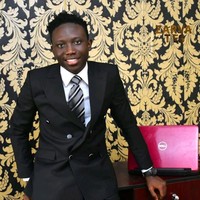
Predoctoral Fellow
CurrentPhD student in the Kreshuk group investigating machine learning for bio-image analysis.
Sep 2022 - Present
Please complete the CAPTCHA to continue

A concise factual answer block for searchers comparing this professional profile.
Joshua Talks is listed as Predoctoral Fellow at EMBL, a with 1052 employees, based in Heidelberg, Baden-württemberg, Germany. AeroLeads shows a matched LinkedIn profile for Joshua Talks.
Joshua Talks previously worked as Research Biological Image Analysis at Oxford Gene Technology Limited and Data Engineer (Test Team) at Pragmatic. Joshua Talks holds Master Of Engineering - Meng, Information And Computer Engineering, Bioengineering, Honours With Merit (1St Project, Ii.1 Modules (32 Percentile)) from University Of Cambridge.
This section adds company-level context without repeating Joshua Talks's masked contact details.
Review company-level records connected to Joshua Talks before choosing the right outreach path.
I am a first year PhD student at the European Molecular Biology Laboratory (EMBL) in Heidelberg, working within the Kreshuk Group developing machine learning-based methods and tools for automatic segmentation, classification and analysis of biological images.I am particularly interested in Computational Biology and Bioinformatics, especially in the field of computer vision and biological image analysis. Deep learning is at the forefront of many advancements driving the current computer vision revolution, and for many challenges in natural image analysis automated techniques are now approaching parity with humans. However, supervised annotation-hungry approaches still present a major bottleneck in the bio-image domain, where it is difficult to obtain a large corpus of reliably labelled data. Annotations of ground-truth data cannot easily be outsourced to non-experts, and changes in experimental conditions can require retraining. Our group is currently working on methods and training strategies that would reduce the requirements on the amount of training data, such as investigating approaches into domain adaption and self-training. To find out more check out my CV or drop me a message.
Company context helps verify the profile and gives searchers a useful next step.
A career timeline built from the work history available for this profile.
Heidelberg, Baden-Württemberg, Germany
PhD student in the Kreshuk group investigating machine learning for bio-image analysis.

Cambridge, England, United Kingdom
I worked in the R&D department at Oxford Gene technology, investigating and implementing AI algorithms for analysing images produced by a MI FCM (Molecular Imaging Flow cytometry) machine. This combines FISH (fluorescent In-Situ Hybridisation) and FCM to produce an automated system that is hoped will increase the testing efficiency and precision for genetic diseases such as Leukaemia.I worked on image analysis, using Machine Learning to analyse subcellular fluorescent images to predict fluorescent spots. One of the major challenges with the dataset was it was unlabelled and labelling it would have required significant time and labour cost. Firstly, I developed an automated annotation pipeline that combined thresholding and filtering stages along with segmentation algorithms to produce semantically segmented images. I then implemented a Convolutional Neural Network (CNN), using the labelled training data that combined a U-Net base along with star-convex polygon approximations to accurately predict fluorescent spot shapes. As an alternative approach, I implemented the previous CNN in a semi-supervised loop that combined clustering analysis to improve semi-supervised classification. This framework combined Fuzzy C-Means (FCM) clustering on unlabelled data to reveal the underlying data space structure, along with a self-training classifier pipeline (CNN previously discussed). The framework aimed to iteratively convert unlabelled data into labelled data, training and improving a classifier at each iteration. The advantage being it only requires a small subset of initially labelled data. I also started looking into active learning as an additional method for training a classifier.Over the project I conducted a literature review, reading and implementing papers on many areas of image analysis from Clustering and Deep Neural Nets to thresholding and image processing. I coded throughout the project in Python, extensively using Keras, Scikit-learn, Open-CV and Pandas.

Cambridgeshire, England, United Kingdom
While at PragmatIC I worked within the Data Test Team on a full stack project to produce a custom web-based data analysis dashboard to allow more flexible and accessible analysis of their RFID chips production and development data.I used SQL to dynamically querying the company database, containing millions of entries, depending on interactive inputs from the user. Allowing the user to easily select any rational combination of data that is was of interest for further inspection. I then used Pandas to sort/format the data into appropriate data-frames and created interactive visualisations using Altair plots. The Dashboard had several layers of analysis and visualisation allowing the user to combine any stage of the production process and click through interactively to different levels with built in analysis of the data or all the way to raw data traces and tables.For the Dashboard I used a Python backend with a Django web framework with a simple modular design to allow for further development and debugging. I developed the user interface and structure of the dashboard using a combination of HTML, CSS styling and dynamic JavaScript to create interactive responses to user inputs. The code also had to be fully and extensively documented to fit into the companies current software standard, throughout the project I maintained best practices for workflow such as using GitHub for version control and working across multiple branches, with scheduled code reviews before merging to a master branch. The project was a great way for me to further strengthen my Python coding and learn and develop skills in new languages such as HTML, CSS and JavaScript. I was constantly faced with new challenges and had to research and learn new skills to overcome them.

Cambridge, England, United Kingdom
While at Huxley Bertram I worked in a combination of the software department and the design office on many different projects, I was part of the whole process from the conceptual design to the implementation of ideas and testing and manufacturing of finished products. I frequently encountered problems outside my expertise and solved this by studying case studies and by learning from the professional engineers around me.As part of the software department I strengthened my Python abilities and worked on the setup of the machine-user interface and also on my own independent project to design and produce an automated microscope inspection rig to detect microscopic defects in products. This involved designing and manufacturing a suitable inspection system that could be integrated into existing systems and then coding a test sequence to automatically inspect products for microscopic failures.As part of the design team I worked with SolidWorks on several design projects such as automated silicon chip production unit, a Vectura inhaler test unit, a high precision tablet press for research into news medicines and a hydrogen aircraft panel permeability test unit. Each project provided its own difficulties and constraints and challenged me to work with the team to create bespoke solutions for each task.The internship not only developed my technical skills, but also developed my ability to work effectively and efficiently in a team within the limitations of time and cost on an industrial scale project, maintaining the highest standard of work while sticking to deadlines in a real-world setting.
Other employees you can reach at embl.de. View company contacts for 1052 employees →
 Martina Peskoller-Fuchs
Colleague at EmblGermany
View →
TF
Martina Peskoller-Fuchs
Colleague at EmblGermany
View →
TF
 Tom Furnival-Adams
Colleague at EmblHeidelberg, Baden-Württemberg, Germany
View →
JH
Tom Furnival-Adams
Colleague at EmblHeidelberg, Baden-Württemberg, Germany
View →
JH
 Jia Hui Li
Colleague at EmblHeidelberg, Baden-Württemberg, Germany
View →
YS
Jia Hui Li
Colleague at EmblHeidelberg, Baden-Württemberg, Germany
View →
YS
 Yashar Sadian
Colleague at EmblHeidelberg, Baden-Württemberg, Germany
View →
AS
Yashar Sadian
Colleague at EmblHeidelberg, Baden-Württemberg, Germany
View →
AS
 Aditya Sankar
Colleague at EmblHeidelberg, Baden-Württemberg, Germany
View →
D-
Aditya Sankar
Colleague at EmblHeidelberg, Baden-Württemberg, Germany
View →
D-
 Dr. -Ing. Eduardo Jacobo Miranda Ackerman
Colleague at EmblDresden, Saxony, Germany
View →
DT
Dr. -Ing. Eduardo Jacobo Miranda Ackerman
Colleague at EmblDresden, Saxony, Germany
View →
DT
 Dr. Thomas Naake
Colleague at EmblHamburg, Germany
View →
LR
Dr. Thomas Naake
Colleague at EmblHamburg, Germany
View →
LR
 Luana Ribeiro
Colleague at EmblCascais, Lisbon, Portugal
View →
YN
Luana Ribeiro
Colleague at EmblCascais, Lisbon, Portugal
View →
YN
 Ye Ning
Colleague at EmblFrankfurt Rhine-Main Metropolitan Area, Germany
View →
SC
Ye Ning
Colleague at EmblFrankfurt Rhine-Main Metropolitan Area, Germany
View →
SC
 Stefania Cucinelli
Colleague at EmblHeidelberg, Baden-Württemberg, Germany
View →
Stefania Cucinelli
Colleague at EmblHeidelberg, Baden-Württemberg, Germany
View →

Investigation of a Novel DNA Alignment Algorithm (Masters Project): As technology advances it will become feasible to store data.

Quick answers generated from the profile data available on this page.
Joshua Talks works for EMBL.
Joshua Talks is listed as Predoctoral Fellow at EMBL.
Joshua Talks is based in Heidelberg, Baden-württemberg, Germany while working with EMBL.
Joshua Talks has worked for Embl, Oxford Gene Technology Limited, Pragmatic, and Huxley Bertram Engineering Ltd.
Joshua Talks's colleagues at EMBL include Martina Peskoller-Fuchs, Tom Furnival-Adams, Jia Hui Li, Yashar Sadian, and Aditya Sankar.
You can use AeroLeads to view verified contact signals for Joshua Talks at EMBL, including work email, phone, and LinkedIn data when available.
Joshua Talks holds Master Of Engineering - Meng, Information And Computer Engineering, Bioengineering, Honours With Merit (1St Project, Ii.1 Modules (32 Percentile)) from University Of Cambridge.
Search by job title, company, industry, location, and seniority. Export verified B2B contact data when you need it.
Start free trial Search contactsCheck these profiles if this is not the Joshua Talks you were looking for.