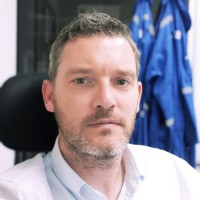
AeroLeads people directory · profile
Stephen Dunne Email & Phone Number
Assistant Professor
at
Northumbria University
1 work email found
@hotmail.co.uk
LinkedIn matched
✓ Verified July 2026
4 data sources
Profile completeness 100%
Current company
Role
Assistant Professor
Location
Newcastle Upon Tyne, England, United Kingdom
Who is Stephen Dunne? Overview
A concise factual answer block for searchers comparing this professional profile.
Quick answer
Stephen Dunne is listed as Assistant Professor at Northumbria University, based in Newcastle Upon Tyne, England, United Kingdom. AeroLeads shows a work email signal at hotmail.co.uk and a matched LinkedIn profile for Stephen Dunne.
Stephen Dunne previously worked as Senior Lecturer in Psychology at University Of Sunderland and Lecturer In Psychology at University Of Sunderland. Stephen Dunne holds Doctor Of Philosophy (Ph.D.), Cognitive Neuroscience from University Of Durham.
Company email context
Email format at Northumbria University
This section adds company-level context without repeating Stephen Dunne's masked contact details.
{first}.{last}@hotmail.co.uk
86% confidence
AeroLeads found 1 current-domain work email signal for Stephen Dunne. Compare company email patterns before reaching out.
Profile bio
About Stephen Dunne
I obtained a BSc (Hons) in Psychology from the University of Durham in 2009. After taking a year out working as an Assistant Psychologist for a charity providing vocational and community support for brain injury survivors, I started my PhD in Cognitive Neuroscience at Durham in 2010, completing this in November 2014.My PhD explored the use of monetary rewards on eye movements in neuro-typical human participants extending previously held knowledge regarding the effectiveness of rewards as a tool for behaviour change in neuro-typical populations and the application of reward-based training for sufferers of visual field deficits such as hemianopia.From 2014 to 2018, I worked at Durham University as a postdoctoral researcher developing, disseminating and conducting research using an app to help compensate for visual loss associated with stroke. My involvement with the development and implementation of rehabilitation paradigms for stroke survivors with visual loss has led me to question how factors such as motivation, competition and goal-setting can be manipulated to improve patient outcome. At best these psycho-social factors in rehabilitation are poorly evidenced and at worst, non-existent. My research aims to understand the interaction between concepts such as competition, collaboration, motivation, reward and goal-setting in order to apply these findings to patient populations. I am a member of the Experimental Psychology Society, the British Psychological Society and a Senior Fellow of the Higher Education Academy.Specialties: Brain Injury, Cognitive Neuroscience, Experimentation, Data Analysis, Data Collection, Mental Health Issues, Neurorehabilitation, Psychology, Psychometrics, Rehabilitation, Report Writing, Research, Reward Learning, Statistical Analysis, Stroke, Vision, Visual Field Deficits
Listed skills include Mental Health, Research, Psychology, Report Writing, and 21 others.
Current workplace
Stephen Dunne's current company
Company context helps verify the profile and gives searchers a useful next step.
12 roles
Stephen Dunne work experience
A career timeline built from the work history available for this profile.

Assistant Professor

Senior Lecturer In Psychology
Aug 2019 - Jan 2022
Lecturer In Psychology
May 2018 - Aug 2019

Postdoctoral Research Associate - Drex Project Manager
Homonymous visual field defects, such as hemianopia, involve partial blindness in both eyes which occurs following damage to the parts of the brain responsible for processing visual information. They are one of the most common and disabling consequences of brain damage, with the visual loss impacting on numerous everyday activities like crossing the street, avoiding obstacles, shopping, reading and driving. Furthermore, the reduced independence of such patients has a subsequent negative effect… Show more Homonymous visual field defects, such as hemianopia, involve partial blindness in both eyes which occurs following damage to the parts of the brain responsible for processing visual information. They are one of the most common and disabling consequences of brain damage, with the visual loss impacting on numerous everyday activities like crossing the street, avoiding obstacles, shopping, reading and driving. Furthermore, the reduced independence of such patients has a subsequent negative effect on their emotional and social functioning. There is currently no systematic rehabilitation strategy for such patients available on the NHS.At Durham University a computerised program has been developed to assist in the rehabilitation of hemianopia called Durham Reading and Exploration (DREX). The training is completed by patients in their own home, with minimal clinical input, and encourages them to adopt more effective eye movements that allow them to compensate for their visual loss. The training has been validated in two trials as an effective rehabilitation tool for patients with homonymous visual field defects. Within my role I am responsible for the continuation of the DREX project; professionalising the DREX training and producing the necessary materials that will allow clinicians and patients to use the training with ease and confidence, but also minimal assistance and cost. Multiplatform versions of DREX will be developed enabling the training to be used by a wider range of individuals with access to different technology such as I-Pads, tablets and smartphones. Furthermore, outcome measures will be built into the program to enable patient improvement to be monitored. Also as part of the project, I am responsible for promoting the DREX program within the NHS on a national scale, ensuring that clinicians are aware of the product and able to distribute it to patients who may find it beneficial. Show less
Nov 2014 - May 2018
Research Postgraduate (Ph.D. Cognitive Neuroscience)
During a studentship awarded by the University of Durham in Cognitive Neuroscience, my thesis explored the use of monetary rewards on eye movements in neuro-typical human participants extending previously held knowledge regarding the effectiveness of rewards as a tool for behaviour change. I have had responsibility for the control of experiments from inception to completion, including the recruitment of participants, data collection, statistical analysis and report writing. Therefore, I am… Show more During a studentship awarded by the University of Durham in Cognitive Neuroscience, my thesis explored the use of monetary rewards on eye movements in neuro-typical human participants extending previously held knowledge regarding the effectiveness of rewards as a tool for behaviour change. I have had responsibility for the control of experiments from inception to completion, including the recruitment of participants, data collection, statistical analysis and report writing. Therefore, I am fully adept in working independently in an academic environment and using my own initiative. I also have experience of conducting lengthy systematic literature reviews in order to form the argument on which my thesis is based. Diligent planning and working to a schedule enabled me to be able to complete my thesis three months prior to my deadline. While conducting my undergraduate and doctoral studies, I have gained experience of using a number of statistical analysis software packages including SPSS and Sigmaplot, in order to analyse both quantitative and qualitative data. Show less
Oct 2010 - Oct 2014

Voluntary Research Assistant
Coinciding with my role as an Assistant Psychologist I was afforded the opportunity to take part in a longitudinal national research project funded by Buckinghamshire Healthcare NHS Trust, investigating the difficulties in social interactions after acquired brain injury and the impact on family and in the work place. The project explored difficulties in memory, planning and organisation plus other personal and social factors influencing outcomes for couples, children, relatives and… Show more Coinciding with my role as an Assistant Psychologist I was afforded the opportunity to take part in a longitudinal national research project funded by Buckinghamshire Healthcare NHS Trust, investigating the difficulties in social interactions after acquired brain injury and the impact on family and in the work place. The project explored difficulties in memory, planning and organisation plus other personal and social factors influencing outcomes for couples, children, relatives and relationships in the workplace. I was charged with the recruitment and follow-up of participants along with their partners and a vocational representative at three-month intervals for a twelve-month period. One of my main duties was the psychometric testing of participants and the scoring of these tests. Within this role I was trained in the use of a number of neuropsychological and social tests including: the Test of Everyday Attention (TEA); Behavioural Assessment of Dysexecutive Syndrome (BADS); the Weschler Memory Scale (WMS); Hayling and Brixton testing; and social inference tests. Through this role I developed a familiarity with NHS protocols and gained experience of direct patient liaison. Regular research forums were held where findings were presented to the Lead Investigator. Through this role I have gained experience of working within the NHS on a funded research project and have experience of disseminating research findings to NHS professionals and other researchers. Furthermore, direct experience of patient interviews and building effective research relationships with service users and NHS professionals was essential to the effectiveness of this role. Show less
Jan 2011 - Jan 2014
Assistant Psychologist
Momentum North East (Formerly Rehab Uk)
This role has involved working with a diverse group of individuals aged between 17 and 70 years, with a wide range of neural and physical conditions, including brain trauma and mental health difficulties. As an Assistant Psychologist, the role involved undertaking clinical interviews and writing up reports with a clinical focus, which provided the basis for multi-disciplinary support and intervention through a prescribed care and safety plan. My responsibilities within this role mean that I am… Show more This role has involved working with a diverse group of individuals aged between 17 and 70 years, with a wide range of neural and physical conditions, including brain trauma and mental health difficulties. As an Assistant Psychologist, the role involved undertaking clinical interviews and writing up reports with a clinical focus, which provided the basis for multi-disciplinary support and intervention through a prescribed care and safety plan. My responsibilities within this role mean that I am fully competent in communicating with a wide range of people of varying cognitive ability including both service users and professionals. I therefore pride myself on my ability to be an excellent communicator and adapt flexibly to a changing environment. With a keen eye for detail and using sensitive and appropriate wording, I have written assessments and other reports relating to service users. I am always careful to tailor the language that I use to an appropriate level for the service user I am working with, taking into account their age and cognitive ability.I have also been involved in running group and individual therapy sessions contributing to the vocational rehabilitation of service users. This particular aspect of the role required independent planning and delivery of a number of weekly sessions including goal setting, stress management and brain injury awareness sessions for service users. I developed new teaching materials and workbooks tailored to each individual service user’s cognitive ability and needs. I devised methods of delivering group-based sessions to large cohorts of service users, such as debates and poster presentations. Service users’ feedback indicated this was a helpful way to learn more about themselves, whilst giving the service users important practical information in order to assist them in their everyday lives. Show less
Jan 2011 - Sep 2013
Support Worker
Momentum North East (Formerly Rehab Uk)
As an undergraduate, I also worked part time as a Community Support Assistant. Primarily I worked on a one-to-one basis with individuals in their own homes, in the community and in residential settings. Within this role I was involved in the building, implementation and maintenance of training packages, providing professional support to assist and enable service users’ engagement in social situations and integration in society. As vulnerable young people and adults, many service users needed… Show more As an undergraduate, I also worked part time as a Community Support Assistant. Primarily I worked on a one-to-one basis with individuals in their own homes, in the community and in residential settings. Within this role I was involved in the building, implementation and maintenance of training packages, providing professional support to assist and enable service users’ engagement in social situations and integration in society. As vulnerable young people and adults, many service users needed considerable support to manage day-to-day tasks without becoming overwhelmed by their difficulties. Working systemically ensured that service users were able to access appropriate support within their immediate and extended family systems, increasing their confidence to disassociate from negative influences within their existing peer group, and developing resilience and self-belief to enable them to manage negative influences within their local community. Show less
Feb 2010 - Jan 2011

Voluntary Worker
I have previously trained and worked with Victim Support. My role involved helping witnesses cope with going to court by giving them information and support. I informed witnesses, from both prosecution and defence, about what to expect at court. I also assisted with practical arrangements and enabled witnesses to deal with the emotional side of giving evidence in a court room setting. This role gave me experience of highly charged emotional situations and taught me the importance of… Show more I have previously trained and worked with Victim Support. My role involved helping witnesses cope with going to court by giving them information and support. I informed witnesses, from both prosecution and defence, about what to expect at court. I also assisted with practical arrangements and enabled witnesses to deal with the emotional side of giving evidence in a court room setting. This role gave me experience of highly charged emotional situations and taught me the importance of communication in such settings, a skill that I am able to employ in all other areas of my life and work now. Show less
Feb 2009 - Mar 2010
Support Worker
Neuropartners Ltd.
Employed as a part-time support worker, I helped provide professional support for individuals suffering from a wide variety of conditions, including brain injury, neurological conditions, learning disabilities and mental health issues. Working with clients on a one-to-one basis has helped further develop my communication and inter-personal skills which are vital to the effectiveness of the role. Furthermore, as some service users are unable to look after their money, it was my role to supervise… Show more Employed as a part-time support worker, I helped provide professional support for individuals suffering from a wide variety of conditions, including brain injury, neurological conditions, learning disabilities and mental health issues. Working with clients on a one-to-one basis has helped further develop my communication and inter-personal skills which are vital to the effectiveness of the role. Furthermore, as some service users are unable to look after their money, it was my role to supervise and aid their spending habits. The support work that I have undertaken with people suffering from a diverse range of conditions has been a demanding yet stimulating and rewarding experience.Communication skills are vital to the effectiveness of the role; it was necessary to listen carefully, to understand and deal effectively with genuine frustration manifested in different ways and to provide support and guidance on how their behaviour should be adapted to meet the challenges that integration presents. Show less
Jul 2008 - Feb 2010

Cad Technician
Summer vacation employment at a Chartered Quantity Surveyors helped to develop my ICT, communication and inter-personal skills. I am proficient in most Office based software applications, for example MS Word and Excel. Although often tasked to undertake work individually, I recognised that I was nevertheless part of a dedicated team and was able to make a positive contribution.
Jun 2003 - Jun 2006
2 education records
Stephen Dunne education
Doctor Of Philosophy (Ph.D.), Cognitive Neuroscience
Bachelor'S Degree, B.Sc. Applied Psychology (Hons), 2:1
FAQ
Frequently asked questions about Stephen Dunne
Quick answers generated from the profile data available on this page.
What company does Stephen Dunne work for?
Stephen Dunne works for Northumbria University.
What is Stephen Dunne's role at Northumbria University?
Stephen Dunne is listed as Assistant Professor at Northumbria University.
What is Stephen Dunne's email address?
AeroLeads has found 1 work email signal at @hotmail.co.uk for Stephen Dunne at Northumbria University.
Where is Stephen Dunne based?
Stephen Dunne is based in Newcastle Upon Tyne, England, United Kingdom while working with Northumbria University.
What companies has Stephen Dunne worked for?
Stephen Dunne has worked for Northumbria University, University Of Sunderland, Durham University, Oxfordshire And Buckinghamshire Mental Health Nhs Foundation Trust, and Momentum North East (Formerly Rehab Uk).
How can I contact Stephen Dunne?
You can use AeroLeads to view verified contact signals for Stephen Dunne at Northumbria University, including work email, phone, and LinkedIn data when available.
What schools did Stephen Dunne attend?
Stephen Dunne holds Doctor Of Philosophy (Ph.D.), Cognitive Neuroscience from University Of Durham.
What skills is Stephen Dunne known for?
Stephen Dunne is listed with skills including Mental Health, Research, Psychology, Report Writing, Statistics, Therapists, Clinical Study Design, and Clinical Research.
Find 750M verified contacts
Search by job title, company, industry, location, and seniority. Export verified B2B contact data when you need it.
Start free trialPeople with similar names
Check these profiles if this is not the Stephen Dunne you were looking for.
View similar profiles