
AeroLeads people directory · profile
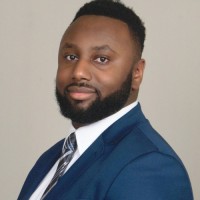
Marcus Young Email & Phone Number
Associate Professor and Director of AMMPI at University of North Texas
at
University of North Texas
1 work email found
@unt.edu
4 phones found area 541 and 940
LinkedIn matched
✓ Verified July 2026
4 data sources
Profile completeness 100%
Current company
Role
Associate Professor and Director of AMMPI at University of North Texas
Location
Denton, Texas, United States
Who is Marcus Young? Overview
A concise factual answer block for searchers comparing this professional profile.
Quick answer
Marcus Young is listed as Associate Professor and Director of AMMPI at University of North Texas at University of North Texas, based in Denton, Texas, United States. AeroLeads shows a work email signal at unt.edu, phone signal with area code 541, 940, and a matched LinkedIn profile for Marcus Young.
Marcus Young previously worked as Associate Professor / Associate Chair for the Undergraduate Degree Program at University Of North Texas and Assistant Professor / Associate Chair for the Undergraduate Degree Program at University Of North Texas. Marcus Young holds Phd, Materials Science Engineering from Northwestern University.
Company email context
Email format at University of North Texas
This section adds company-level context without repeating Marcus Young's masked contact details.
{first}.{last}@unt.edu
86% confidence
AeroLeads found 1 current-domain work email signal for Marcus Young. Compare company email patterns before reaching out.
Profile bio
About Marcus Young
Marcus Young is a Associate Professor and Director of AMMPI at University of North Texas at University of North Texas. He possess expertise in materials science, characterization, mechanical testing, materials, scanning electron microscopy and 28 more skills. He is proficient in Spanish and German.
Listed skills include Materials Science, Characterization, Mechanical Testing, Materials, and 29 others.
Current workplace
Marcus Young's current company
Company context helps verify the profile and gives searchers a useful next step.
12 roles · 25 years
Marcus Young work experience
A career timeline built from the work history available for this profile.
Associate Professor / Associate Chair For The Undergraduate Degree Program
CurrentUnder the broad heading of Structural Metallic Materials, Dr. Young’s research group focuses on the development, processing, and characterization of structural alloys, specifically, shape memory alloys, refractory and reactive metal alloys, lightweight alloys, amorphous metal alloys, high entropy alloys, and complex concentrated alloys.Often times, using these structural alloys as a base, his research group also focuses on the development, processing, and characterization of porous metallic materials and metal composites.In terms of characterization techniques, Dr. Young’s research group is especially focused on characterizing materials using neutron, synchrotron and laboratory X-ray scattering in combination with thermomechanical testing. In addition to characterization of structural metallic materials, Dr. Young’s group also examines battery materials (e.g. Pb- & Zn-based) and superconducting materials (e.g. REBCO and MgB2).Another branch of Dr. Young’s research group is focused on examining modern and ancient art historical objects by using a multitude of advanced techniques such as DSC, SEM, TEM, neutron diffraction, synchrotron X-ray diffraction and imaging, Nanoindentation, and 3D atom probe. Most of these cultural heritage objects are of historical significance so it is important to pay special attention to testing nondestructively and non-invasively.
Sep 2018 - Present
Assistant Professor / Associate Chair For The Undergraduate Degree Program
University Of North Texas
Under the broad heading of Structural Metallic Materials, Dr. Young’s research group focuses on the development, processing, and characterization of structural alloys, specifically, shape memory alloys, refractory and reactive metal alloys, lightweight alloys, and amorphous metal alloys.Often times, using these structural alloys as a base, his research group also focuses on the development, processing, and characterization of porous metallic materials and metal composites.In terms of characterization techniques, Dr. Young’s research group is especially focused on characterizing materials using neutron, synchrotron and laboratory X-ray scattering in combination with thermomechanical testing.Another branch of Dr. Young’s research group is focused on examining modern and ancient art historical objects by using a multitude of advanced techniques such as DSC, SEM, TEM, neutron diffraction, synchrotron X-ray diffraction and imaging, Nanoindentation, and 3D atom probe. Most of these cultural heritage objects are of historical significance so it is important to pay special attention to testing nondestructively and non-invasively.
Sep 2012 - Sep 2018

Research Metallurgist
My research was focused primarily on development, processing, and characterization of shape memory alloys, superconducting alloys, bulk metallic glasses, Hf-, Ti- and Zr-based alloys.
Oct 2010 - May 2012

Aug 2010 - May 2012
Alexander Von Humboldt Foundation Post-Doctoral Research Fellow
My research was focused primarily on processing and characterization of shape memory and superelastic NiTi and short-fiber reinforced AlMg- and AlZn-metal matrix composites. Experimental techniques used for this research included DSC, SEM, TEM, IR thermography, nanoindentation, X-ray diffraction, and extensive mechanical testing. I also characterized NiTiCuPd thin films produced using a combinatorial approach. Based on results from these thin films, I developed NiTiCuPd bulk materials such as wires, spring actuators, and tensile and compression samples. In addition to my research, I also supervised several projects.
Feb 2008 - Feb 2010

Andrew W. Mellon Foundation Post-Doctoral Research Fellow
My research involved characterizing both ancient and modern (Bonnard, Bouraine, Brancusi, Despiau, Lipchitz, Maillol, Matisse, Picasso, and Poupelet) bronzes using ICP, SEM, SIMS, and X-ray techniques such as fluorescence, spectroscopy, imaging, and diffraction.
Jul 2006 - Aug 2007
Researcher
Northwestern University
2002 - 2007
~5 yrs

Graduate Research Assistant
As a graduate research assistant, my research was focused primarily on strain measurements and imaging of metal matrix composites using high energy x-rays at the APS. The metal matrix composites researched were interpenetrating Al2O3-Al composites, super-conducting Mg-MgB2 composites, ultrahigh-carbon steels, Al-Mullite syntactic foam composites, and Al-SiC biomorphic composites. In addition to these materials, I also performed some research on Zr-Nb and shape-memory NiTi with Prof. Mark Daymond at Queen’s University and ancient Chinese bronzes with Dr. Francesca Casadio at the Art Institute of Chicago.
Sep 2002 - Jul 2006

Summer Internship
My research involved mechanical testing to determine the strength distribution and Weibull modulus of silicon carbide fibers for General Electric’s Ceramics Laboratory at G.E. Global Research Facility. These fibers are used as reinforcement in high temperature structural composites such as ceramic matrix composites.
May 2001 - Aug 2001
Research Assistant
Used Visual Basic to assist in the implementation of a broad-based U.S. Chemical Process Industry molecular modeling simulation.
Dec 1999 - Aug 2000
Sole Proprietor
Infinite Vision
Ceramics business in which I produced, marketed, and sold ceramics.
Jan 1995 - Aug 1998
3 education records
Marcus Young education
Phd, Materials Science Engineering
Bs, Metallurgical & Material Science Engineering
2 Bfa'S, Ceramics - Sculpture
FAQ
Frequently asked questions about Marcus Young
Quick answers generated from the profile data available on this page.
What company does Marcus Young work for?
Marcus Young works for University of North Texas.
What is Marcus Young's role at University of North Texas?
Marcus Young is listed as Associate Professor and Director of AMMPI at University of North Texas at University of North Texas.
What is Marcus Young's email address?
AeroLeads has found 1 work email signal at @unt.edu for Marcus Young at University of North Texas.
What is Marcus Young's phone number?
AeroLeads has found 4 phone signal(s) with area code 541, 940 for Marcus Young at University of North Texas.
Where is Marcus Young based?
Marcus Young is based in Denton, Texas, United States while working with University of North Texas.
What companies has Marcus Young worked for?
Marcus Young has worked for University Of North Texas, Ati Wah Chang, Oregon State University, Ruhr-Universität Bochum, and Northwestern University.
How can I contact Marcus Young?
You can use AeroLeads to view verified contact signals for Marcus Young at University of North Texas, including work email, phone, and LinkedIn data when available.
What schools did Marcus Young attend?
Marcus Young holds Phd, Materials Science Engineering from Northwestern University.
What skills is Marcus Young known for?
Marcus Young is listed with skills including Materials Science, Characterization, Mechanical Testing, Materials, Scanning Electron Microscopy, Composites, Simulations, and Powder X Ray Diffraction.
Find 750M verified contacts
Search by job title, company, industry, location, and seniority. Export verified B2B contact data when you need it.
Start free trialPeople with similar names
Check these profiles if this is not the Marcus Young you were looking for.
View similar profiles