AeroLeads people directory · profile
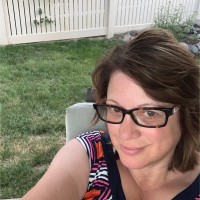
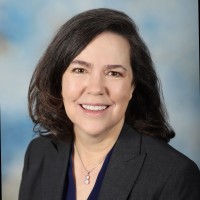
Sharon Schendel Email & Phone Number
Project Manager and Science Writer Consortium for Immunotherapeutics Against Emerging Viral Threats
at
La Jolla Institute for Immunology
1 work email found
@lji.org
2 phones found area 561
LinkedIn matched
✓ Verified August 2026
4 data sources
Profile completeness 100%
Current company
Role
Project Manager and Science Writer Consortium for Immunotherapeutics Against Emerging Viral Threats
Location
San Diego, California, United States
Company size
Who is Sharon Schendel? Overview
A concise factual answer block for searchers comparing this professional profile.
Quick answer
Sharon Schendel is listed as Project Manager and Science Writer Consortium for Immunotherapeutics Against Emerging Viral Threats at La Jolla Institute for Immunology, a with 423 employees, based in San Diego, California, United States. AeroLeads shows a work email signal at lji.org, phone signal with area code 561, and a matched LinkedIn profile for Sharon Schendel.
Sharon Schendel previously worked as Project Manager/Science Writer Consortium for Immunotherapeutics Against Emerging Viral Threats at La Jolla Institute For Immunology and Freelance editor at 3C Editing. Sharon Schendel holds Ba, Chemistry from Indiana University Bloomington.
Company email context
Email format at La Jolla Institute for Immunology
This section adds company-level context without repeating Sharon Schendel's masked contact details.
{last}@lji.org
89% confidence
AeroLeads found 1 current-domain work email signal for Sharon Schendel. Compare company email patterns before reaching out.
Profile bio
About Sharon Schendel
In essence, all scientific research can be communicated as a story. I’ve devoted much of my scientific career to helping scientists tell their story so that the importance of their results is clear to all audiences, no matter their level of expertise.
Listed skills include Life Sciences, Publishing, Biochemistry, Cell Biology, and 31 others.
Current workplace
Sharon Schendel's current company
Company context helps verify the profile and gives searchers a useful next step.
La Jolla Institute For Immunology
9 roles
Sharon Schendel work experience
A career timeline built from the work history available for this profile.
Project Manager/Science Writer Consortium For Immunotherapeutics Against Emerging Viral Threats
CurrentThe Consortium for Immunotherapeutics Against Emerging Viral Threats is an NIH funded, multidisciplinary partnership that brings together researchers in academic, industry and government settings to develop antibody-based therapeutics to treat individuals infected with some of the world's most feared viruses, including Ebola virus, Lassa virus and Equine Encephalitis Viruses. I help write grant applications, publications and reports for the Consortium, and ensure that the Consortium's activities are compliant with funding body mandates.
Jun 2019 - Present
Freelance Editor
Current
3C Editing
In 1999 I began helping colleagues edit their research papers and grants. Since then I've provided editing assistance to scientists at the Sanford Burnham Prebys Medical Discovery Institute, the Genomics Institute of the Novartis Research Foundation (GNF, La Jolla), the Boston Biomedical Research Institute, Thomas Jefferson University, Tulane University, Harvard University, and Cepheid, Inc. In 2009 I contracted with Jam Post (www.jamp.com), which specializes in editing for researchers based in Japan, and I've since completed more than 350 assignments. I expanded my contract work in 2011 by taking on papers from Bioscience Editing Solutions (www.bioscienceeditingsolutions.com) and have edited more than 250 papers for this service. In 2016 I wrote a 2,000-word newsletter article for Cepheid, Inc. (Sunnyvale, CA) that surveyed the recent literature to frame the debate about whether molecular testing for C. difficile should be used not only for diagnosis but also for infection control. For all of these assignments, I strive to submit the updated versions earlier than requested and have never missed a deadline. I aim to enhance the clarity and the conciseness of the text, improve transitions and reduce redundancy, as well as make suggestions for improving the figure presentation to highlight the importance of the results. Please note that The Scripps Research Institute (TSRI) is not involved with and does not endorse my free-lance editing work, which is wholly independent of my full-time position as an employee of TSRI.
Jan 1999 - Present

Project Manager/Science Writer Viral Hemorrhagic Fever Immunotherapeutics Consortium
I’m excited to join the lab of Dr. Erica Ollmann Saphire at The Scripps Research Institute to work as a Project Manager/Science Writer coordinating the data analysis and program reporting for the Viral Hemorrhagic Fever Immunotherapeutics Consortium (VIC). This international, multidisciplinary collaborative effort is directed by Dr. Saphire and funded by a National Institute of Allergy and Infectious Diseases (NIAID) Center for Excellence in Translational Research (CETR) grant. The VIC brings together nearly 40 labs and compiled one of the largest collections of antibodies against filoviruses and arenaviruses that allows the testing of novel antibody combinations to design more effective antibody-based therapeutics for pre- and post-exposure protection against these deadly viruses. In my role as Project Manager, I work closely with Dr. Saphire and VIC collaborators to:• Manage, integrate and analyze datasets generated by VIC to identify novel, lifesaving antibody cocktails for pre- or post-exposure protection against filoviruses and arenaviruses• Craft grant proposals, progress reports and scientific manuscripts for the VIC and the Saphire laboratory • Design figures and slide presentations to highlight VIC findings• Provide content for and maintain the VIC website • Assist Saphire lab members with writing-based projects
Mar 2017 - Jun 2019

Graduate And Postdoctoral Education Specialist
Working with the Sanford Burnham Prebys Medical Discovery Institute’s (SBP) Graduate School of Biomedical Sciences (GSBS) is an exciting new career direction that allows me to pursue my long-standing interest in science education. This young and innovative program aims to use novel approaches to educate the biomedical scientists of the future.In my role as Specialist I work closely with the Program’s Dean and Manager to:• Organize training and workshops to keep SBP faculty and staff abreast of the latest pedagogical approaches in higher education and consult with the faculty on Program accreditation, evaluation, and improvement. • Work with students and faculty to ensure that they have meaningful and mutually productive mentoring relationships.• Design workshops and resources that help students learn important skills that are needed for a successful scientific career, particularly helping them become strong written and oral communicators. • Help students build networks by working with local biotechnology and pharmaceutical companies that will assist in expanding the Program’s training footprint. • Develop outreach and diversity programs to attract students from a wide variety of ethnic and socioeconomic backgrounds. • Identify potential funding sources and author grant applications to augment program funding.• Foster alumni engagement to maintain the program’s legacy. • Participate in Program self-review and formal program reviews.
Apr 2015 - Mar 2017

Biochemical Journal Staff Editor And Reviews Coordinator
From January 2001-April 2015 I managed the "Biochemical Journal" U.S. Editorial Office and also oversaw U.S. activities of "Bioscience Reports" and "Clinical Science", which are all published by Portland Press Ltd., the Biochemical Society publishing arm. I also handled submissions from the Americas for "Biotechnology & Applied Biochemistry" and "Biology of the Cell" when these journals were clients of Portland Press Ltd. My main activity was to oversee the peer review process for papers submitted by North and South American authors, which involved selecting appropriate Editorial Board members and outside referees to evaluate submissions. I also identified possible new Editorial Board and Advisory Panel members and promoted the journal at scientific meetings. The slide shows below represent ways in which I highlighted services offered by Portland Press titles. Each presentation was designed to enhance the Journal’s visibility in the Americas. In April 2013 Dr. Guy Salvesen assumed the role of Reviews Editor for the "Biochemical Journal", and I assisted him by identifying and vetting potential review topics and authors, as well as ensuring that commissioned review articles were submitted when promised. This work provided the Journal with a steady stream of highly visible and timely reviews that were critical for maintaining its impact factor.
Dec 2000 - Apr 2015
Postdoctoral Fellow
My post-doctoral position in John C. Reed’s lab at the Sanford-Burnham Institute allowed me to build on skills that I’d acquired during my Ph.D. work and apply them to the study of the Bcl-2 protein family, which is involved in the regulation of cell death (apoptotic) pathways. When I began in the Reed lab, the idea of Bcl-2 proteins inserting into membranes was novel, and this was an exciting time to be in the rapidly changing field of apoptosis. My project represented a new research direction to which Dr. Reed was most willing to commit, despite some inherent risk. At the time, the Institute was more strongly focused on cell biology, and to perform the biophysical experiments my project required that I foster collaborations with researchers throughout the La Jolla scientific community so that I could access necessary equipment. Because of the Reed lab's large size, I became a more independent scientist by developing my own projects, securing my own funding, and writing my own papers. I also had the opportunity to mentor more junior post-doctoral fellows, both in research techniques and strategies as well as scientific communications. Shortly after joining the Reed lab I applied for and was awarded a fellowship from the Department of Defense (DoD) Breast Cancer Research Program, which covered my salary and overhead funding. Prior to earning the DoD funding, I was supported by an NIH training grant. My post-doctoral fellowship also allowed me to develop effective communication skills by providing me with many opportunities to speak about my results and those of other Reed lab members at national meetings.
Nov 1996 - Dec 2000

Graduate Student Research Assistant
My Ph.D. thesis, supervised by Prof. W. A. Cramer, centered on colicin E1, a bacterial toxin produced by some E. coli strains. Colicins kill by several mechanisms, including inhibiting protein or cell wall synthesis, but pore-forming colicins have a unique quality wherein they are synthesized as soluble proteins, but under certain conditions will insert into membranes, making them a useful model to study membrane protein insertion. I first focused on the colicin E1 pore-forming domain, and the structural changes that occur as it inserts into a membrane. I used several spectroscopic techniques to assess these changes, as well as ion-selective electrodes to monitor channel formation in liposomes or whole cells. Later I explored how colicins cross the periplasmic space, which separates the inner and outer membranes of E. coli. The E. coli protein TolA is required for some colicins to exert their cytotoxic effects. The predicted TolA structure features an unusually long, highly helical central segment. I wondered whether colicins used TolA as a conduit to the inner membrane, and if the length of the central helical domain was important. Using TolA deletion mutants I developed the idea that colicin translocation mechanisms differ, and that the dependence of colicin E1 on TolC, an E. coli outer membrane protein, might uniquely position it to cross the periplasmic space with greater efficiency than the pore-forming colicins that rely on the more abundant outer membrane protein OmpF. Prof. Cramer’s lab was an excellent training environment. He ensured that his students learned the business of being a scientist, which requires excellent communication and research skills. When I graduated from Prof. Cramer’s lab I could craft research papers and knew the qualities of a solid, fundable grant application. This knowledge proved invaluable for my future positions.
Aug 1990 - May 1996
Research Technician
During my work as a Research Technician at Purdue University, I gathered experimental data for members of the W.A. Cramer lab in the Department of Biological Sciences. My experimental support responsibilities included: ensuring a sufficient supply of purified proteins for experiments; developing a protocol for production of heavy atom derivatives for crystallography experiments; optimizing ion selective electrode experiments for channel activity measurements; and production of recombinant DNA for site-directed mutations. I also managed lab inventory and reagent ordering.
Aug 1989 - Aug 1990
Team & coworkers
Colleagues at La Jolla Institute for Immunology
Other employees you can reach at lji.org. View company contacts for 423 employees →
CH
 Connor Hong
Colleague at La Jolla Institute For ImmunologySan Diego, California, United States
View →
KE
Connor Hong
Colleague at La Jolla Institute For ImmunologySan Diego, California, United States
View →
KE
 Kellen Eddington
Colleague at La Jolla Institute For ImmunologySan Diego, California, United States
View →
SY
Kellen Eddington
Colleague at La Jolla Institute For ImmunologySan Diego, California, United States
View →
SY
 Shantille Yu, Ms
Colleague at La Jolla Institute For ImmunologySan Diego, California, United States
View →
SP
Shantille Yu, Ms
Colleague at La Jolla Institute For ImmunologySan Diego, California, United States
View →
SP
 Sudhasini Panda
Colleague at La Jolla Institute For ImmunologySan Diego, California, United States
View →
SH
Sudhasini Panda
Colleague at La Jolla Institute For ImmunologySan Diego, California, United States
View →
SH
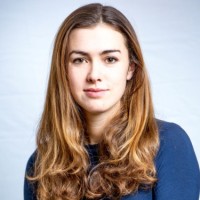 Sonya Haupt
Colleague at La Jolla Institute For ImmunologySan Diego, California, United States
View →
SK
Sonya Haupt
Colleague at La Jolla Institute For ImmunologySan Diego, California, United States
View →
SK
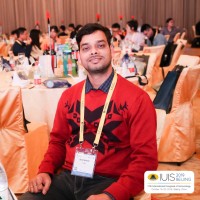 Sunil Kumar
Colleague at La Jolla Institute For ImmunologySan Diego, California, United States
View →
LO
Sunil Kumar
Colleague at La Jolla Institute For ImmunologySan Diego, California, United States
View →
LO
 Laura Odongo
Colleague at La Jolla Institute For ImmunologySan Diego, California, United States
View →
EL
Laura Odongo
Colleague at La Jolla Institute For ImmunologySan Diego, California, United States
View →
EL
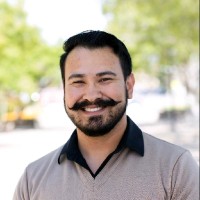 Eduardo Lucero Meza
Colleague at La Jolla Institute For ImmunologySan Diego, California, United States
View →
MC
Eduardo Lucero Meza
Colleague at La Jolla Institute For ImmunologySan Diego, California, United States
View →
MC
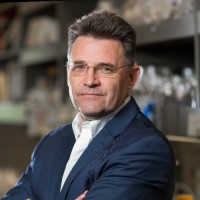 Michael Croft
Colleague at La Jolla Institute For ImmunologySan Diego, California, United States
View →
MB
Michael Croft
Colleague at La Jolla Institute For ImmunologySan Diego, California, United States
View →
MB
 Matthew Busse
Colleague at La Jolla Institute For ImmunologyEureka, California, United States
View →
Matthew Busse
Colleague at La Jolla Institute For ImmunologyEureka, California, United States
View →
Connor Hong
Colleague at La Jolla Institute For ImmunologySan Diego, California, United States
View →
KE
Kellen Eddington
Colleague at La Jolla Institute For ImmunologySan Diego, California, United States
View →
SY
Shantille Yu, Ms
Colleague at La Jolla Institute For ImmunologySan Diego, California, United States
View →
SP
Sudhasini Panda
Colleague at La Jolla Institute For ImmunologySan Diego, California, United States
View →
SH
Sonya Haupt
Colleague at La Jolla Institute For ImmunologySan Diego, California, United States
View →
SK
Sunil Kumar
Colleague at La Jolla Institute For ImmunologySan Diego, California, United States
View →
LO
Laura Odongo
Colleague at La Jolla Institute For ImmunologySan Diego, California, United States
View →
EL
Eduardo Lucero Meza
Colleague at La Jolla Institute For ImmunologySan Diego, California, United States
View →
MC
Michael Croft
Colleague at La Jolla Institute For ImmunologySan Diego, California, United States
View →
MB
Matthew Busse
Colleague at La Jolla Institute For ImmunologyEureka, California, United States
View →
3 education records
Sharon Schendel education

Ba, Chemistry
Ph.D., Biochemistry
Education record
West Lafayette High School
FAQ
Frequently asked questions about Sharon Schendel
Quick answers generated from the profile data available on this page.
What company does Sharon Schendel work for?
Sharon Schendel works for La Jolla Institute for Immunology.
What is Sharon Schendel's role at La Jolla Institute for Immunology?
Sharon Schendel is listed as Project Manager and Science Writer Consortium for Immunotherapeutics Against Emerging Viral Threats at La Jolla Institute for Immunology.
What is Sharon Schendel's email address?
AeroLeads has found 1 work email signal at @lji.org for Sharon Schendel at La Jolla Institute for Immunology.
What is Sharon Schendel's phone number?
AeroLeads has found 2 phone signal(s) with area code 561 for Sharon Schendel at La Jolla Institute for Immunology.
Where is Sharon Schendel based?
Sharon Schendel is based in San Diego, California, United States while working with La Jolla Institute for Immunology.
What companies has Sharon Schendel worked for?
Sharon Schendel has worked for La Jolla Institute For Immunology, 3C Editing, The Scripps Research Institute, Sanford Burnham Prebys Medical Discovery Institute, and Biochemical Society.
Who are Sharon Schendel's colleagues at La Jolla Institute for Immunology?
Sharon Schendel's colleagues at La Jolla Institute for Immunology include Connor Hong, Kellen Eddington, Shantille Yu, Ms, Sudhasini Panda, and Sonya Haupt.
How can I contact Sharon Schendel?
You can use AeroLeads to view verified contact signals for Sharon Schendel at La Jolla Institute for Immunology, including work email, phone, and LinkedIn data when available.
What schools did Sharon Schendel attend?
Sharon Schendel holds Ba, Chemistry from Indiana University Bloomington.
What skills is Sharon Schendel known for?
Sharon Schendel is listed with skills including Life Sciences, Publishing, Biochemistry, Cell Biology, Online Publishing, Academic Publishing, Publications, and Journals.
Find 750M verified contacts
Search by job title, company, industry, location, and seniority. Export verified B2B contact data when you need it.
Start free trialPeople with similar names
Check these profiles if this is not the Sharon Schendel you were looking for.
View similar profiles