AeroLeads people directory · profile
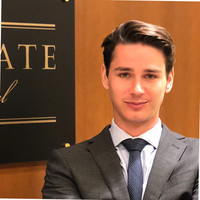
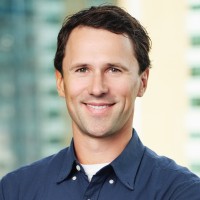
Thomas Fox Email & Phone Number
CEO and Co-Founder
at
Highwood Emissions Management
LinkedIn matched
✓ Verified Jul 2026
3 data sources
Profile completeness 86%
Current company
Role
CEO and Co-Founder
Location
Calgary, Alberta, Canada
Company size
Who is Thomas Fox? Overview
A concise factual answer block for searchers comparing this professional profile.
Quick answer
Thomas Fox is listed as CEO and Co-Founder at Highwood Emissions Management, a with 29 employees, based in Calgary, Alberta, Canada. AeroLeads shows a matched LinkedIn profile for Thomas Fox.
Thomas Fox previously worked as President and Director of Innovation at Highwood Emissions Management and President & Director of Innovation at Highwood Emissions Management. Thomas Fox holds Doctor Of Philosophy (Ph.D.) And Vanier Scholar, Geography, 4.00 from University Of Calgary.
Company email context
Email format at Highwood Emissions Management
This section adds company-level context without repeating Thomas Fox's masked contact details.
Highwood Emissions Management
Review company-level records connected to Thomas Fox before choosing the right outreach path.
Profile bio
About Thomas Fox
How big is our atmosphere? If the earth is an apple, the atmosphere is the peel. The thin layer of gas that extends from your shoelaces to the edge of outer space creates the conditions necessary for human life. Without an atmosphere, we could not breathe, grow food, or withstand dangerous solar radiation. The atmosphere also regulates our climate – without it the average temperature on Earth would not be the +15°C (59°F) we're used to, but a significantly less pleasant -18°C (0°F).Humans are currently facing what might be their greatest collective challenge to date. In the past few hundred years, we have benefited from our environment to improve life expectancy, education, food security, and prosperity. To achieve this, we have altered the chemical composition of the atmosphere at an alarming rate. Moving forward, Earth’s 8 billion citizens must work together to ensure that we can remain prosperous while also finding ways to care for our home – namely by reducing the carbon content of the atmosphere.I am motivated to play my part in addressing this challenge. As a Vanier scholar, I completed a PhD at the University of Calgary Centre for Smart Emissions Sensing Technologies. Since 2016, I've been working to reduce methane emissions from the oil and gas industry. I have led and participated in projects to develop, evaluate, and deploy exciting new technologies to cost-effectively reduce emissions.I specialize in measurement technologies and leak detection and repair (LDAR). I am familiar with the science, deployment, policy, and logistics of technologies like optical gas imaging, continuous monitoring, aircraft, and satellites. Understanding the strengths and limitations of each approach, and how they fit together, is crucial for the development and implementation of high-performance, compliant, and cost-effective emissions management.
Current workplace
Thomas Fox's current company
Company context helps verify the profile and gives searchers a useful next step.
Highwood Emissions Management
10 roles
Thomas Fox work experience
A career timeline built from the work history available for this profile.
President And Director Of Innovation
President & Director Of Innovation
I work with industry, government, and innovators around the world, leveraging data and knowledge to optimize GHG emissions management. Currently, our work focuses on reducing methane emissions from the oil and gas industry. Highwood’s mission is to innovate, collaborate, and educate the path to a world with effective and affordable emissions management solutions.My role as Highwood’s President is to work with:• Oil and gas producers to develop long-term, holistic emissions reduction strategies that include baseline assessments, abatement plans, leak detection and repair programs, top-down and bottom-up reconciliation, reporting, dissemination, dynamic learning, and predictive maintenance.• Technology innovators and solution providers to design, evaluate, and deploy their product or solution. We combine industry experience and simulation to accelerate commercialization trajectories, identify and overcome barriers to success, understand global product-market fit, plan and implement pilot programs, access new markets, and manage the logistics of moving to the oilfield.• Regulators, policymakers, industry associations, financial institutions, and research institutions to deliver on a broad range of programs related to emissions reductions, including policy development, policy evaluation, tracking emissions reductions, compliance strategies, applied research, reporting, investment strategies, and recommended practices.

Methane Emissions Technology Evaluation - U Of C Centre For Smart Emissions Sensing Technologies
This position focuses on evaluating technologies for methane leak detection and repair in the upstream oil and gas sector. My work seeks to find faster and cheaper ways of locating and quantifying fugitive emissions, which will ultimately lead to reduced GHG emissions, cleaner air, and product loss prevention for producers. I also work to understand and improve methane-sensing platform integration and methane mitigation policy.My primary projects are (1) Leading the development of LDAR-Sim, a modeling framework for evaluating alternative LDAR programs, and (2) Leading an international group of scientists, industry groups, regulators, and technology companies in developing the world's first emissions reduction equivalence framework for emerging technologies.https://iopscience.iop.org/article/10.1088/1748-9326/ab0cc3https://www.elementascience.org/articles/10.1525/elementa.369/
Sep 2016 - Sep 2020
Lab Instructor
Teaching assistant for:Geog 607 (GIS Basics and Beyond) - 2016Geog 439 (Quantitative Methods in Geography II) - 2018Geog 639 (Advanced Spatial Analysis and Modeling) - 2018 and 2020Guest lecturer in Geog 205 (2017) and Geog 439 (2018)
Sep 2016 - May 2020

Research Associate: Glaciers And Fog
Working to understand the effects of fog events on glacier radiation balance at McCall Glacier. We presented the first systematic analysis of the influence of fog on surface energy balance components of McCall Glacier, Brooks Range, Alaska, where fog is partly advected from the Beaufort Sea and partly moisture-sourced over the Alaska North Slope. Our results show that fog can both reduce and enhance the main surface energy balance components, but that the net effect is likely a reduction in energy for melt.
Nov 2015 - Aug 2016

Research Scientist: Agricultural Land Use
My work at McGill focused on understanding land-use change trajectories in India. I used high-resolution satellite remote sensing and semi-structured interviews with farmers and politicians to reveal changing agricultural land-use practices. We show a move away from agricultural activity in homegardens, but conclude that these ecologically and culturally important systems are not disappearing, but rather evolving to meet the needs of a less agricultural Kerala. Our research highlights the value of using mixed methods for characterizing land-use and land-cover histories in tropical regions.https://www.sciencedirect.com/science/article/abs/pii/S0167880917301950
Sep 2012 - Apr 2015
Nserc Usra: Historical Dust Storm Study
Using historical weather data to quantify long-term trends in dust emission rates across the Canadian Prairies. The research looked at the frequency of airborne dust between 1961 and 2006 from seven weather stations and correlated the data to changes in farm management, such as the increase in direct seeding and reduction of summer fallow.https://iopscience.iop.org/article/10.1088/1748-9326/7/1/014008https://www.fmc-gac.com/risk-management/direct-seeding-an-environmental-success-story/
May 2011 - Sep 2011
Nserc Usra: Bison Sand Dune Study
A study of the historical effects of bison herds on ecological heterogeneity in Canadian sandhill regions. Present information to suggest that bison were attracted to sandhills for a number of reasons, and that in great numbers they had considerable influence on sandhills ecosystem functions. Behaviours such as grazing, trailing, wallowing, horning, and trampling created a patchwork mosaic of disturbance effects. We hypothesize that it may be beneficial to reintroduce bison to sandhills ecosystems in the Canadian prairies to restore biodiversity at all levels.https://link.springer.com/article/10.1007/s10531-012-0255-9
May 2010 - Aug 2010
Nserc Usra: Hummingbird Foraging Behaviour
We sought to determine whether wild, free-living rufous hummingbirds (Selasphorus rufus) learning a single reward location within a rectangular array of flowers would employ both nearby visual landmarks and the geometric relationships of the array. The hummingbirds showed no evidence that they used the geometry of the rectangular array of flowers to remember the reward. Rather, they used our experimental landmarks, and possibly nearby, natural landmarks, to orient and navigate to the reward.https://link.springer.com/article/10.1007%2Fs10071-014-0748-x
May 2008 - Aug 2009
Team & coworkers
Colleagues at Highwood Emissions Management
Other employees you can reach at highwoodemissions.com. View company contacts for 29 employees →
JR
 Jeff Rutherford
Colleague at Highwood Emissions ManagementStanford, California, United States
View →
CB
Jeff Rutherford
Colleague at Highwood Emissions ManagementStanford, California, United States
View →
CB
 Courtney Buchholz P.Eng
Colleague at Highwood Emissions ManagementGreater Calgary Metropolitan Area, Canada
View →
TG
Courtney Buchholz P.Eng
Colleague at Highwood Emissions ManagementGreater Calgary Metropolitan Area, Canada
View →
TG
 Thomas Galesloot
Colleague at Highwood Emissions ManagementCalgary, Alberta, Canada
View →
BP
Thomas Galesloot
Colleague at Highwood Emissions ManagementCalgary, Alberta, Canada
View →
BP
 Bruna Palma
Colleague at Highwood Emissions ManagementCalgary, Alberta, Canada
View →
ML
Bruna Palma
Colleague at Highwood Emissions ManagementCalgary, Alberta, Canada
View →
ML
 Mirta Leon
Colleague at Highwood Emissions ManagementKaty, Texas, United States
View →
CN
Mirta Leon
Colleague at Highwood Emissions ManagementKaty, Texas, United States
View →
CN
 Chris Nixon, Phd, Rse, Git
Colleague at Highwood Emissions ManagementCanada
View →
KS
Chris Nixon, Phd, Rse, Git
Colleague at Highwood Emissions ManagementCanada
View →
KS
 Keegan Shaw
Colleague at Highwood Emissions ManagementLadysmith, British Columbia, Canada
View →
NK
Keegan Shaw
Colleague at Highwood Emissions ManagementLadysmith, British Columbia, Canada
View →
NK
 Nozomu Koshirae
Colleague at Highwood Emissions ManagementCalgary, Alberta, Canada
View →
BA
Nozomu Koshirae
Colleague at Highwood Emissions ManagementCalgary, Alberta, Canada
View →
BA
 Bahareh Ashtiani
Colleague at Highwood Emissions ManagementNorth Vancouver, British Columbia, Canada
View →
BT
Bahareh Ashtiani
Colleague at Highwood Emissions ManagementNorth Vancouver, British Columbia, Canada
View →
BT
 Barbara Telford Ma
Colleague at Highwood Emissions ManagementCalgary, Alberta, Canada
View →
Barbara Telford Ma
Colleague at Highwood Emissions ManagementCalgary, Alberta, Canada
View →
Jeff Rutherford
Colleague at Highwood Emissions ManagementStanford, California, United States
View →
CB
Courtney Buchholz P.Eng
Colleague at Highwood Emissions ManagementGreater Calgary Metropolitan Area, Canada
View →
TG
Thomas Galesloot
Colleague at Highwood Emissions ManagementCalgary, Alberta, Canada
View →
BP
Bruna Palma
Colleague at Highwood Emissions ManagementCalgary, Alberta, Canada
View →
ML
Mirta Leon
Colleague at Highwood Emissions ManagementKaty, Texas, United States
View →
CN
Chris Nixon, Phd, Rse, Git
Colleague at Highwood Emissions ManagementCanada
View →
KS
Keegan Shaw
Colleague at Highwood Emissions ManagementLadysmith, British Columbia, Canada
View →
NK
Nozomu Koshirae
Colleague at Highwood Emissions ManagementCalgary, Alberta, Canada
View →
BA
Bahareh Ashtiani
Colleague at Highwood Emissions ManagementNorth Vancouver, British Columbia, Canada
View →
BT
Barbara Telford Ma
Colleague at Highwood Emissions ManagementCalgary, Alberta, Canada
View →
3 education records
Thomas Fox education
Doctor Of Philosophy (Ph.D.) And Vanier Scholar, Geography, 4.00
Master’S Degree, Geography, 4.00
Bachelor’S Degree, Environmental Science, 4.00
FAQ
Frequently asked questions about Thomas Fox
Quick answers generated from the profile data available on this page.
What company does Thomas Fox work for?
Thomas Fox works for Highwood Emissions Management.
What is Thomas Fox's role at Highwood Emissions Management?
Thomas Fox is listed as CEO and Co-Founder at Highwood Emissions Management.
Where is Thomas Fox based?
Thomas Fox is based in Calgary, Alberta, Canada while working with Highwood Emissions Management.
What companies has Thomas Fox worked for?
Thomas Fox has worked for Highwood Emissions Management, University Of Calgary, The University Of Lethbridge, and Mcgill University.
Who are Thomas Fox's colleagues at Highwood Emissions Management?
Thomas Fox's colleagues at Highwood Emissions Management include Jeff Rutherford, Courtney Buchholz P.Eng, Thomas Galesloot, Bruna Palma, and Mirta Leon.
How can I contact Thomas Fox?
You can use AeroLeads to view verified contact signals for Thomas Fox at Highwood Emissions Management, including work email, phone, and LinkedIn data when available.
What schools did Thomas Fox attend?
Thomas Fox holds Doctor Of Philosophy (Ph.D.) And Vanier Scholar, Geography, 4.00 from University Of Calgary.
Find 750M verified contacts
Search by job title, company, industry, location, and seniority. Export verified B2B contact data when you need it.
Start free trialPeople with similar names
Check these profiles if this is not the Thomas Fox you were looking for.
View similar profiles