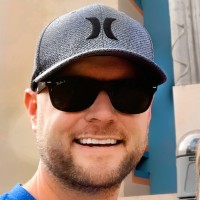
AeroLeads people directory · profile
Brandon Clark Email & Phone Number
Stanford Impact Founder: Ecopreneur Fellow
at
Stanford University Graduate School of Business
1 work email found
@stanford.edu
2 phones found area 508
LinkedIn matched
✓ Verified Jul 2026
4 data sources
Profile completeness 100%
Current company
Role
Stanford Impact Founder: Ecopreneur Fellow
Location
Attleboro, Massachusetts, United States
Who is Brandon Clark? Overview
A concise factual answer block for searchers comparing this professional profile.
Quick answer
Brandon Clark is listed as Stanford Impact Founder: Ecopreneur Fellow at Stanford University Graduate School of Business, based in Attleboro, Massachusetts, United States. AeroLeads shows a work email signal at stanford.edu, phone signal with area code 508, and a matched LinkedIn profile for Brandon Clark.
Brandon Clark previously worked as Co-Founder at Recovered Potential and Ph.D. in Chemical Engineering at Stanford University. Brandon Clark holds Doctor Of Philosophy - Phd, Chemical Engineering from Stanford University.
Company email context
Email format at Stanford University Graduate School of Business
This section adds company-level context without repeating Brandon Clark's masked contact details.
{first_initial}{last}@stanford.edu
86% confidence
AeroLeads found 1 current-domain work email signal for Brandon Clark. Compare company email patterns before reaching out.
Profile bio
About Brandon Clark
Experienced engineer with a demonstrated proficiency in academic research, project leadership and teamwork, and engineering design. Interested in the fields of resource recovery, wastewater treatment, chemical separations, sustainable development, and environmental materials science.
Listed skills include Aspen Plus, Comsol, C, Solidworks, and 30 others.
Current workplace
Brandon Clark's current company
Company context helps verify the profile and gives searchers a useful next step.
Stanford University Graduate School Of Business
AeroLeads page
8 roles
Brandon Clark work experience
A career timeline built from the work history available for this profile.
Co-Founder
Current
Recovered Potential
We recover, refine, and sell valuable resources from wastewater, seawater, and biological waste to kickstart a circular economy.
Sep 2024 - Present
Stanford Impact Founder: Ecopreneur Fellow
CurrentThe Stanford Impact Founder (SIF) Fellowship provides funding along with advising support to Fellows who want to start a high-impact for-profit or nonprofit venture to address a pressing social or environmental need. https://ecopreneurship.stanford.edu/sif-eco-fellows-2024/
Sep 2024 - Present

Ph.D. In Chemical Engineering
Lab of Dr. William Tarpeh. I designed materials for selective nitrogen recovery from wastewater.
Sep 2018 - Sep 2024
Undergraduate Research Assistant
I worked as an unpaid research assistant in the lab of Dr. Amy Peterson in WPI's chemical engineering department since my freshman spring. My first project was to help a graduate student study thermal transitions in the viscoelastic behavior of polyelectrolytes as a function of their humidity histories. For these materials, I compared the elastic modulus and water storage of samples stored in ambient and humidity-controlled environments through dynamic mechanical analysis and thermogravimetric analysis. I am co-authored on a paper regarding this subject with Dr. Peterson that has been published in the Journal of Polymer Science, Part B: Polymer Physics.For my second project, I studied the relationship between physical and coulombic interactions between layers and macromolecular diffusion properties in polyelectrolyte multilayers (PEMs). To do this, I used DMA data to determine ionic bond density of PEMs. I then ran a release study to measure the time it took a fluorescently tagged polymer to diffuse through different PEMs. I had no graduate student this time; Dr. Peterson herself gave me suggestions for experiments.My final research in this lab, my senior thesis, involved the usability of inorganic nanowire-modified polyelectrolyte complexes (PECs) as ion-exchange membranes (IEMs) for vanadium flow batteries (VFBs). This is the project where I have had the most responsibility. I was fully in charge of defining project goals, necessary experiments, expected outcomes, and contingency plans.
Apr 2015 - Sep 2018
Amgen Scholar
I served as a research assistant to a postdoc in the lab of Dr. Bradley Olsen in MIT's chemical engineering department. While I completed most necessary experiments on my own, I spoke to this postdoc every day about recent data, the direction of our project, and troubleshooting. I was responsible for using bacterial transformation to produce and purify iterations of green fluorescent protein with different charge distributions. I then ran RAFT polymerization reactions to synthesize polyanions, polycations, and neutral polymers. I characterized these materials using SDS gel electrophoresis, liquid chromatography/mass spectroscopy, gel permeation spectroscopy, and NMR spectroscopy. Finally, I ran turbidity measurements to investigate how protein charge distribution affected interactions between these proteins and polymers in aqueous solutions. I presented this work at the MIT Amgen Scholar poster session at the end of the summer. I also attended the Amgen Symposium at UCLA, where I networked with professors and other scholars.
Jun 2017 - Aug 2017

Undergraduate Research Fellow
My responsibilities were similar to my work as an Amgen Scholar. I served as a research assistant to a graduate student in the lab of Dr. Lia Krusin-Elbaum in CCNY’s physics department. While I completed most necessary experiments on my own, I spoke to this graduate student every day about recent data, the direction of our project, and troubleshooting. I applied gating to a ternary topological insulator called Bismuth Telluride Selenide. I then measured longitudinal and Hall resistivity, bulk charge carrier densities, charge mobility, and Shubnikov-de Haas oscillations at temperatures down to 1.9K, magnetic field strengths up to 14 T, and gate voltages up to 100 V. Consequently, I investigated the effects of electrostatic gating on multiple conduction properties. I presented this work at the Columbia MRSEC poster session at the end of the summer. I then presented this work at Stanford's undergraduate research conference and the MRS 2017 Spring conference.
May 2016 - Aug 2016

Manufacturing Engineering Intern
In the manufacturing section of Siemens’ Walpole Site, six different machines fill and seal medical packs with blood diagnostic chemicals in assembly line fashion. As in intern after my senior year of high school, I led research that involved designing a new method to test if sealed packs had leaks. Their old method was reliable, but it was too slow for a new machine line design that they were proposing. I tested packs under vacuum conditions to see how sealed packs expanded compared to packs with clear leaks. The goal was to have a laser sensor detect the contraction of leaking packs as internal pressure was released. However, sensor data revealed that packs usually expanded irreversibly due to the malleability of the pack plastic, and this was indistinguishable from the expansion of sealed packs. I presented this to the head of engineering and proposed research into alternate solutions.
May 2014 - Sep 2014
3 education records
Brandon Clark education
Doctor Of Philosophy - Phd, Chemical Engineering
Chemical Engineering, 4.0/4.0
Valedictorian
Attleboro High School
FAQ
Frequently asked questions about Brandon Clark
Quick answers generated from the profile data available on this page.
What company does Brandon Clark work for?
Brandon Clark works for Stanford University Graduate School of Business.
What is Brandon Clark's role at Stanford University Graduate School of Business?
Brandon Clark is listed as Stanford Impact Founder: Ecopreneur Fellow at Stanford University Graduate School of Business.
What is Brandon Clark's email address?
AeroLeads has found 1 work email signal at @stanford.edu for Brandon Clark at Stanford University Graduate School of Business.
What is Brandon Clark's phone number?
AeroLeads has found 2 phone signal(s) with area code 508 for Brandon Clark at Stanford University Graduate School of Business.
Where is Brandon Clark based?
Brandon Clark is based in Attleboro, Massachusetts, United States while working with Stanford University Graduate School of Business.
What companies has Brandon Clark worked for?
Brandon Clark has worked for Stanford University Graduate School Of Business, Recovered Potential, Stanford University, Worcester Polytechnic Institute, and Massachusetts Institute Of Technology.
How can I contact Brandon Clark?
You can use AeroLeads to view verified contact signals for Brandon Clark at Stanford University Graduate School of Business, including work email, phone, and LinkedIn data when available.
What schools did Brandon Clark attend?
Brandon Clark holds Doctor Of Philosophy - Phd, Chemical Engineering from Stanford University.
What skills is Brandon Clark known for?
Brandon Clark is listed with skills including Aspen Plus, Comsol, C, Solidworks, Python, Unity3D, Ni Multisim, and Ableton Live.
Find 750M verified contacts
Search by job title, company, industry, location, and seniority. Export verified B2B contact data when you need it.
Start free trialPeople with similar names
Check these profiles if this is not the Brandon Clark you were looking for.
View similar profiles